Review by Nigel Patterson - Elvis Information Network
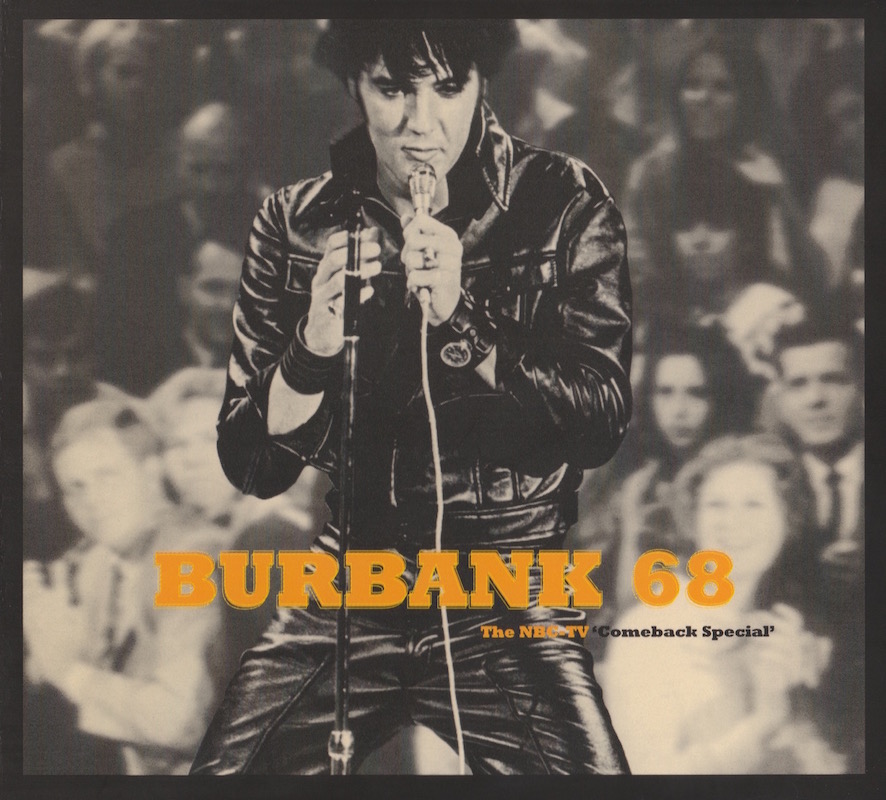
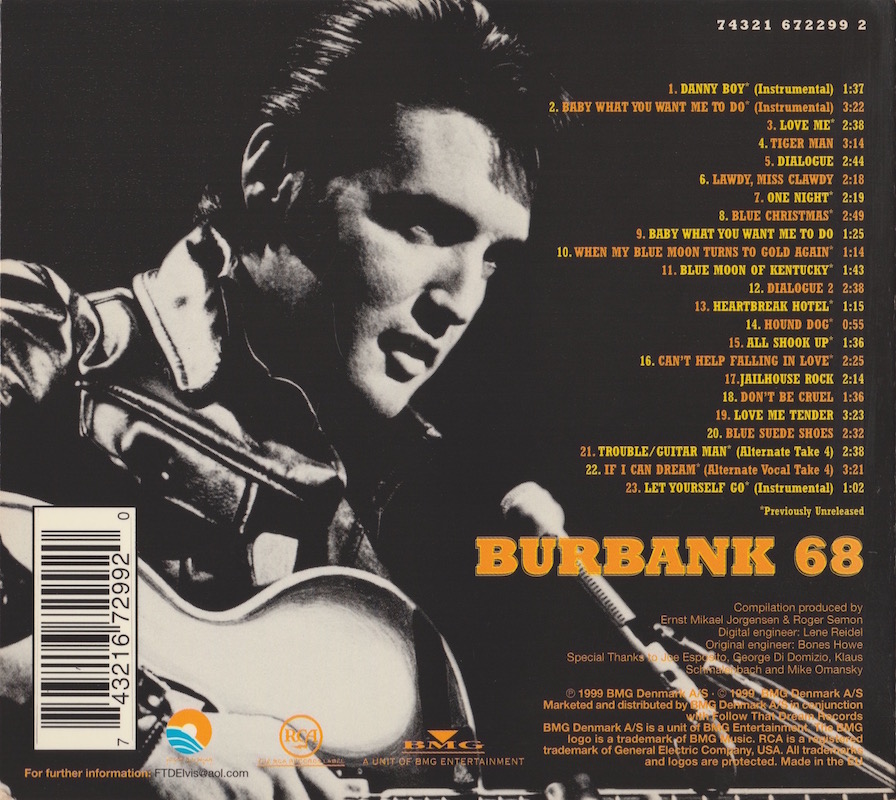
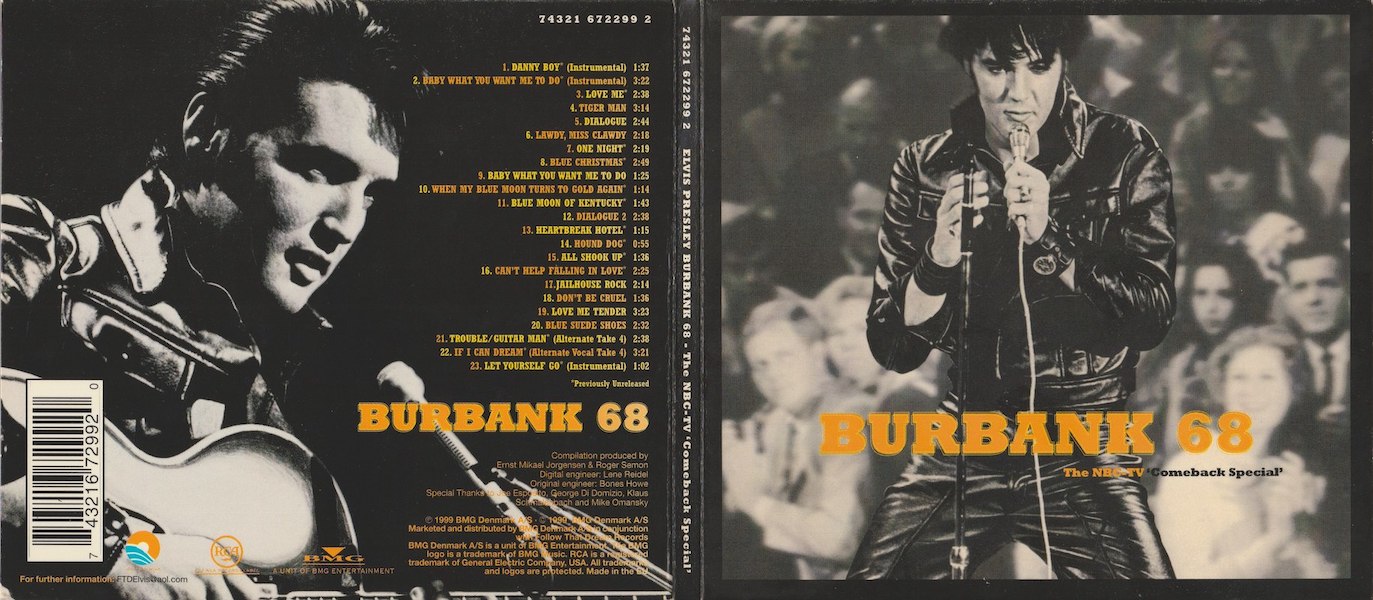
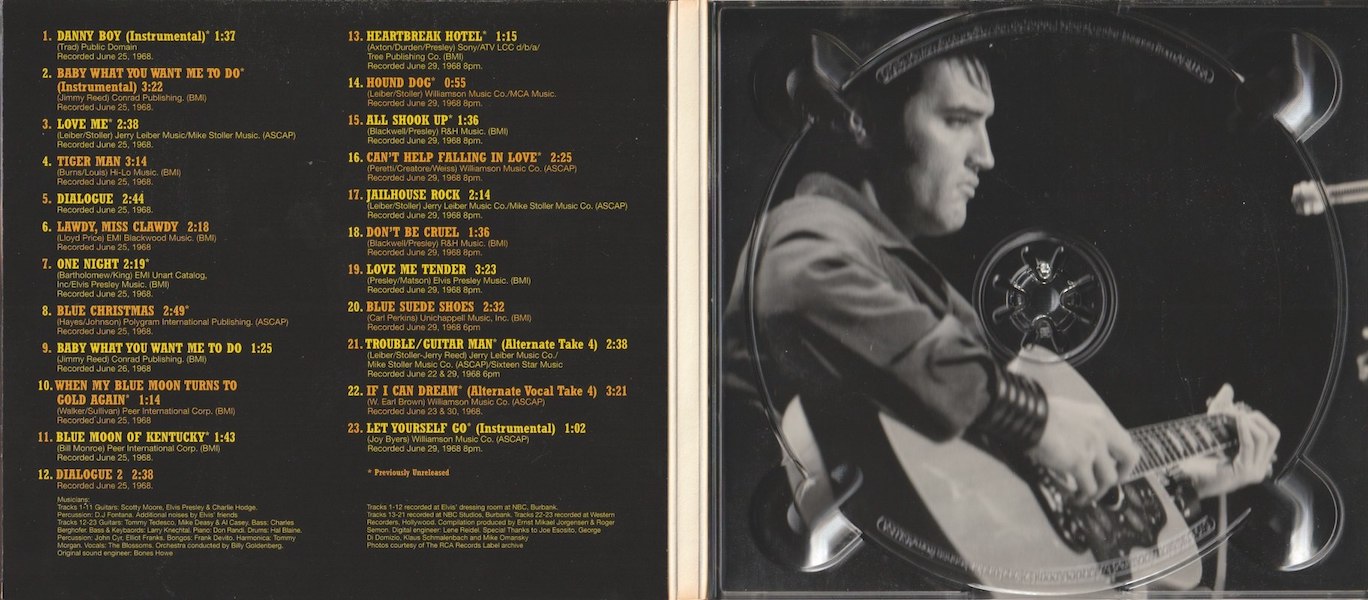
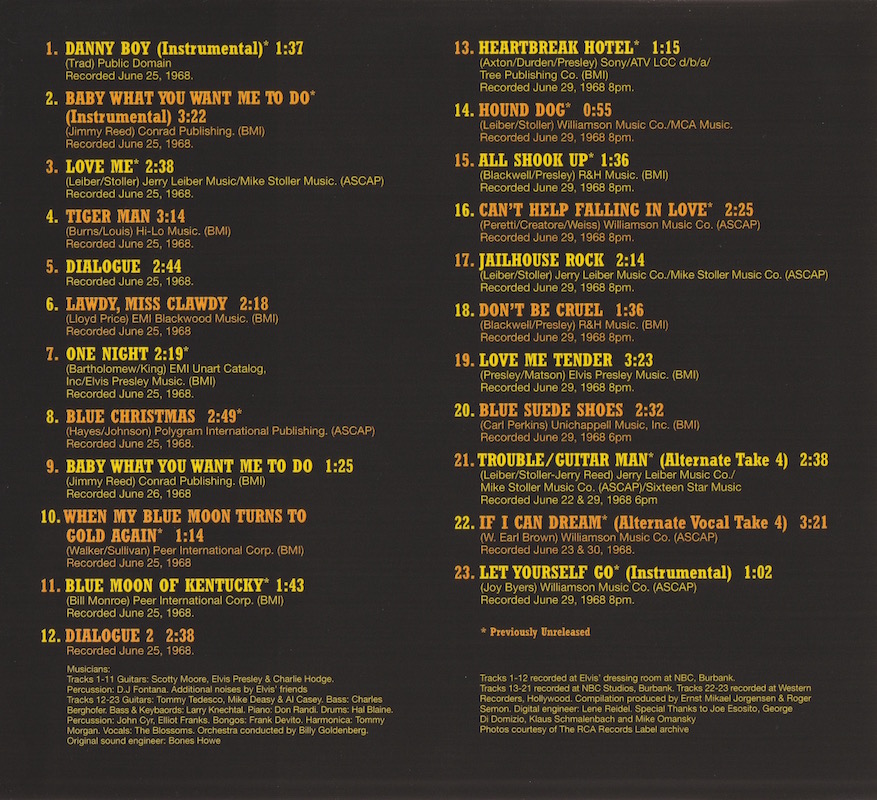
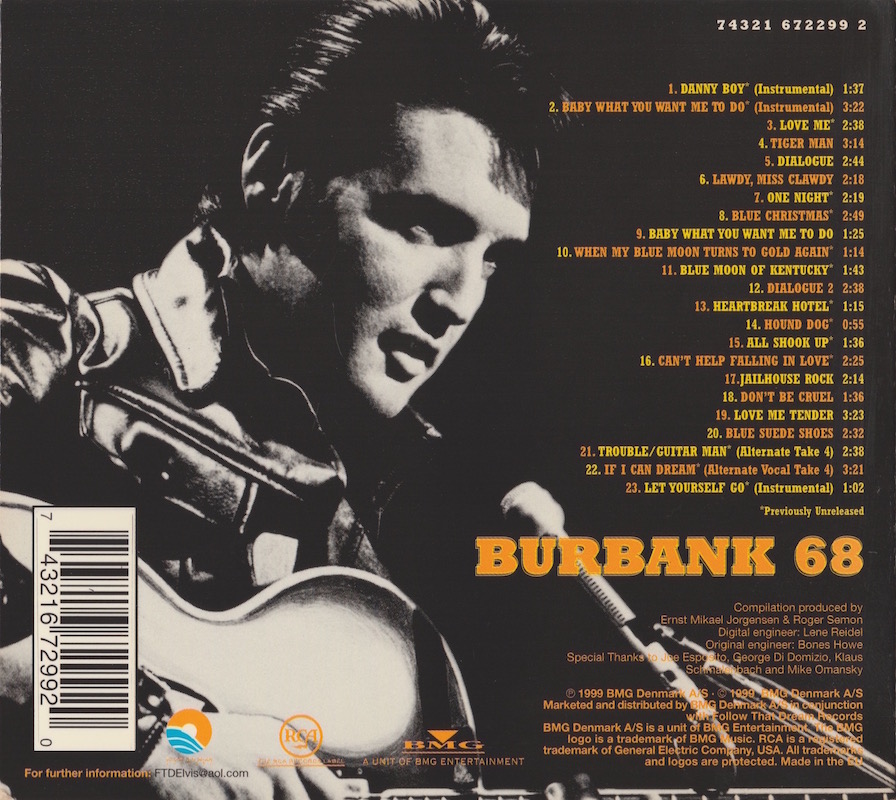
The debut release from FTD is a beauty! Focusing on Elvis' historic ‘68 Comeback Special, it is chock full of twenty three great recordings (including three instrumentals and two dialogue tracks), fourteen of which are previously unreleased.
The King is majestic, at a musical peak, rocking and serenading an appreciative, if initially apprehensive audience. The reason for their apprehension is the fact that Elvis hadn't performed live in front of an audience for nearly eight years and both his nervousness and growing confidence shows throughout the album.
The CD opens with two instrumental tracks, ‘Danny Boy’(*) and ‘Baby, What You Want Me To Do’(*). These neatly create an air of expectation as we await the unmistakable vocal artistry that will enthrall us for over 50 minutes.
The first we hear of The King's wonderful voice is a wafting version of ‘Love Me’(*). This is followed by one of Elvis' best tracks from the late ‘60s period, the underrated classic, ‘Tiger Man’. This is a song in which Elvis is full of raw power and emotion. It is a blistering recording!
On ‘Lawdy, Miss Clawdy’, Elvis' voice is gravelly as the toe tappin' jam version travels along. ‘One Night’(*) is made better by the band's laughter and hijinks, and the fun continues with another unreleased alternate take, the perennial yuletide favorite, ‘Blue Christmas’(*).
It is interesting to listen to ‘Baby, What You Want Me To Do’ without the familiar "do you remember that" monologue. An informal, fast paced ‘When My Blue Moon Turns To Gold Again’(*) follows and it features some great "in-your-ears" guitar work. Elvis maintains the informal, up-tempo pace with ‘Blue Moon of Kentucky’* and at one point loses his voice.
‘Heartbreak Hotel’(*), the song that broke Elvis internationally in 1956, is introduced by Elvis saying: "We'll I’m gonna have to do it sooner or later, so we might as well get on with it baby". This is a great, if short, version, and one audibly appreciated by the audience. Elvis segues into a frenetic, even shorter version of ‘Hound Dog’(*) and the medley continues with an equally frenetic ‘All Shook Up’(*), full of audience screams.
By the end of his performing career Elvis rushed his closing song ‘Can't Help Falling In Love’(*). In 1968 he gives us the treatment the beautiful love ballad deserves. A rich vocal and lilting pace with great backing orchestration make this one of the album highlights. A sublime recording!
A change of gear as Elvis well and truly revs it up with a raucous rendition of one of his greatest... ‘Jailhouse Rock’. You can tell everyone is enjoying themselves as The King rocks and rolls through this classic.
A really interesting version of ‘Don't Be Cruel’ follows where Elvis' deep vocal is nicely complemented by high backing vocals and flute. A deliberately paced, soft version of ‘Love Me Tender’ has women in the audience swooning. It includes the "you made my life a wreck, err...complete" line and is a longer than the normal version.
At the intro to ‘Blue Suede Shoes’ you wouldn't know what song is coming, but Elvis soon stamps his feet to a familiar tune. A neat track featuring very clear vocal diction and an infectious beat.
Another highlight is the ‘Trouble’/‘Guitar Man’(*) medley. This is Take 4 and it features a humorous introduction before Elvis gets bluesy for his screaming audience.
Listening to Elvis you really believe his middle name is "Misery". The audience has really gotten in the swing of the medley before a sudden fade out on ‘Guitar Man’.
The penultimate track is ‘If I Can Dream'(*). This is a song that rivals John Lennon's ‘Imagine’ with its intelligent lyrics expressing meaning and hope for a better world. And this version doesn't disappoint as Elvis sings it with power and conviction! It is a great pity that Elvis didn't recognise a valid role for himself to influence public opinion through songs such as this and ‘In The Ghetto’.
The disc ends as it began with an instrumental, this time the underrated ‘Let Yourself Go’(*), a track (with vocal) richly deserving of a contemporary remix.
The two dialogue tracks are essentially production discussions and are fascinating to listen to as production staff effectively try to reassure a nervous Elvis.
The audio quality of Burbank 68 is very clear, and digital engineer, Lene Reidel, deserves a pat on the back for her fine work.
Verdict: Burbank 68 is a great start for the FTD label. With its alternate takes and dialogue tracks it provides an intimate portrait of a musical superstar rediscovering himself in the company of close friends and fans. There is a rare joyousness in being party to such a pivotal moment in a superlative and historic career. Turn up your hi-fi and enjoy!
(* previously unreleased alternate recording)