Review by Piers Beagley - Elvis Information Network
When the Golden Celebration box-set was first released in 1984 one of the real highlights for Elvis collectors were the nine tracks that had been discovered of Elvis singing at home. Some were from his time in Germany while others were from the mid-60s back home in the US. These songs helped confirm fans’ presumptions and expectations that in his downtime Elvis would be sitting at home playing whatever music came to mind and from every kind of musical style.
Unsurprisingly, several of these would eventually be recorded officially by Elvis in the studio, some over a decade later. Despite the low quality of these tapes they helped capture the joy of Elvis singing to himself and friends, as well as giving fans an inkling of what he enjoyed performing just for himself - perhaps some were even demos for himself. Fans also needed to appreciate just how lucky they were to have these home recordings captured for posterity.
Another five songs would appear on the Platinum: A Life In Music box-set in 1997 and several bootlegs would follow featuring more personal tapes.
The BMG 1999 The Home Recordings CD would also feature twenty tracks that would further elaborate on how Elvis’ personal influences affected his musical legacy.
As the booklet noted…
“This collection shares a privilege enjoyed by few: evenings at home with Elvis. From these songs we get a better understanding of the man than from any tawdry exposé. Here, he reveals himself to us.
Elvis was music. All American music. Show tunes, country ballads, R&B raunch, black gospel, white gospel, classic pop, and western songs. He was a reliquary of old and great music.”
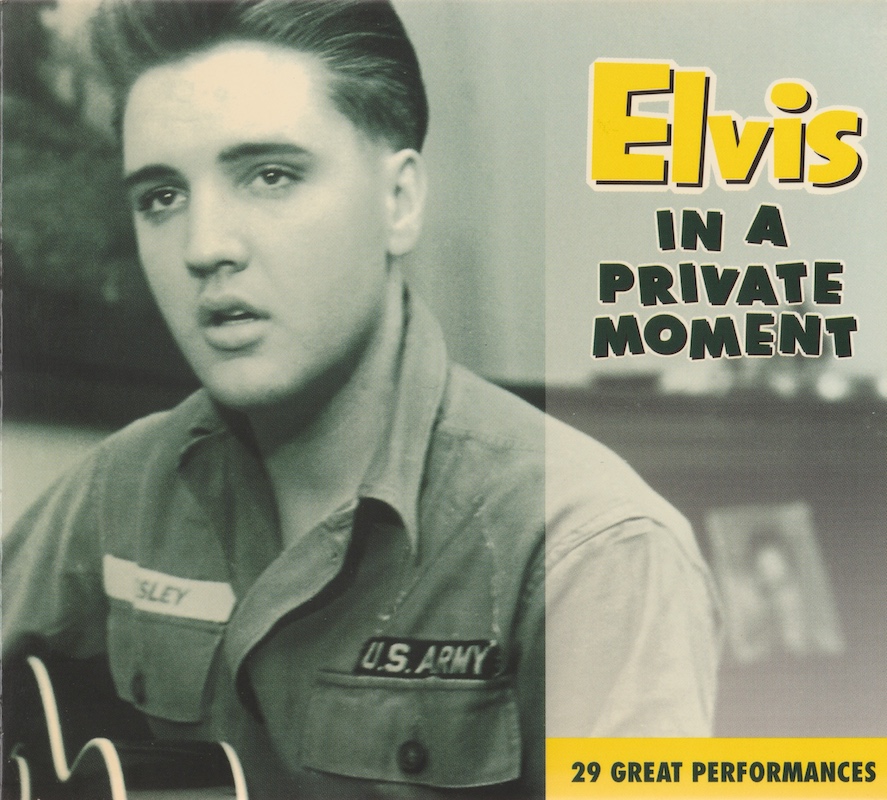
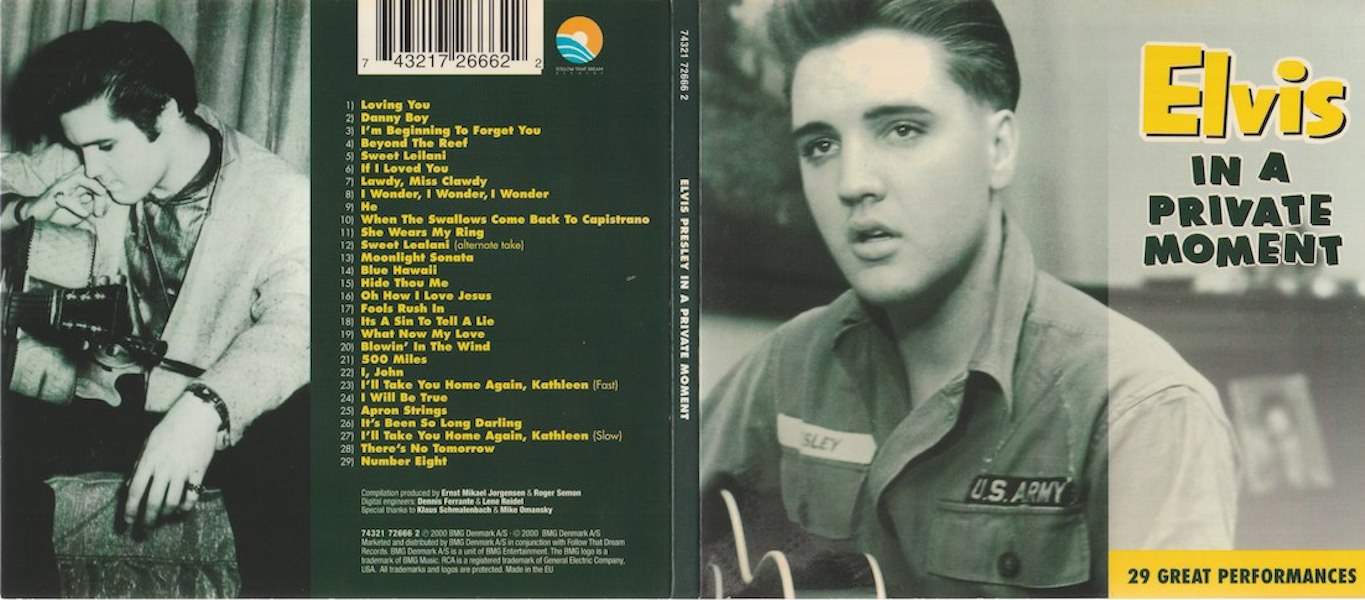
There is no doubt that the better quality home performances had to be used for the “General Public” BMG release, but it was somewhat of a surprise that only a year later FTD’s third release is a further twenty-nine home recorded performances.
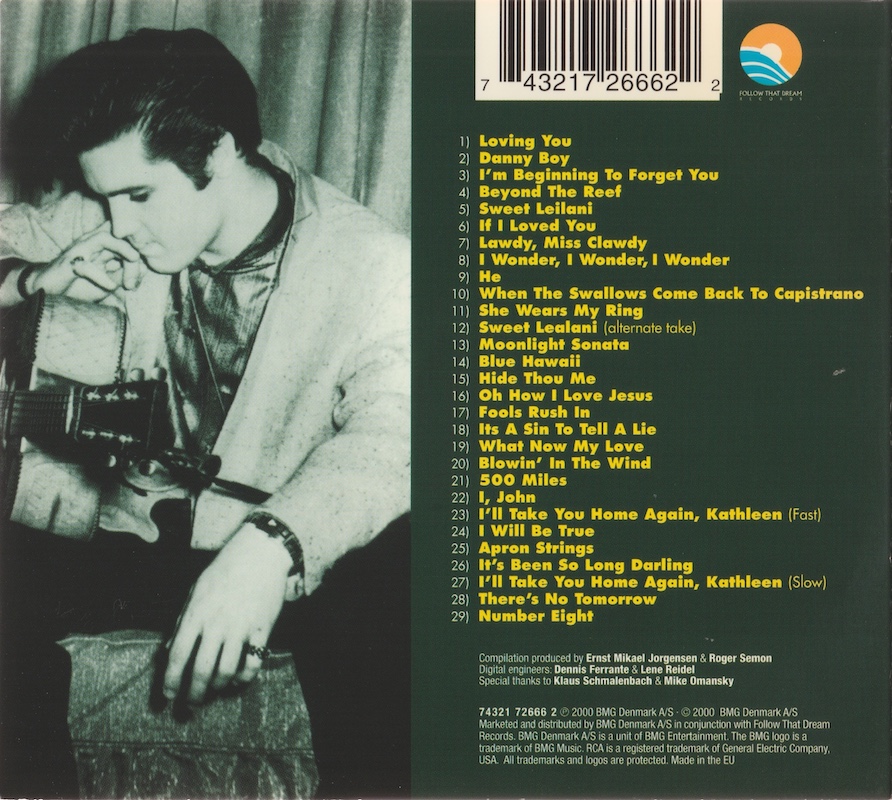
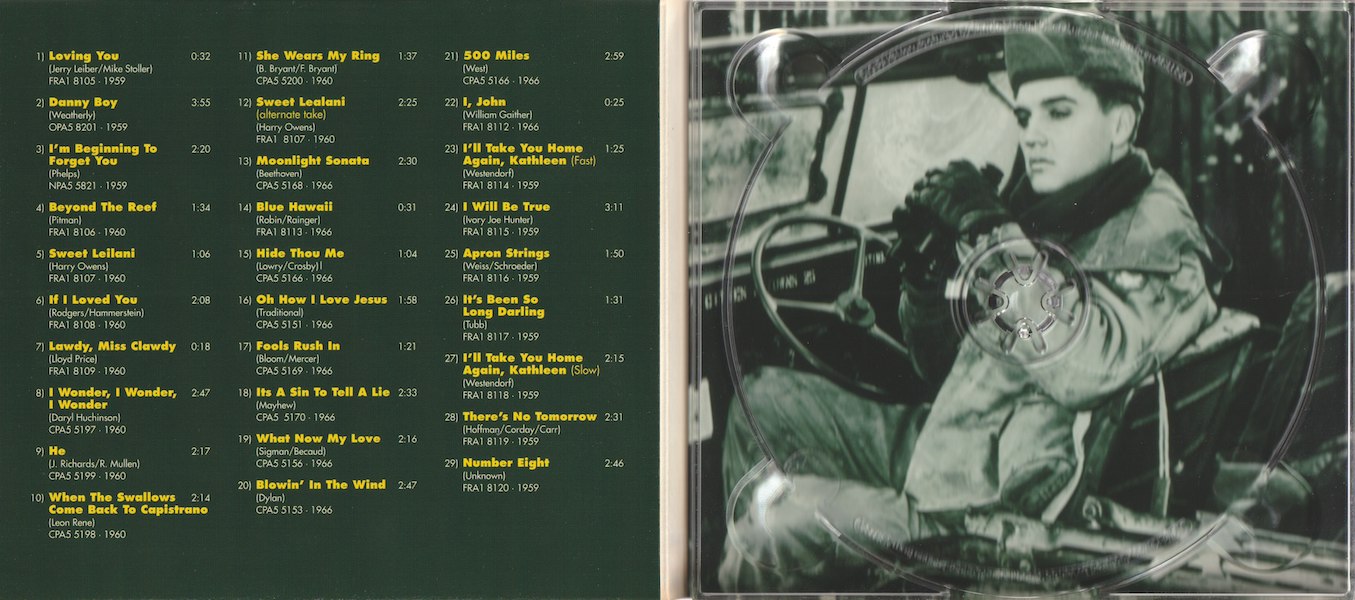
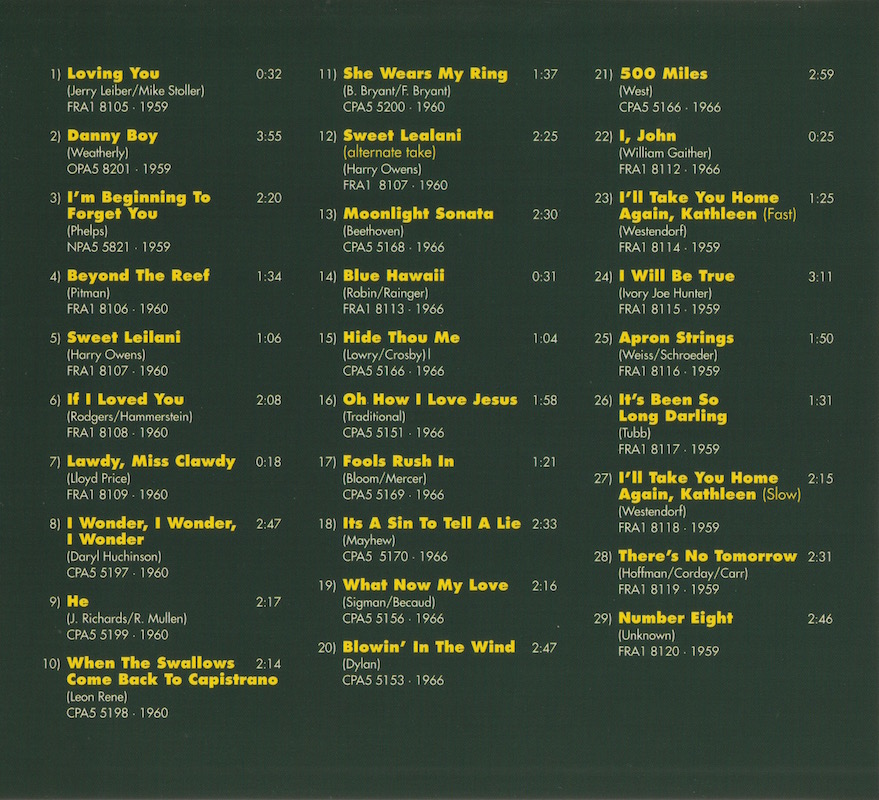
Once again, there are plenty of treats in store, including several songs that Elvis would later record for album release, such as ‘What Now My Love’, ‘She Wears My Ring’, ’I'll Take You Home Again, Kathleen’, ‘I Will Be True’ and ‘Danny Boy’ along with the complete, if rather distorted, tape of Elvis singing ‘There’s No Tomorrow’ which would be reinvented as his classic single, ‘It's Now Or Never’.
Ten tracks come from Elvis’ time in Germany and what a fascination it is to eavesdrop on the music that was grabbing Elvis' attention while he was being prevented from officially recording for RCA. At the time there was a suggestion that Elvis might record a few solo numbers while over in Germany for RCA to release and you can imagine that some of these tracks - if recorded semi-professionally - could have become a cute RCA EP release, perhaps called Greetings From Germany!
The CD kicks off with Elvis solo and strumming his guitar singing a brief burst of ‘Loving You’ before continuing on with his charming version of ‘Danny Boy’. Who knew that the fifties Rock’n’Roll Elvis would be fascinated by this old Irish lament and how extraordinary that Elvis would not officially record it until his Jungle Room sessions almost twenty years later. In 1959, the track had been released as a single by Conway Twitty, so presumably Elvis had heard that version. At the same session Elvis would also sing his own version of ‘Mona Lisa’, another Conway Twitty single released while Elvis was in the army. Edited on to the end of ‘Danny Boy’ is thirty seconds of Elvis delightfully fooling around, scatting on the bassline, with ‘Santa Claus Is Back In Town’. For some reason this is uncredited on the CD sleeve, but it is a nice bonus treat.
An alternate version of the Jim Reeves’ 1959 single B-side ‘I’m Beginning To Forget You’ follows where Elvis pushes the song away from its original Country origins to a more R&B feel. At the end someone, probably Vernon, comments, “That’s sounding better boy!”
The seven other songs recorded at Bad Nauheim are collected at the end of the CD, presumably because they are of a poorer audio quality. On these songs Elvis is playing piano rather than guitar. This sets starts with a very nice Jerry Lee Lewis type boogie on a speeded-up version of ‘I'll Take You Home Again, Kathleen’. The charming alternate “slow version” also included here (unfortunately with disappointing distortion) is similar to Elvis’ 1971 version that he would record in RCA‘s studios.
Elvis would also record Ivory Joe Hunter’s ‘I Will Be True’ at RCA in 1971, and here we get another superb personal recording with Elvis providing a beautiful yearning vocal. It is only a shame that it is not in better quality.
In more of a rocking mood, Elvis plays more piano-boogie on the Weiss / Schroeder (‘I Got Stung’/‘Big Hunk O’ Love’) composed ‘Apron Strings’, which includes the ‘Such A Night' riff as an intro. (What a shame no home-recording of that classic has so far appeared!) Presumably ‘Apron Strings’ had been suggested to Elvis for future RCA material, although in the end it would be Britain's Cliff Richard who would release it in 1959 as the B-side to his smash single ‘Living Doll’.
‘It’s Been So Long Darling’, an old Ernest Tubb country number, gets the similar Elvis piano-boogie treatment. The R&B flavoured ‘Number Eight’ (later clarified as the song ‘The Titles Will Tell’ as recorded by Sun artist Barbara Pittman) is the final fifties‘ home recording included here. This features a brilliant, fiery vocal which, along with Elvis’ pounding piano, sounds surprisingly similar to the passion Elvis poured into ‘I’ll Hold You In My Heart’ twelve years later at his Memphis sessions. What a shame that the audio quality is sub-standard.
Several of these songs could have been easily slotted into the 1960 Elvis Is Back! sessions; however, it is the full (albeit distorted) version of ‘There’s No Tomorrow’ that would be the real key to Elvis’ future 1960 re-emergence. Although he had stated in interviews that he enjoyed Mario Lanza who would have thought, during the Rock’n’Roll years of 1958-59, that it would be Elvis’ Latino influences that would power his future Number 1 singles? A re-write of the Italian classic ‘O Sole Mio’, ‘There’s No Tomorrow’ was an early 1950s RCA single by Tony Martin although Elvis would be more familiar with the 1957 version recorded by The Clovers. In fact it was the B-side of their single, ‘Down In The Alley’, another song Elvis would record professionally later on. Elvis gives the song a powerful work-out - amazingly close to his future RCA single - despite noting that he has a cold. Looking back at this 1959 recording provides an amazing foresight into Elvis’ future career, knowing that Elvis would still be singing ‘It’s Now Or Never’ at his very final concert.
From Germany 1959 the CD then moves on to nine tracks recorded at his Hollywood, Monovale Drive home in late 1960. Things had really changed with Elvis back at the top of the charts and having nearly completed three movies in just eight months. Nancy Sharpe was a new girlfriend he had met at Twentieth Century-Fox and she often visited him at home sometimes joining in with Elvis as he jammed on various home-recordings.
Away from the pressure of recording RCA hit material, this time Elvis relaxes with some show-tunes, Rodgers/Hammerstein’s ‘If I Loved You’ (“Sounds like one of those musicals" someone rightly comments!) as well as some “Hawaiian” influenced material including two versions of Bing Crosby’s ‘Sweet Leilani’. It is fascinating that Elvis would also try out Crosby’s ‘Beyond The Reef’ (sadly incomplete) harmonizing with Red West and Nancy Sharpe. Elvis would of course reprise the same idea while relaxing at the end of one of his creatively stimulating How Great Thou Art sessions six years later.
Elvis again returns to his Latino influences with ‘When the Swallows Come Back to Capistrano’ a song by The Ink Spots that he obviously loved since over the years he would often refer to it at future RCA sessions. He also touches on his religious influences with the ballad ‘He’.
The nice surprises here are a delightful romp through The Vagabonds forties’ doo-wop hit ‘I Wonder, I Wonder, I Wonder’ as well as a charming, delicate version of ‘She Wears My Ring’ a song that had been released in 1960 as a single by Jimmy Bell. This version feels far more emotional and loving than the somewhat overblown version that Elvis would record over a decade later at Stax.
The remaining ten tracks come from 1966 - luckily recorded for posterity at Elvis’ Rocca Place home by his pal Red West - and it is a really mixed bunch almost the complete opposite to the material Elvis was recording at the time for his movie soundtracks. This session kicks off with an astounding piano / vocal performance of Beethoven’s ‘Moonlight Sonata’. Who knew that Elvis could or would play classical pieces for his own amusement? Although in Guralnick’s Elvis autobiography (‘68 Comeback Special arranger) Billy Goldenberg would recall Elvis regularly playing ‘Moonlight Sonata’ during the rehearsals. Most of these recordings feature backing vocals from Red West and Charlie Hodge with the around-the-piano scenario reminiscent of the gospel-jam featured in the movie Elvis On Tour.
Knowing that these home-recordings were a few months before Elvis’ May 1966 How Great Thou Art session it is interesting that Elvis again alludes to his gospel roots with ‘Hide Thou Me’ (’Rock of Ages’), a powerful ‘Oh, How I Love Jesus’ as well as ‘I, John’ which Elvis would of course later cut for RCA.
The remaining songs would be recorded with Elvis and friends singing along to instrumental versions being played on vinyl - and some of these are in particularly good quality.
‘Fools Rush In’ - a much gentler ballad version compared to his later 1971 official recording - is sensational in being so different to Ricky Nelson’s 1963 hit version. Here Elvis sings it as a slow torch-song in a similar way to one of his favourites Billy Eckstine. Sadly this version fades out before the end.
The orchestra-backed ‘It’s A Sin To Tell A Lie’ is another gem with Elvis emulating The Ink Spots 1940’s version. He even replicates their mid-song soliloquy - but also adding his own touch, “Well you gotta know it’s a sin, baby, to tell a bloody lie”! The influence that The Ink Spots would have on Elvis’ musical legacy is shown elsewhere by his recordings of their other songs ‘That's When Your Heartaches Begin’, ‘Where No One Stands Alone’, ‘It Is No Secret’ and also ‘When the Swallows Come Back to Capistrano’.
‘What Now My Love’ is another song Elvis would eventually record but here gets a rather lightweight run-through due to the fast tempo piano-backing. Again it’s a totally different arrangement from the dramatic Aloha version we know so well.
Other fascinations are the fast tempo sing-a-long to Dylan’s ‘Blowin’ In The Wind’. This is very different to the better, slower-paced “solo” Elvis version featured on the Platinum box-set. At the end Elvis states, ”Those guys are sick” although it is impossible to know what he is talking about - perhaps the tempo or even The Kingston Trio who they are singing along with! ‘500 Miles’ - yet another folk song accompanied by The Kingston Trio’s instrumental album of 1963 - is another charming sing-along with Elvis harmonizing on the bass-line rather than taking the lead.
The CD runs just under an hour so personally I think it a shame not to have the other (A Golden Celebration) Bad Nauheim classics ‘Earth Angel’ and ‘Soldier Boy’ included here in upgraded audio.
Overall Verdict
While it is understandable that this set of home-recordings will never be on high rotation in Elvis collectors’ regular playlists they do impart a marvelous history lesson. The twenty-nine tracks featured here (thirty if we include ‘Santa Claus Is Back In Town’) all provide a wonderful lesson into what kind of music intrigued Elvis when away from the confines of the RCA recording studio. While we all knew of Elvis’ love of Gospel and R&B, the appearance of mid-sixties folk songs, show tunes, some Bing Crosby, the Irish ‘Danny Boy’ and even some Beethoven are all fascinating insights into Elvis’ musical influences. It all goes to prove that spending evenings with Elvis singing at home was indeed a privilege. As the third release from the FTD fan club label, this is sensational stuff that should be of interest to any serious Elvis collector.