Review by Piers Beagley - Elvis Information Network
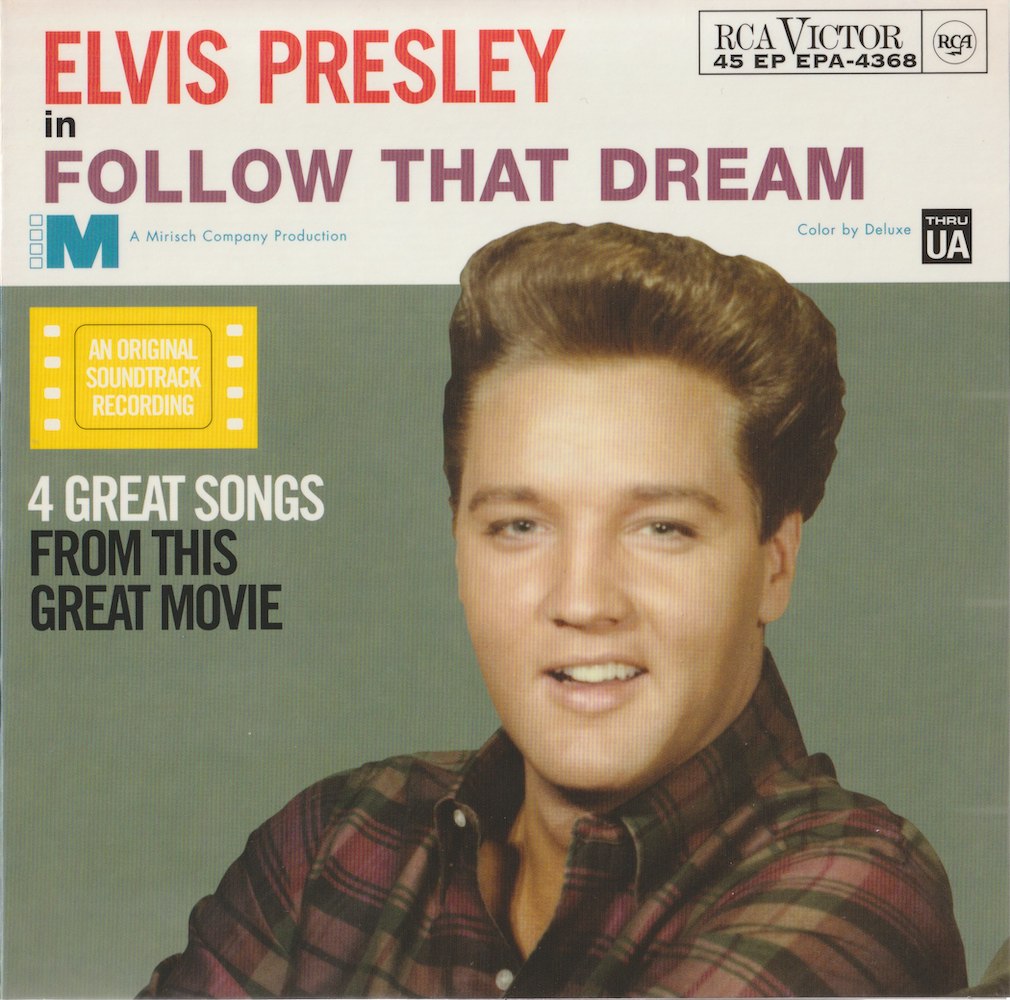
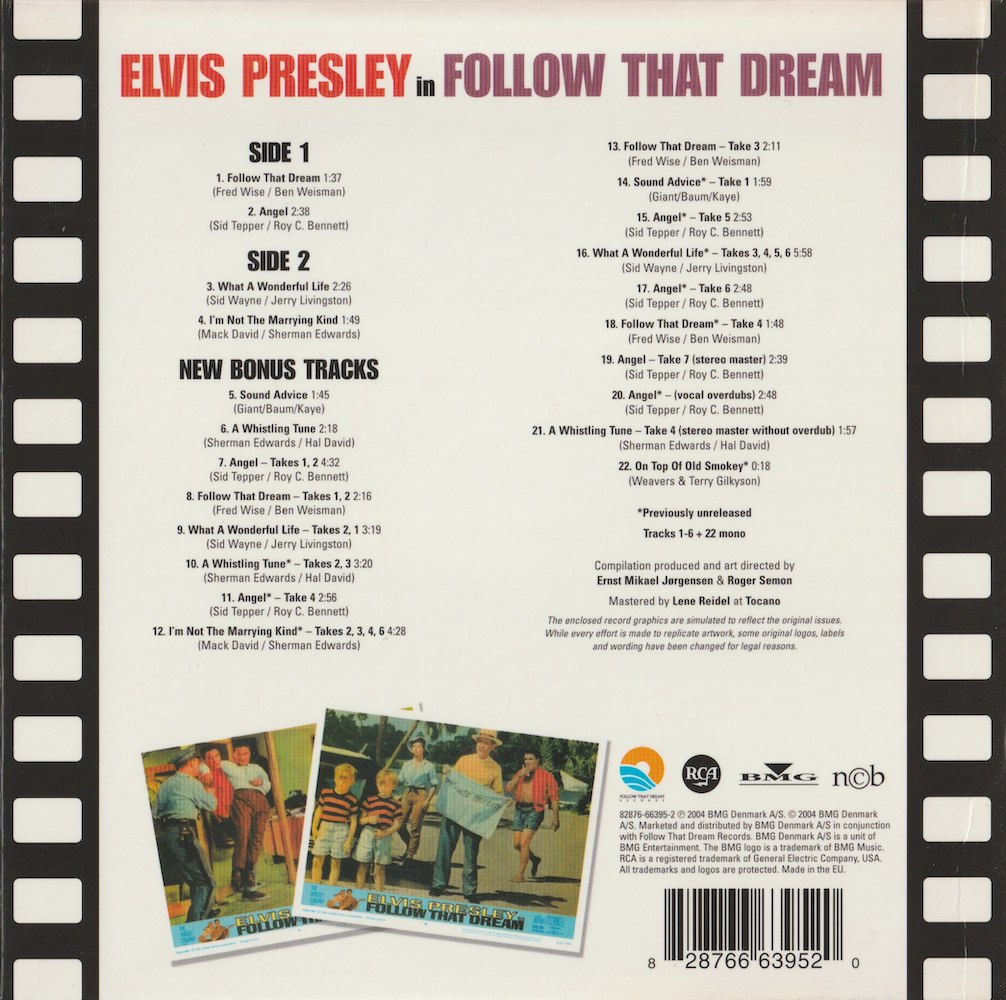
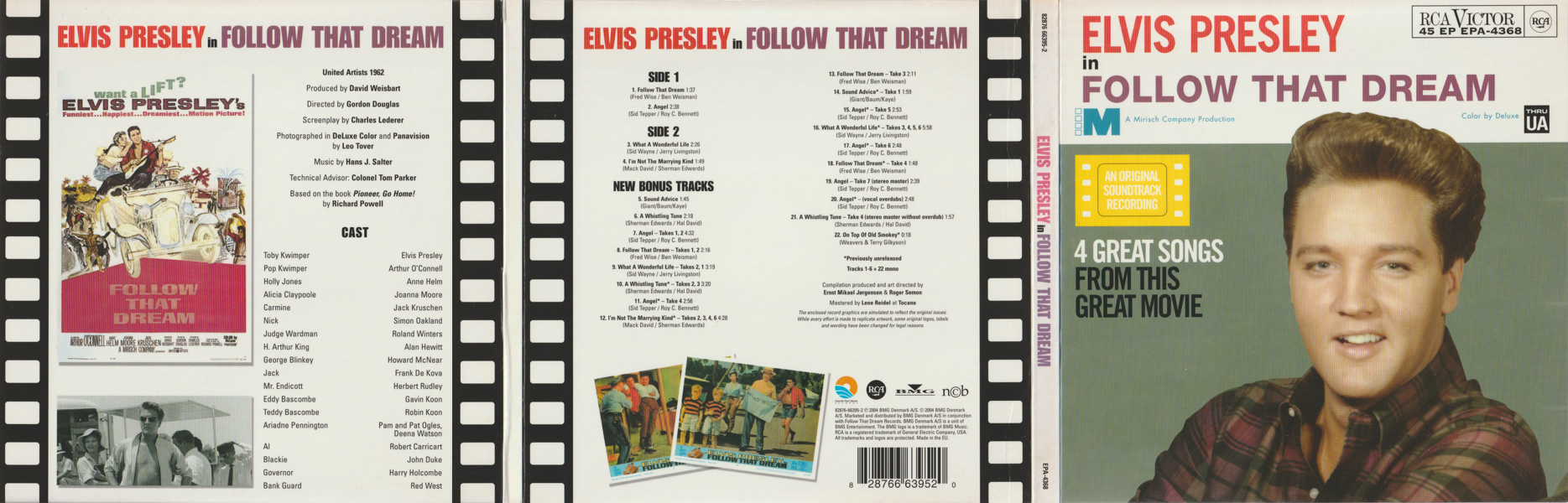
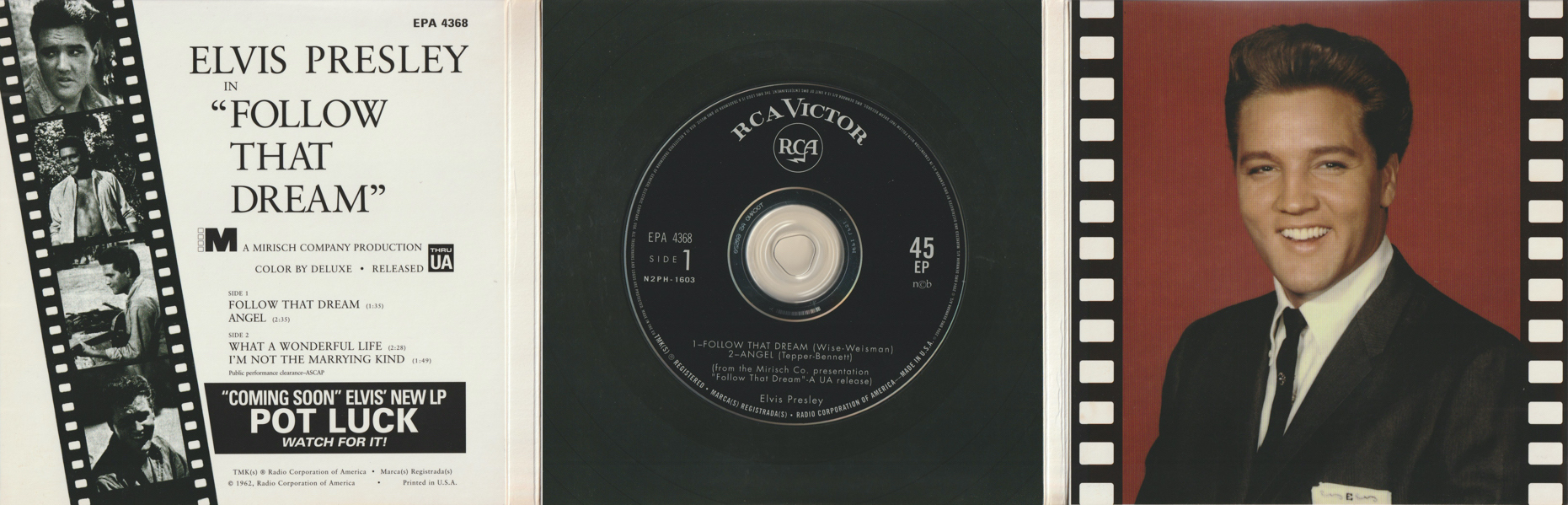
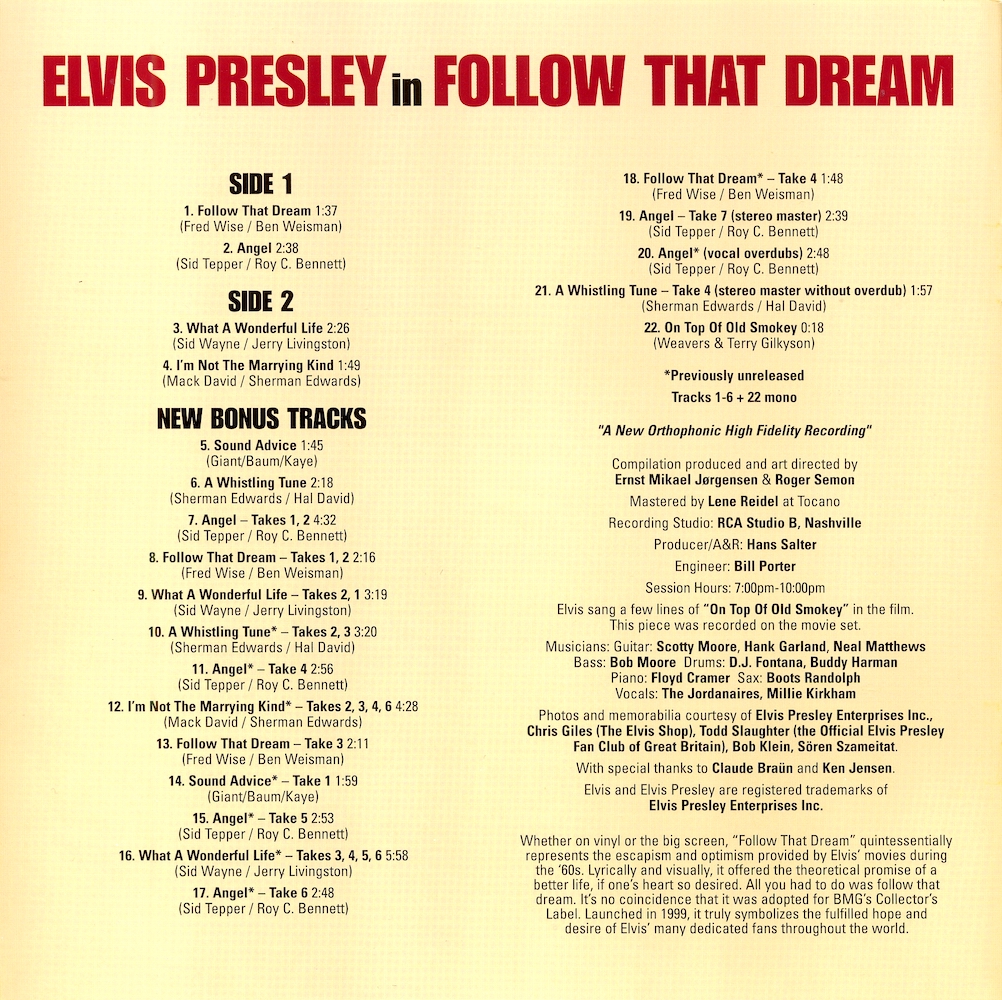
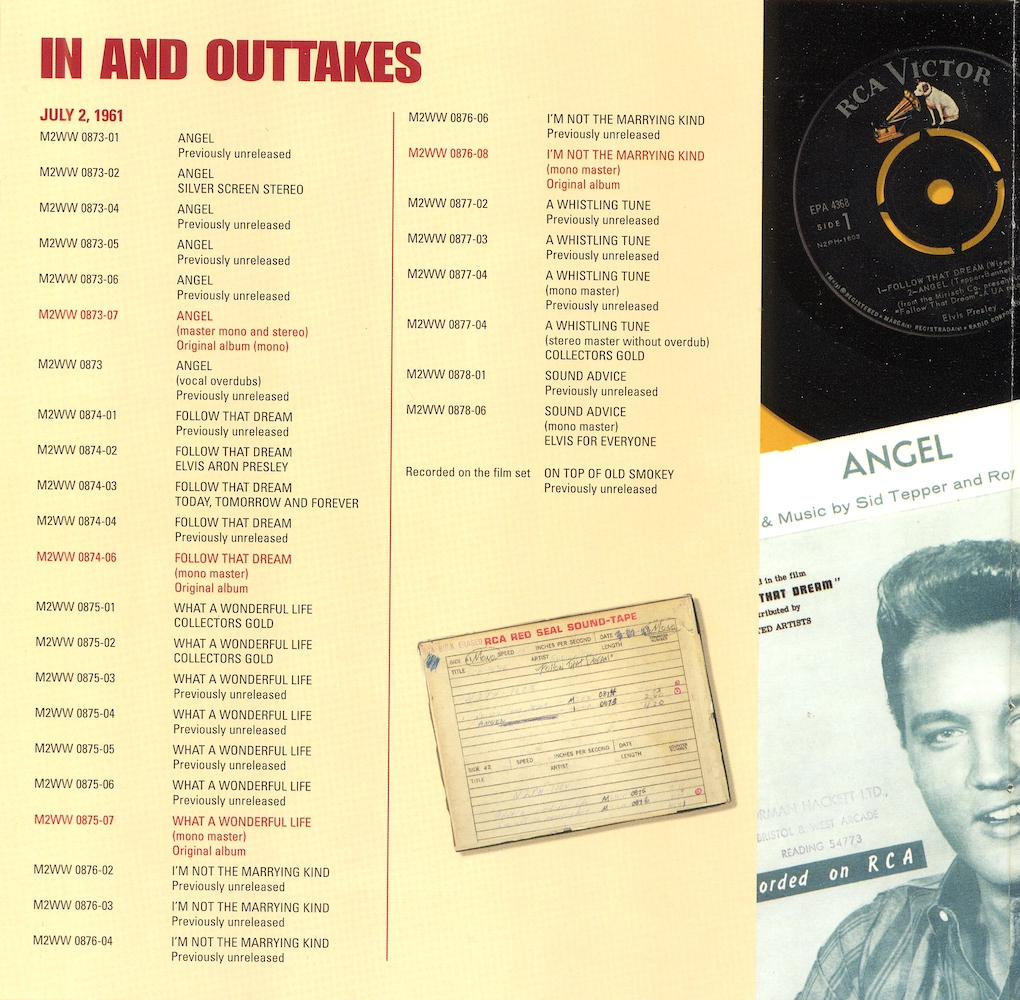
This was the tenth FTD extended movie soundtrack release. This time it focuses on the four-track EP, associated songs, alternate takes, plus a colour booklet full of photos and information.
Many Elvis fans would have previously purchased these soundtracks on vinyl and again via RCA’s Double Features series. Here we continue an in-depth look at each one to see if they are worth buying again.
Follow That Dream - (22 tracks, 59 minutes).
This was Elvis’ ninth movie and although filmed after Blue Hawaii the Elvis "travelogue formula" still hadn’t been established since Blue Hawaii wouldn’t be released until four months later in November. The massive financial success of the Hawaiian movie would, unfortunately, formularise almost every Elvis film from then on.
Luckily Follow That Dream was still a fresh chance for Elvis to try out his relaxed comedy style of acting and without the added pressure of too many soundtrack songs. Filmed almost entirely on location in Florida, it is one of Elvis’ best films. With Blue Hawaii not yet released, the soundtrack recordings were still being considered for exactly what they were, "movie songs".
Elvis’ musical creativity was still rightly focused on creating exciting new studio material and just one week before this soundtrack session, Elvis had recorded the magnificent double A-side of ‘(Marie’s The Name) His Latest Flame’ / ‘Little Sister’. In 1961, Elvis was still re-discovering life after the army years and hardly had a moment to breathe between work commitments. Just four months previously on March 25 Elvis had performed the magnificent Bloch Arena Pearl Harbor benefit concert. Little did he know that it would be his last live appearance for eight years!
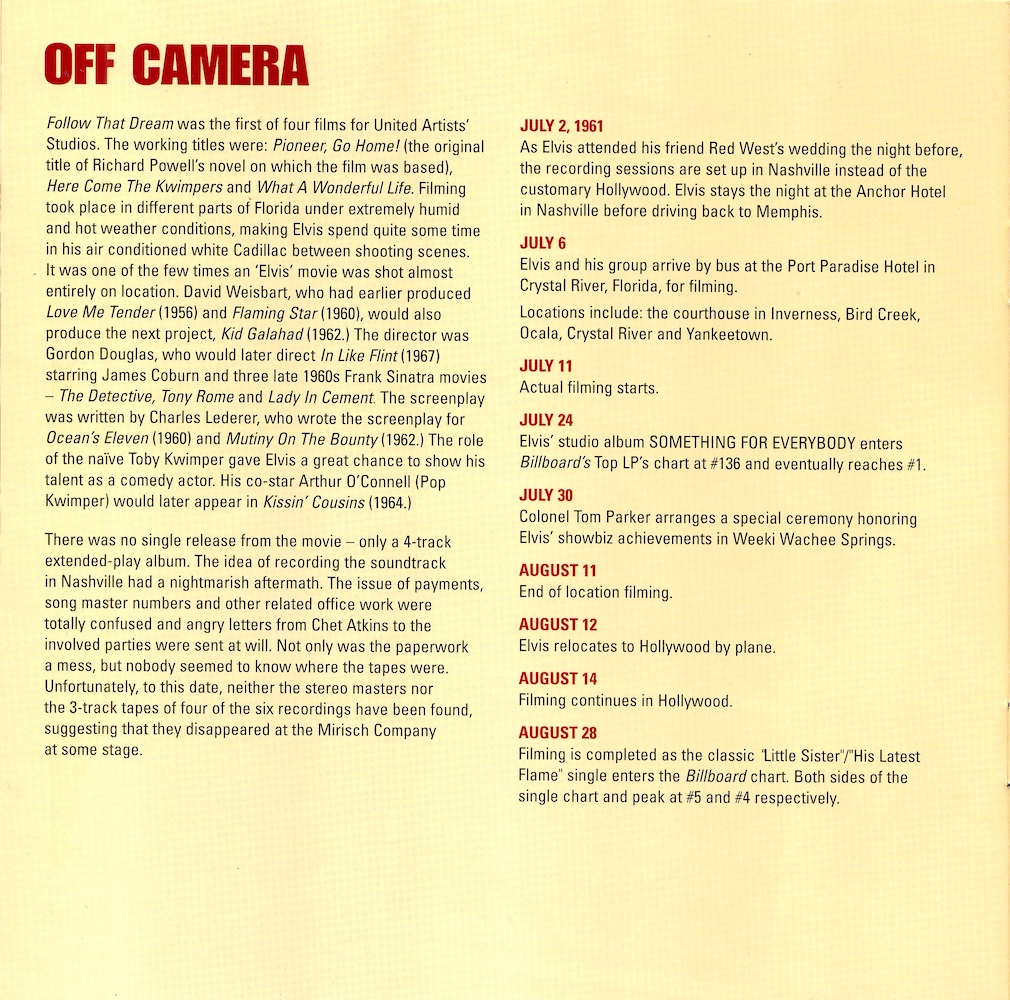
The Follow That Dream film shoot was, in some ways, a holiday for Elvis. He towed his new twenty-two-foot power boat down to Florida for the duration and, along with the "Memphis Mafia", enjoyed regular water-skiing at Crystal River.
During the filming Elvis also dated his twenty- two-year-old co-star Anne Helm. In an interesting 1995 interview she said, "I don’t remember him talking much about his feelings, but he did share with me that he was offered a part in The Fugitive Kind that was based on Tennessee Williams’ play, with Elia Kazan (A Streetcar Named Desire) directing. It was a wonderful movie, I mean, almost written for Elvis. He didn’t say he had regrets, but my feeling was that he did." She also added, "In those days we were very promiscuous, and of course I knew he was having a lot of affairs, but we really adored one another, I mean, I really loved him. I just sensed that his life was very compartmentalised."
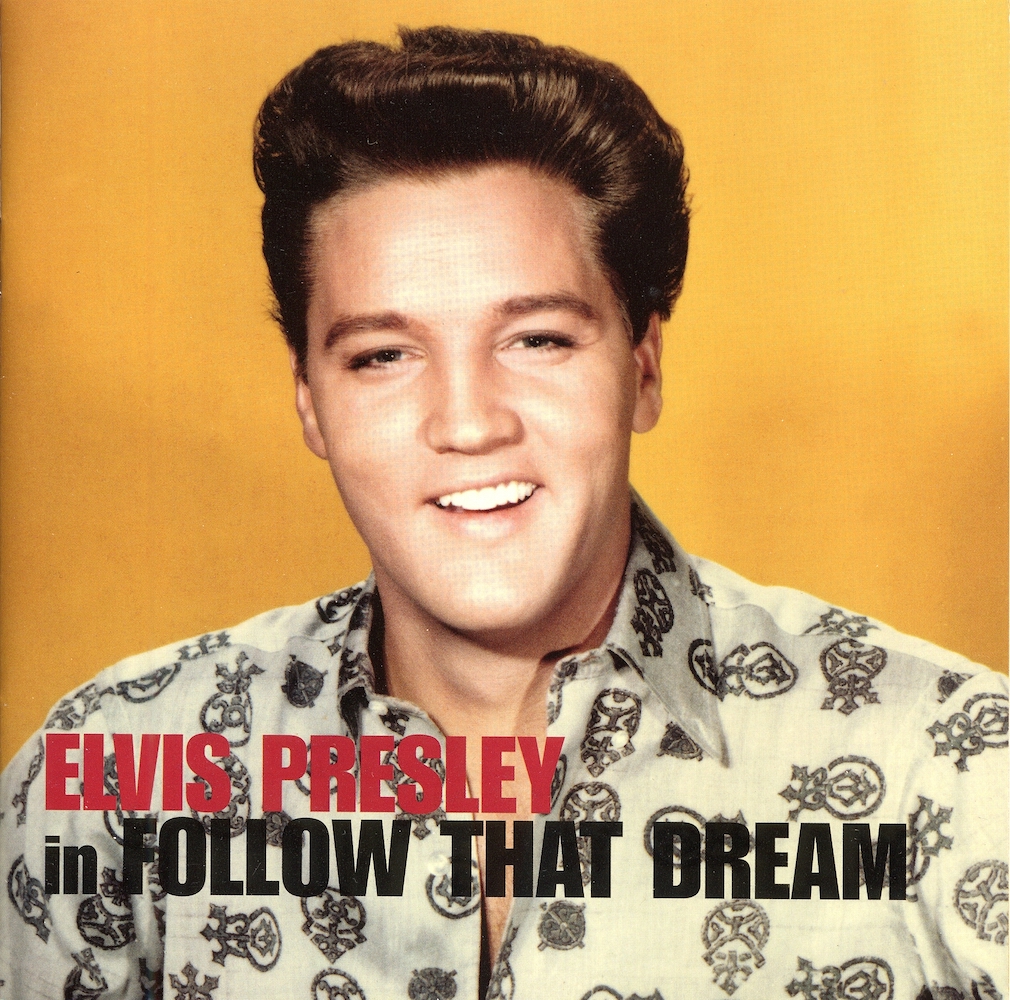
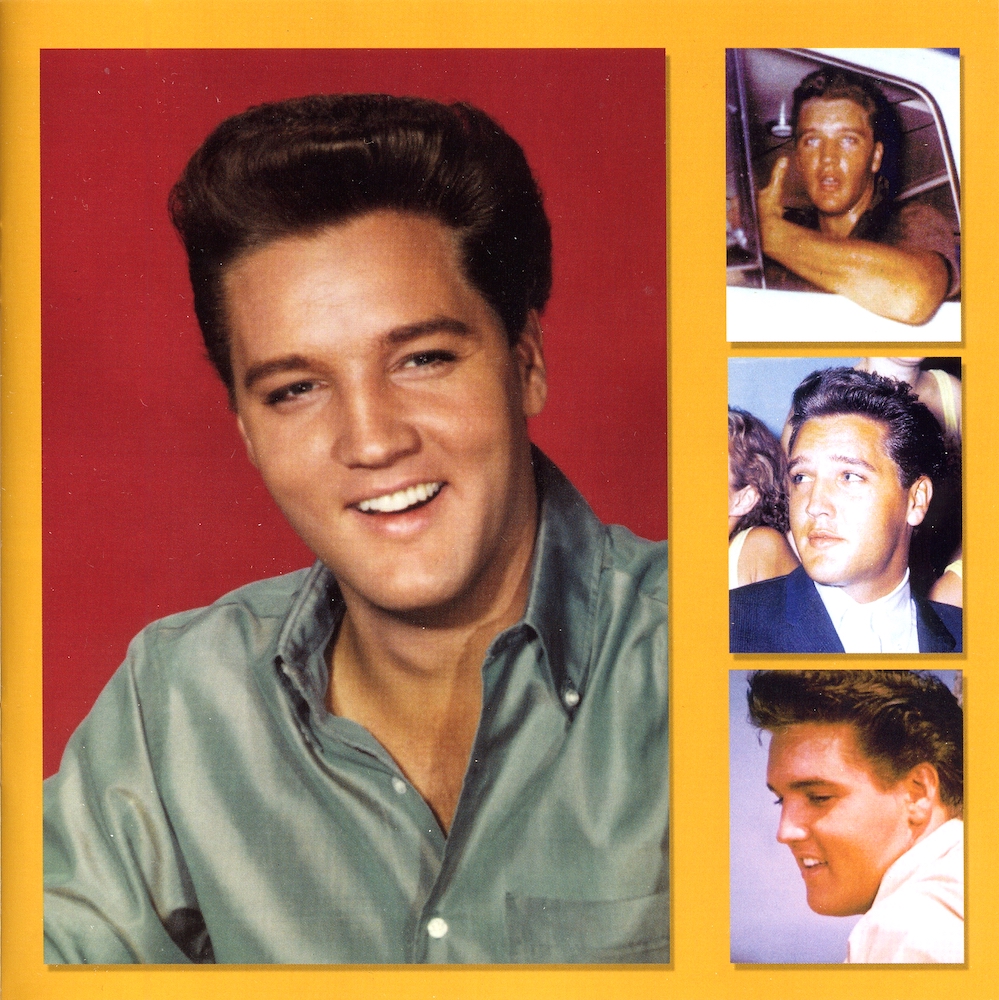
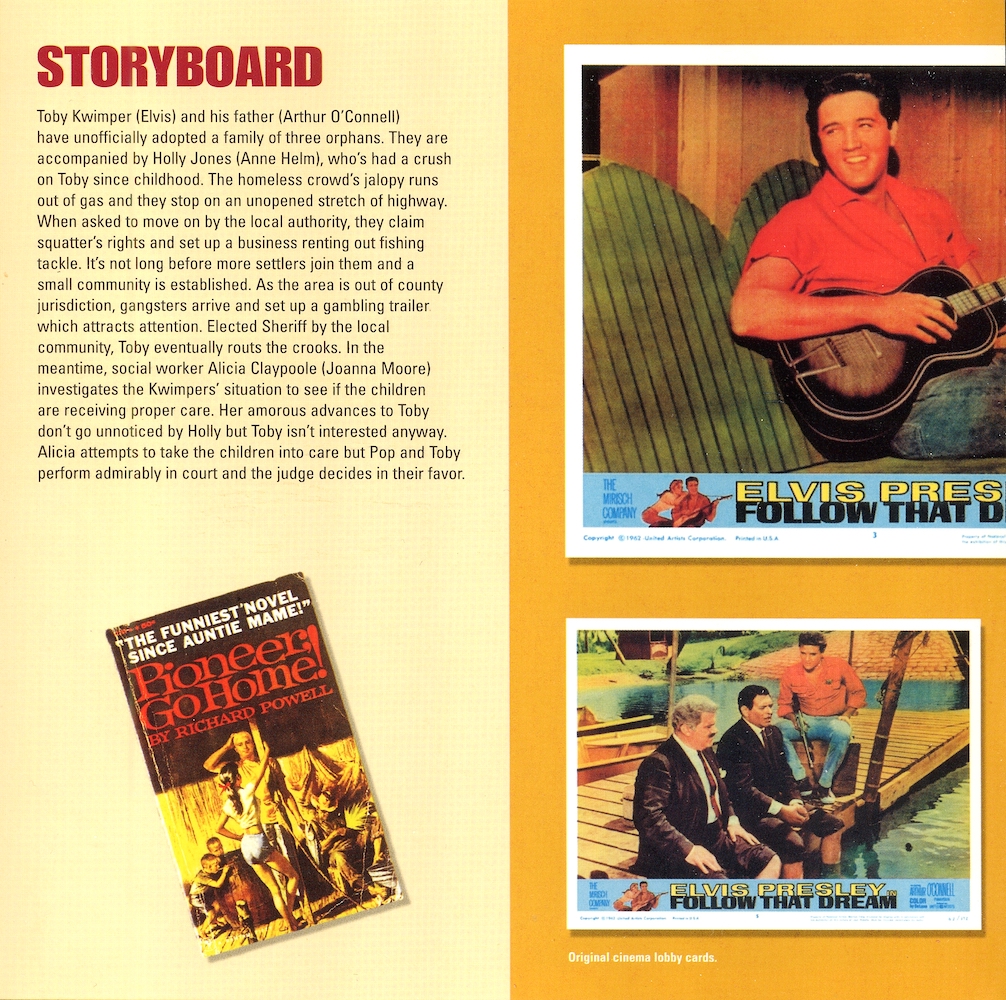
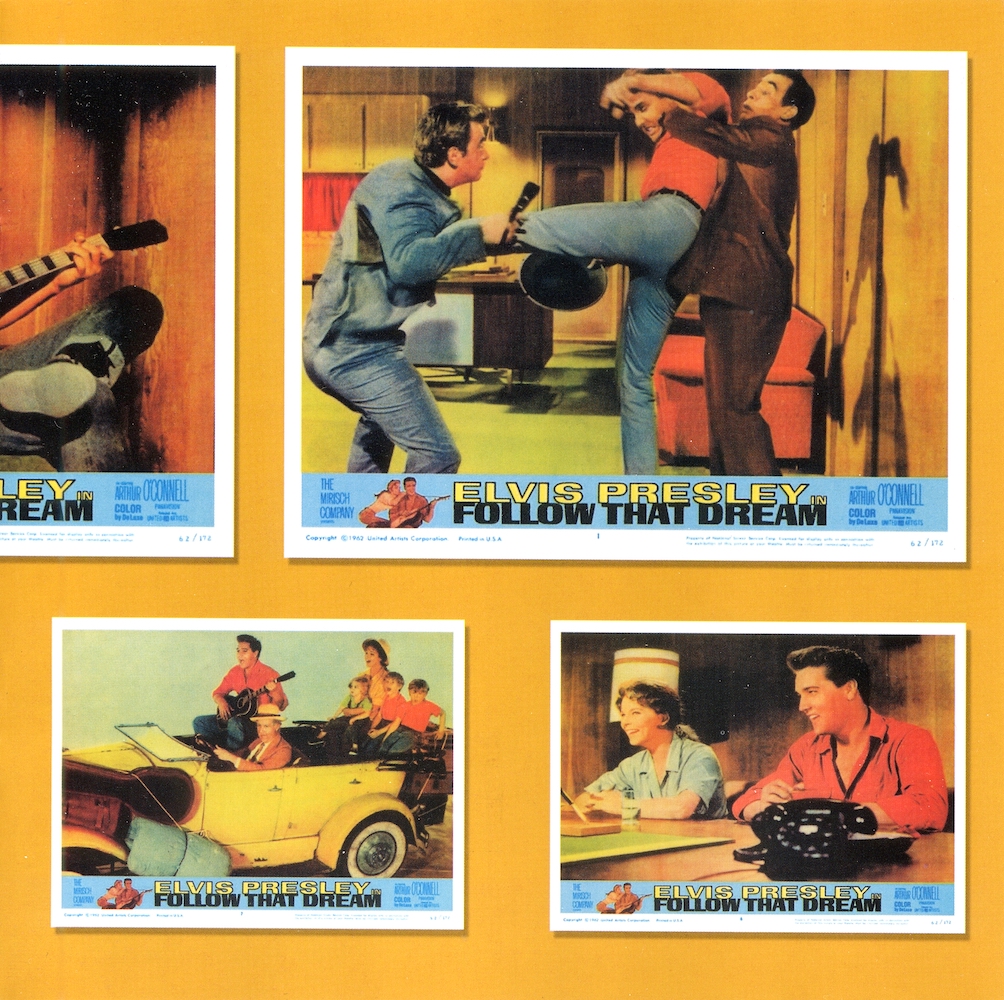
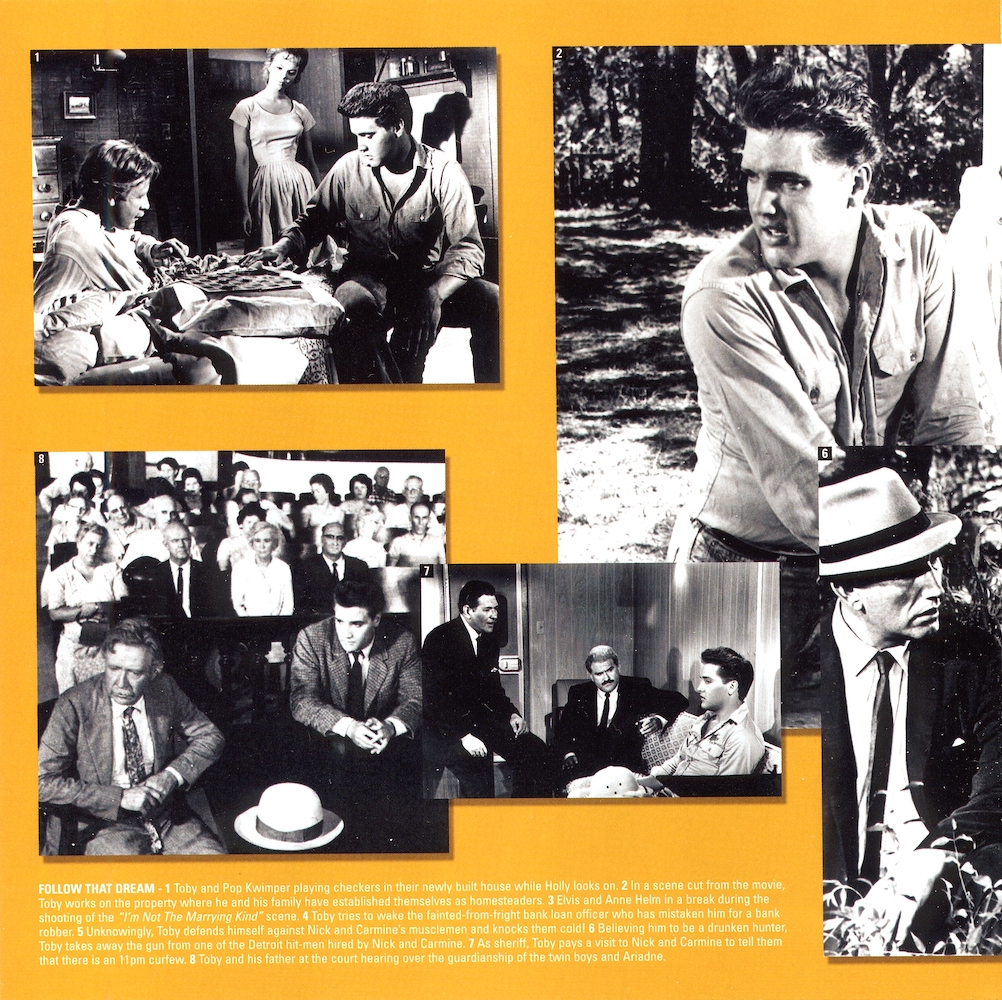
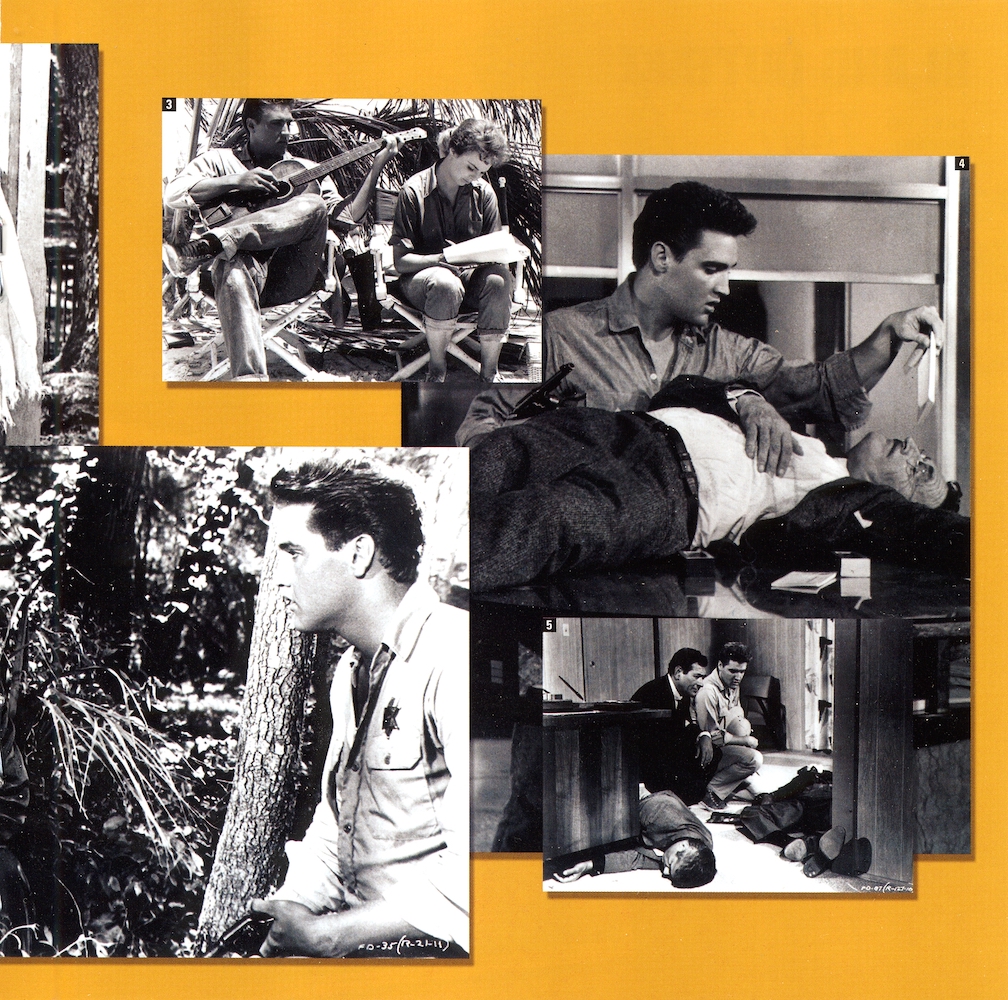
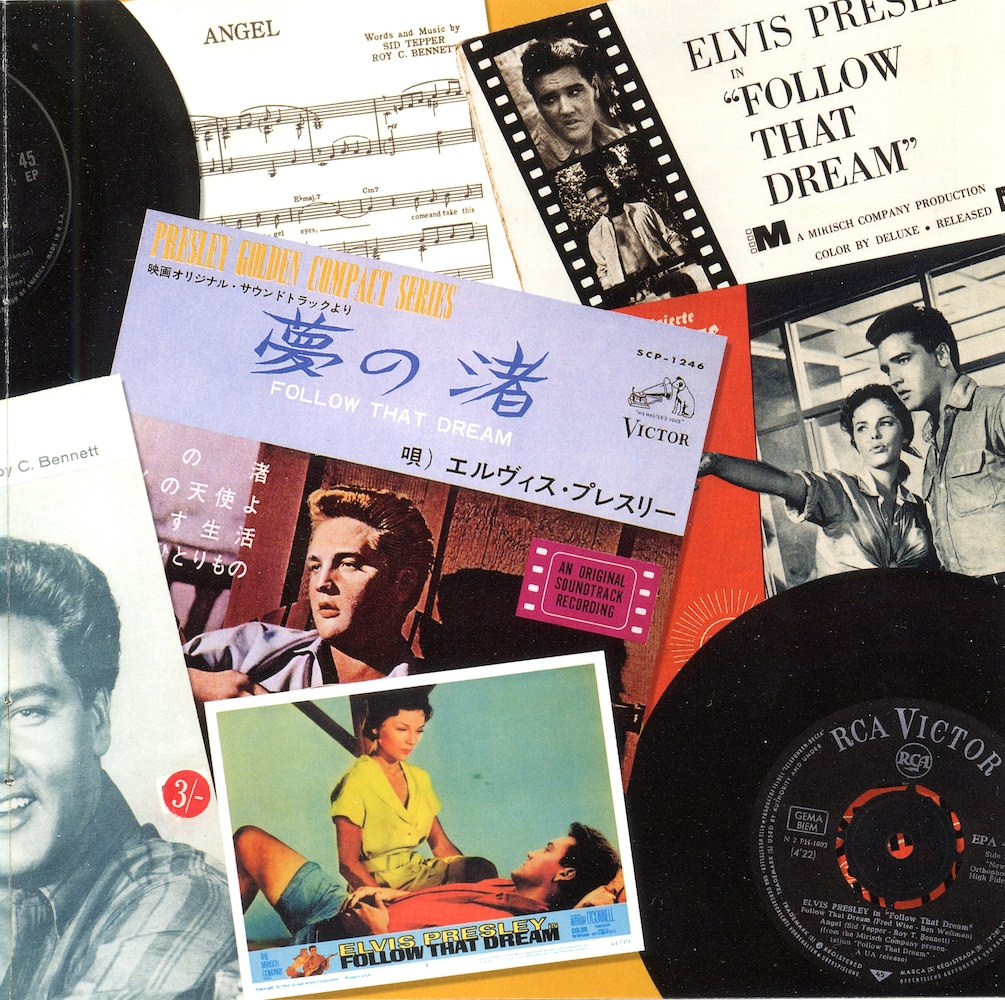
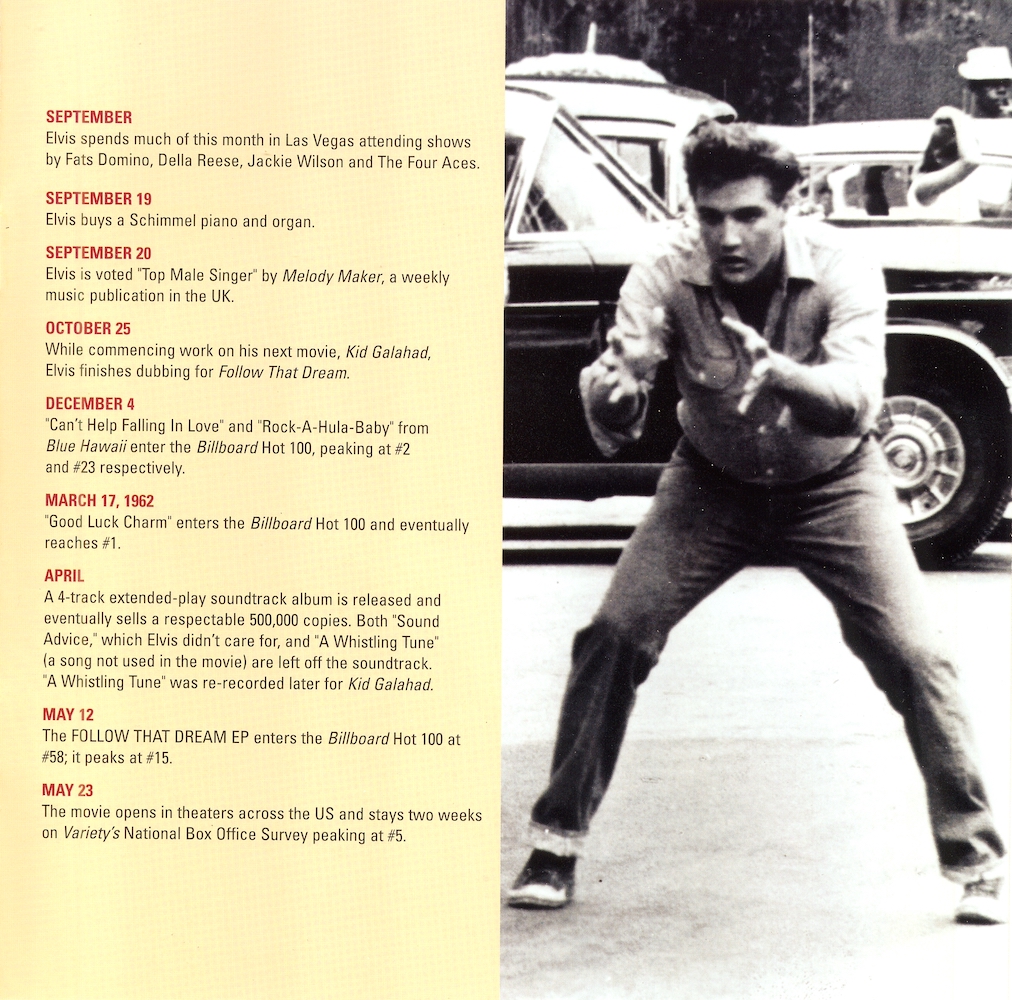
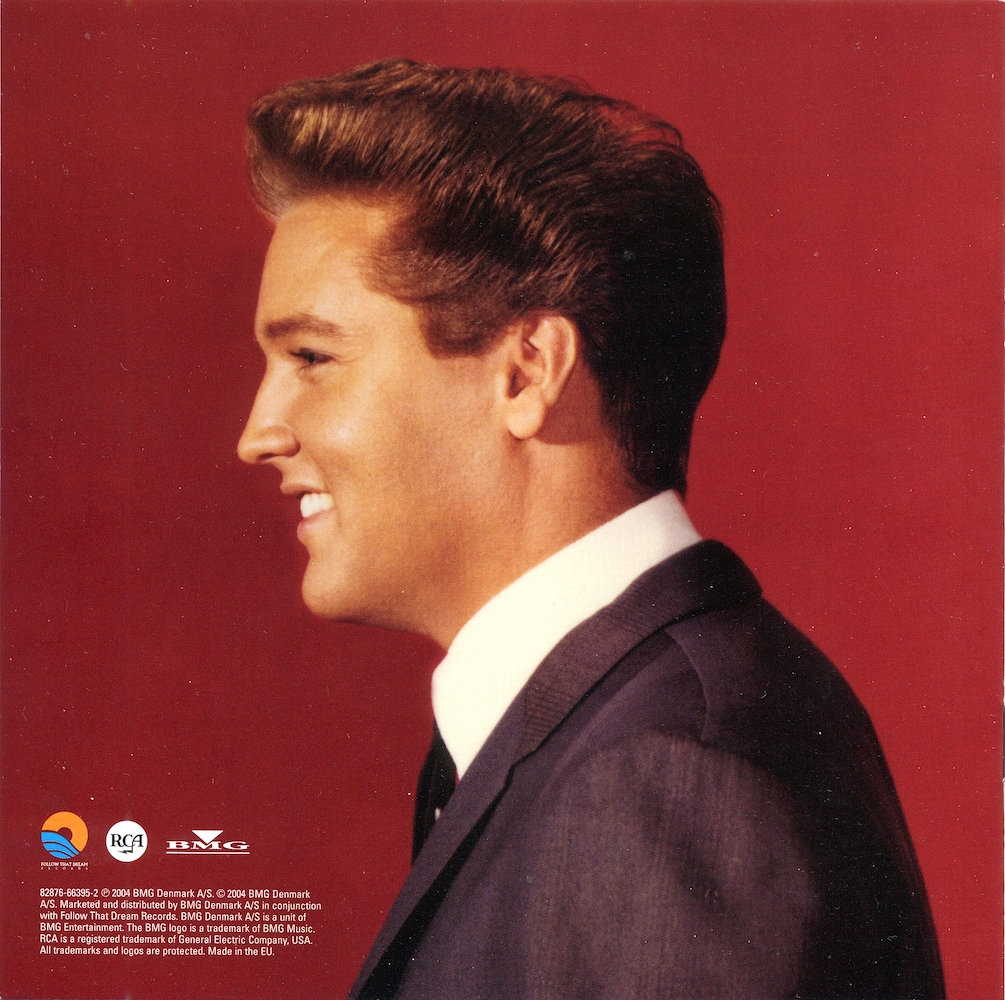
The FTD sleeve and booklet contains the usual first-rate mix of photos and memorabilia. A nice touch here is the fact that Elvis’ hair is his natural colour and he looks healthy and relaxed in every photo. Elvis of course dyed his hair black from 1957, except for his time in the army and this brief period in 1961.
After the recording session Elvis asked for the track ‘Sound Advice’ not to be released on record and ‘A Whistling Tune’ was dropped from the movie - only to be re-recorded for his following film Kid Galahad.
Although only six songs are involved, plus eighteen seconds of ‘On Top Of Old Smokey’ from the film itself, the CD runs fifty-nine minutes, five minutes longer than Double Trouble, the last FTD soundtrack release!
The Follow That Dream EP made #15 in the US charts. This was a fair placing for a soundtrack EP, released just two months after ‘Good Luck Charm’ had made #1.
The legendary Hank Garland, who died in December 2004, was Elvis’ lead guitarist during this period. Follow That Dream would sadly be his last recording session before his tragic car crash.
While the title track and ‘Angel’ are fine songs, the other material was rather weak compared to Elvis’ other 1961 work. Also, as noted on the sleeve, the stereo masters from the original EP (except ‘Angel’) have been lost. All the original mono versions here sound extremely flat and muffled and an odd echo effect was added to the whole track at the time, most noticeable on ‘Angel’.
The real joy of this CD is hearing these songs in stereo, which lets you appreciate Elvis’ great band working in Nashville’s Studio B.
The soundtrack recordings really burst into life immediately you get to the stereo outtakes. However, a real disappointment here is that the stereo master of ‘Angel’ runs at too slow a speed. It definitely drags and sounds like an analogue tape transfer error. The same version of this song on Double Features or the Command Performances does not have this fault.
Ridiculously, it actually sounds better on the Kwimper bootleg CD Keep Following That Dream which was released in 2000!
Elvis recorded all of these tracks in one night’s work and with the songs well rehearsed there is, unfortunately, very little variation between each take, and surprisingly little studio banter.
Looking closer at the outtakes ...
‘Angel’ - This song shows off Elvis' beautiful vocal range, as well as some cool double-bass work by Bobby Moore. Take 1 ends with Elvis stumbling over his words and adding a nice whistle. Take 2 is already near perfect, but the band are still using a fade-out rather than the definite ending of the master. Listen out for Elvis’ slight laugh at the very end, indicating his satisfaction with the take.
By Take 4 they have created the final ending, but haven’t perfected it yet. Takes 5 and 6 are just beautiful, and only emphasise how Elvis strived for perfection, since these appear to be both acceptable versions. A very nice addition is having Elvis’ two attempts at trying a vocal overdub. While both fail halfway through, Elvis’ solo vocal on the right-hand channel lets you hear his every breath and intake. It is really worth turning off the band playback on the left channel, just to hear Elvis on his own.
‘Follow That Dream’ - On Take 1 Elvis misses the intro saying, "Sorry, darn!", but it is Take 2 that is the real delight. Previously released, on the Elvis Aron Presley box-set, the audio mix is improved here with much clearer percussion and background vocals, and with the fade-out extended. The tempo is a little slower and Elvis sounds slightly tentative, giving it an interesting rehearsal feel. Take 3 is the same as featured on the Today, Tomorrow And Forever box-set (and in the same quality) but here there is some extra studio chatter at the start, with Elvis sounding very business like. Take 4 has the assured vocal and bounce of the final master, and it was this version that was released on the Command Performances box-set (although incorrectly Take 2 was indicated). This FTD cover says “previously unreleased” but this is not the case.
‘What A Wonderful Life’ - Takes 2 and 1 were featured on the Collector’s Gold box-set but with the studio banter edited. These versions again have a nice rougher feel and the band haven’t yet worked out the break structure. Even Hank Garland’s guitar work is a little messy! Takes 3, 4 and 5 all fall apart as the band, or Elvis, again mess up the break. Take 6 is the gem that sounds so much better in stereo and without the original added echo. There is a slight falter on Elvis’ vocal which stopped it becoming the master but, with the excellent audio mix, it is the best sounding version yet released.
'I’m Not The Marrying Kind’ - A real “movie song” with Elvis emphasising its silliness by fooling around with the lyrics at the start of Take 2. Takes 3 and 4 fall apart with Elvis apologising, "Sorry I lost it." The interesting revelation is that, with the band playing alone, the melody sounds quite fine, proving that it is only the pathetic lyric that makes this song so desperately forgettable. Interestingly the poor mono mix of the master has Elvis’ band sounding very much like his original Sun studio trio, but Take 6 with this better mix (at last Floyd Cramer’s jazzy piano work is audible) has a very nice feel. Even with a messed-up ending it is a great sounding version compared to the master.
‘Sound Advice’ - Elvis never wanted this song released, so why would you? A real throw-away, but the simpler arrangement of Take 1 sounds better and also fits the simple lyric. At the end Elvis says, "That was ideal". Elvis was right and they should have stuck with this version. (You have to be thankful that the other Takes 2 to 5, actually featured on the Keep Following the Dream bootleg, are omitted here!)
‘A Whistling Tune’ - The original mono master had that odd "bathroom echo effect" to the whole track. Take 2 breaks down early on, while Take 3 is quite fun since Elvis is totally unsure of the melody and even the pace of the lyric! At the end Elvis even acknowledges this with a grumpy, "Ok, cut it off!"
The stereo master Take 4, without whistling overdub, is the same as on the Collector’s Gold box-set but also has the odd effect of being edited down in length. The real problem here is that the lyric of the song is about a romantic night-time walk, yet these earlier recordings all sound like a fast lunchtime jog! Elvis would re-record it again three months later for his next film Kid Galahad with the slower tempo perfected.
The final track is Elvis singing the American folk song 'On Top Of Old Smokey' taken from the movie soundtrack. At only eighteen seconds long it is hardly an essential inclusion in this soundtrack album, but it is still nice to have it finally released officially.
Verdict
With only six songs, this soundtrack release is very light on content, and with such little musical development they do make relatively repetitive listening. The audio transfer fault on the stereo master of ‘Angel’ is also pretty unjustifiable.
The photos of Elvis however, with his natural glowing brown hair, are quite delicious!
On the positive side, the FTD extended soundtrack releases are becoming very collectable and if you don’t already own the bootleg Keep Following That Dream, this is a nice addition to the set.
This cannot be an essential soundtrack purchase but if Follow That Dream is your favourite movie then the best sounding versions of all the songs really are hidden in their outtakes.