Review by Piers Beagley - Elvis Information Network
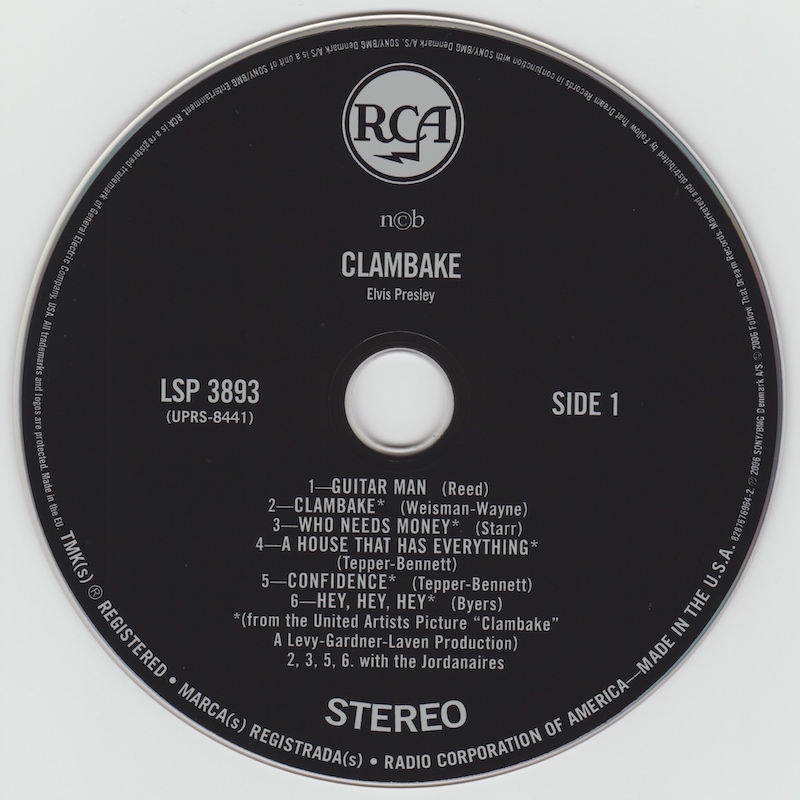
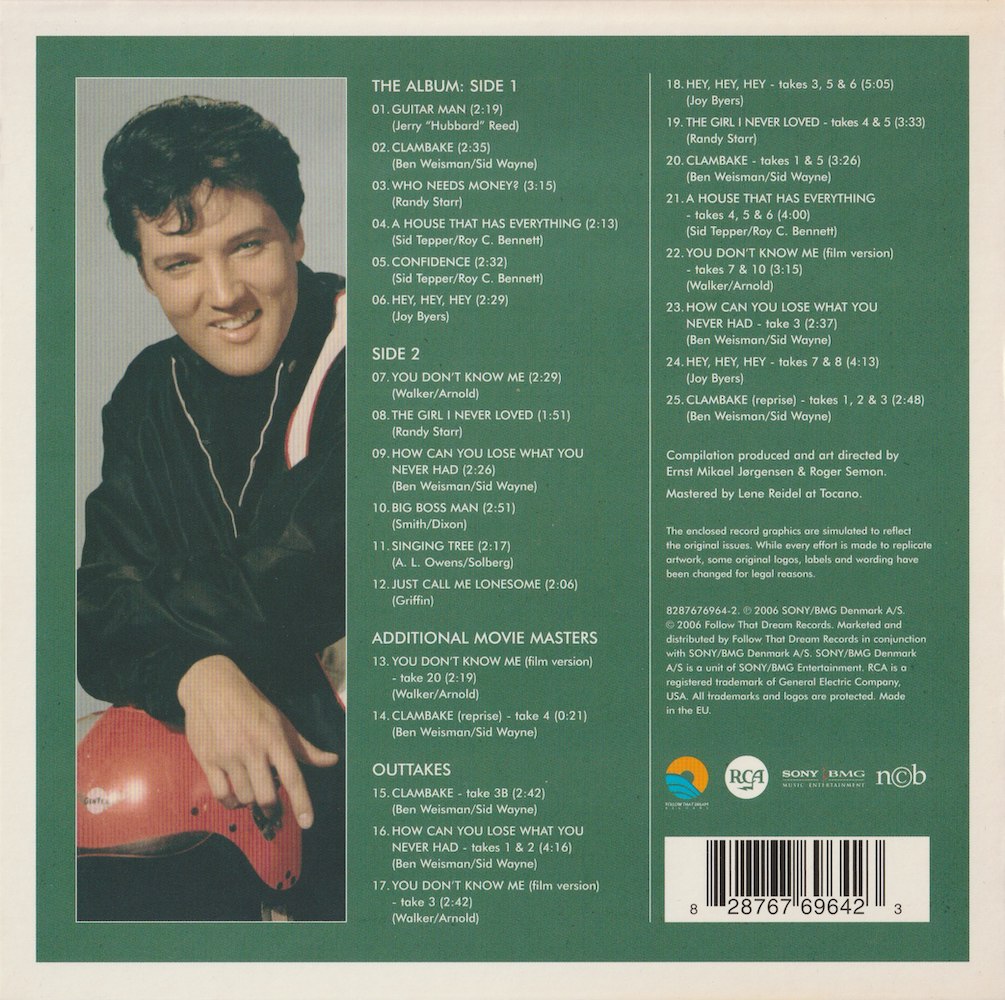
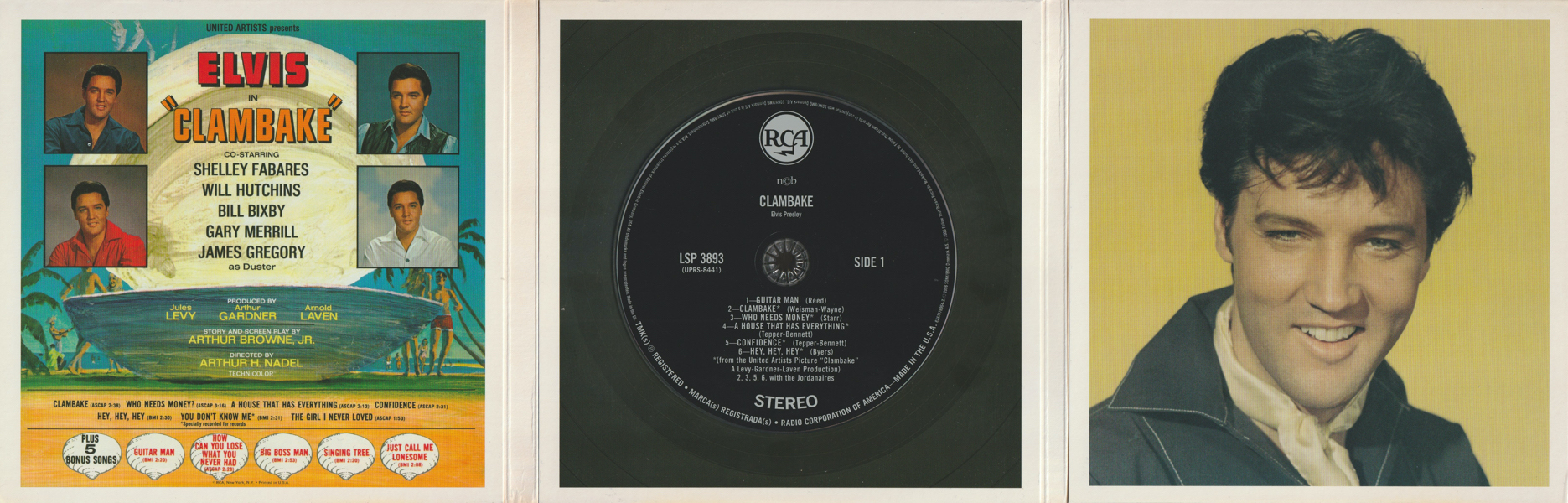
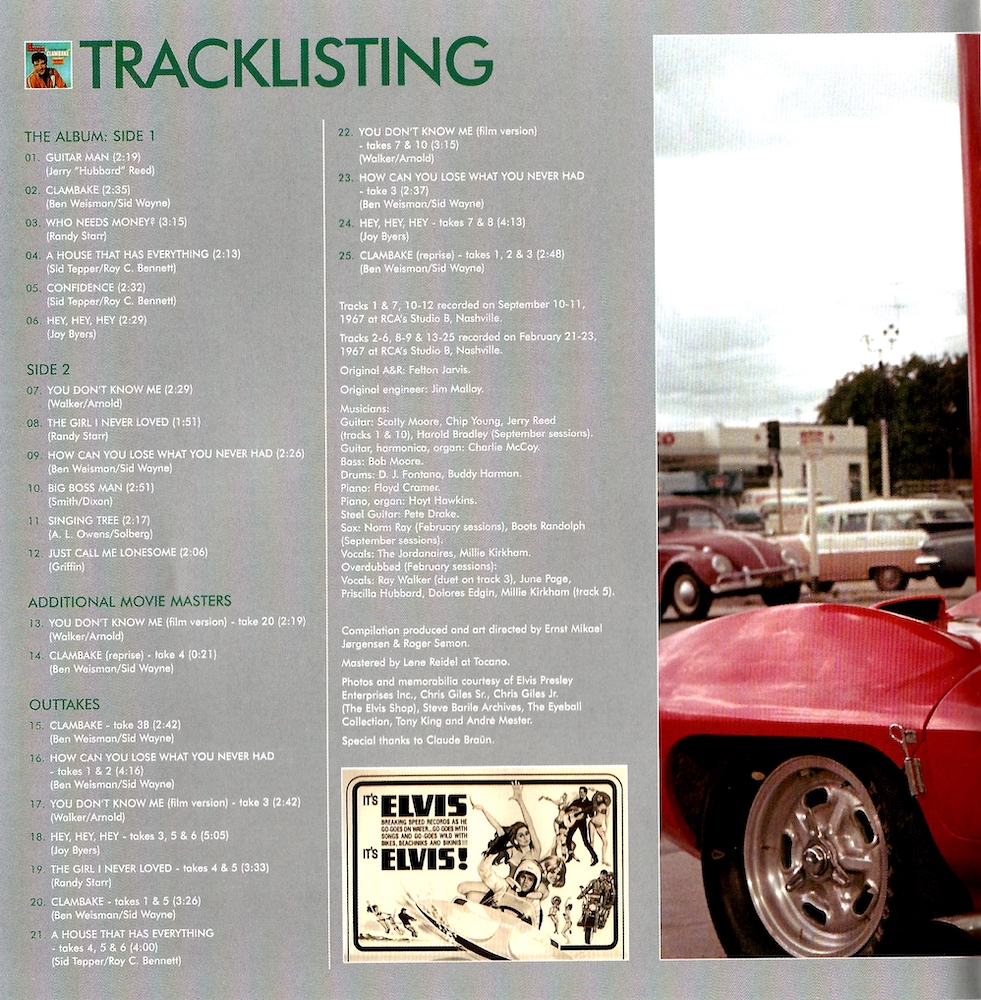
Clambake is the fourteenth FTD extended movie soundtrack release - once again presented with the original LP, alternate takes, plus a colour booklet full of photos and information.
Many Elvis fans would have previously purchased these soundtracks on LP and again via RCA’s Double Features series.
Here we continue an in-depth look at each one to see if they are worth buying again.
Clambake - (25 tracks, 71 minutes).
This was Elvis’ twenty-fifth film and, along with Double Trouble and Easy Come, Easy Go, released in the same year, Elvis’ movie career was as low as it could go.
During this period Elvis had a new passion, his new “Circle G” ranch - and had no desire to go back to Hollywood. Elvis was having fun, even getting up early in the morning to check on the horses. All his entourage moved out of Graceland into new semi-trailers and there were regular races and picnics.
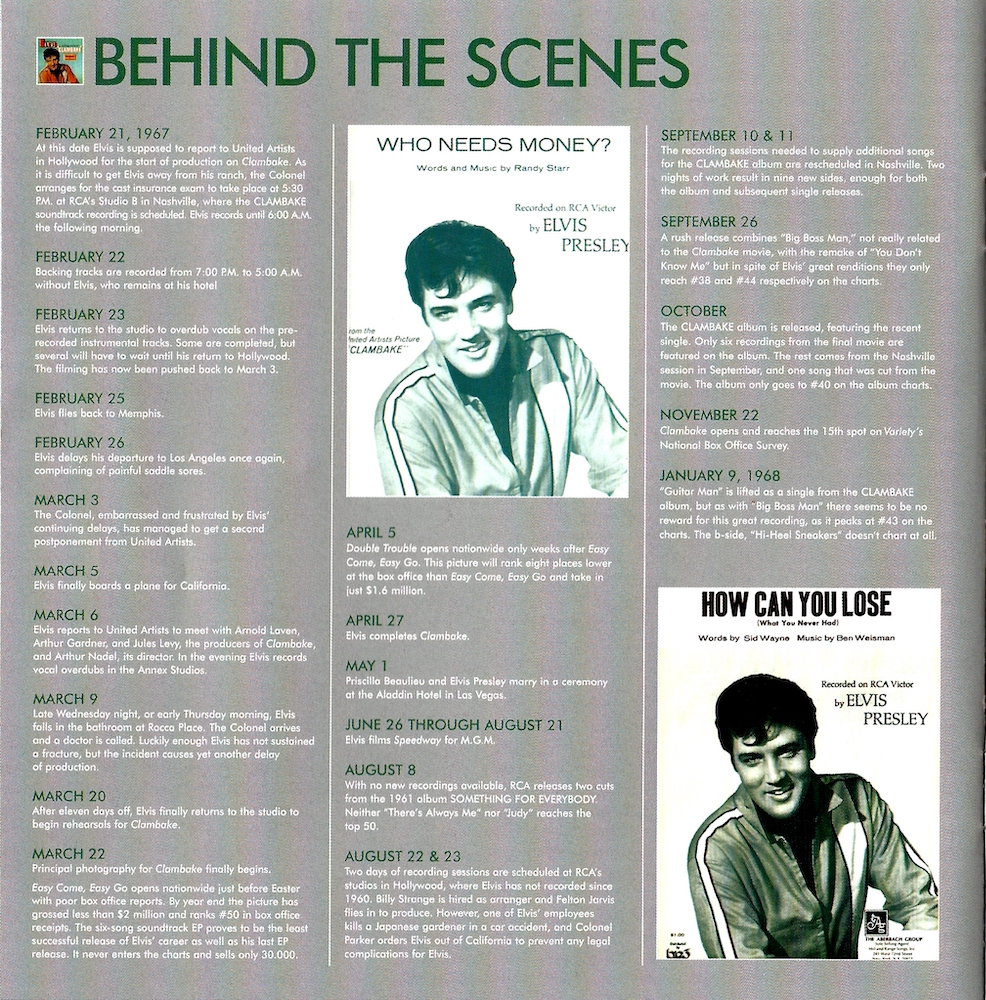
Due to this the Colonel moved the soundtrack recording session to Nashville to make it easier but Elvis still didn’t bother to turn up on the second day. Elvis felt the same with the commencement of the film production, and it was delayed several times for reason as various as “saddle sores” and the well-known Rocca Place concussion incident. (This is where the Colonel berated the Memphis Mafia for not looking after Elvis properly and then suggests that Elvis get rid of his spiritual books).
Filming finally started in March and the Clambake production took five weeks. During this time both Easy Come, Easy Go and Double Trouble were released only two weeks apart. Both were relative failures and the Easy Come, Easy Go EP, from Elvis’ last recording session, only sold a paltry 30,000 copies.
While the soundtrack to Double Trouble was pretty awful, it still had the feel of a movie soundtrack LP. The trouble with the original Clambake LP was that the added bonus songs were from Elvis’ late 1967 ‘Guitar Man’ session which in turn made the soundtrack material sound even worse! After all, this is Elvis’ only soundtrack album that did not start with a song from the film. Going from ‘Guitar Man’ to ‘Clambake’ to ‘Who Needs Money?’, and ‘Confidence’ is extremely jarring.
At least the soundtrack LP ran thirty minutes this time but this was because of the five extra tracks from the later studio session.
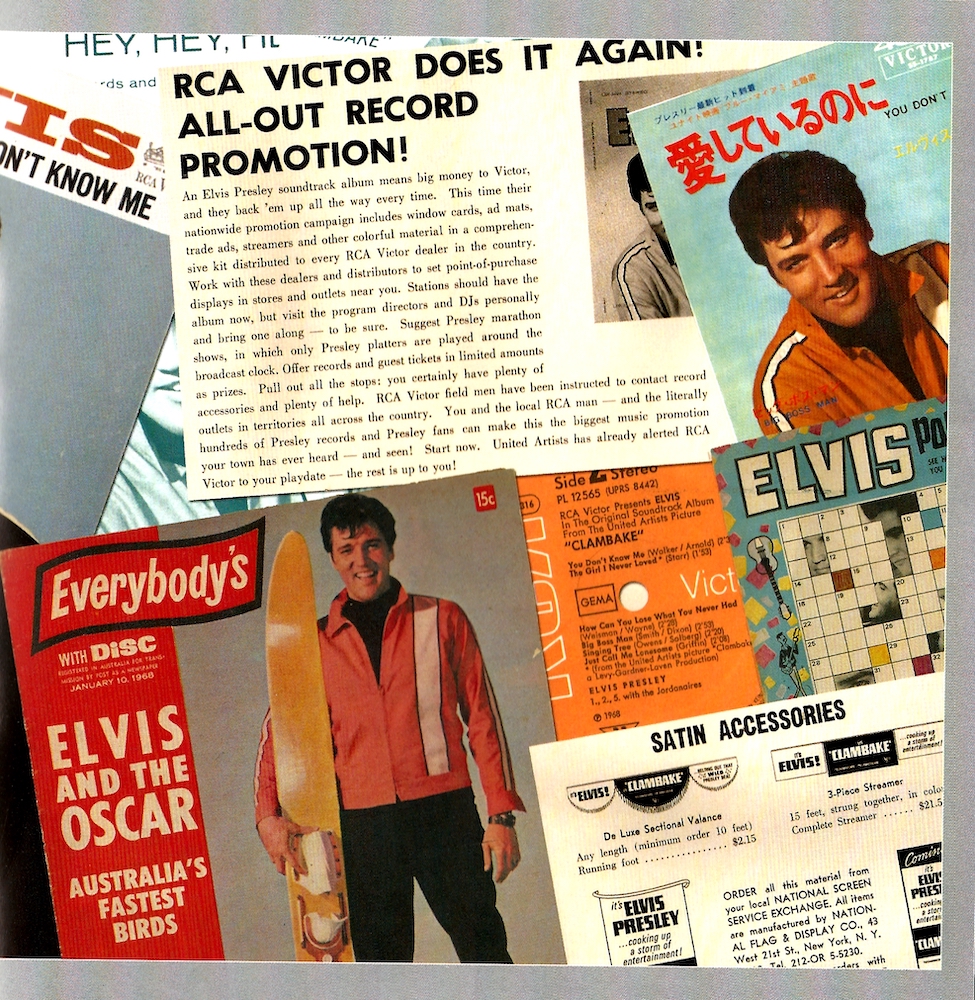
No soundtrack song was deemed worthy of a single release but of course both ‘Guitar Man’ and ‘Big Boss Man’ were single releases. These helped the Clambake soundtrack album struggle to a lowly #40 in the US charts.
Elvis’ disinterest in the soundtrack actually works in our favour as, with the session moved to Studio B in Nashville, at least the sound quality is good and a great improvement on the substandard (Radio Recorders) Double Trouble. However, ‘Who Needs Money?’ and ‘Confidence’ were true humdrum movie-fare and hardly worthy of record release. Elvis probably felt the same since he only recorded vocal overdubs for both songs.
‘Confidence’ is also a straight copy of Frank Sinatra’s Oscar-winning song ‘High Hopes’ from his 1959 film Hole In The Head. How Sid Tepper and Roy Bennett got away without crediting original writers Sammy Cahn and Jimmy Van Heusen I have no idea. Unfortunately, another track ‘Hey, Hey, Hey’ is also one of Elvis’ lamest soundtrack numbers.
Even with the general poor content there are also some minor quibbles with this release. The LP tape master has been used for the original twelve tracks and the audio isn’t as bright as on the earlier Double Features release. It is a shame that the studio tracks were also better on the ‘60s box-set, ‘Just Call Me Lonesome’ being particularly poor here.
In a strange move, FTD (mastering engineer Lene Reidel) has also decided to add unnecessary echo to the outtakes. The echo is not on the LP masters for the same songs so why add it to the outtakes? While this may sound ok on a couple of tracks, the intimacy of some songs i.e. ‘A House That Has Everything’ in that special atmosphere of Studio B is lost. At times it sounds as if Elvis is singing down the corridor in the toilet! The original clean studio tapes of Elvis singing with no echo sound more intimate and much better.
Finally there is also a disc mastering fault which may cause some CD players to skip at the beginning of Track 24 (’Hey, Hey, Hey’ takes 7 and 8) and halfway through Track 25 (’Clambake’ - reprise takes 1 to 3). This, however, happened on only two of the ten CD players that I tried, and not on every occasion.
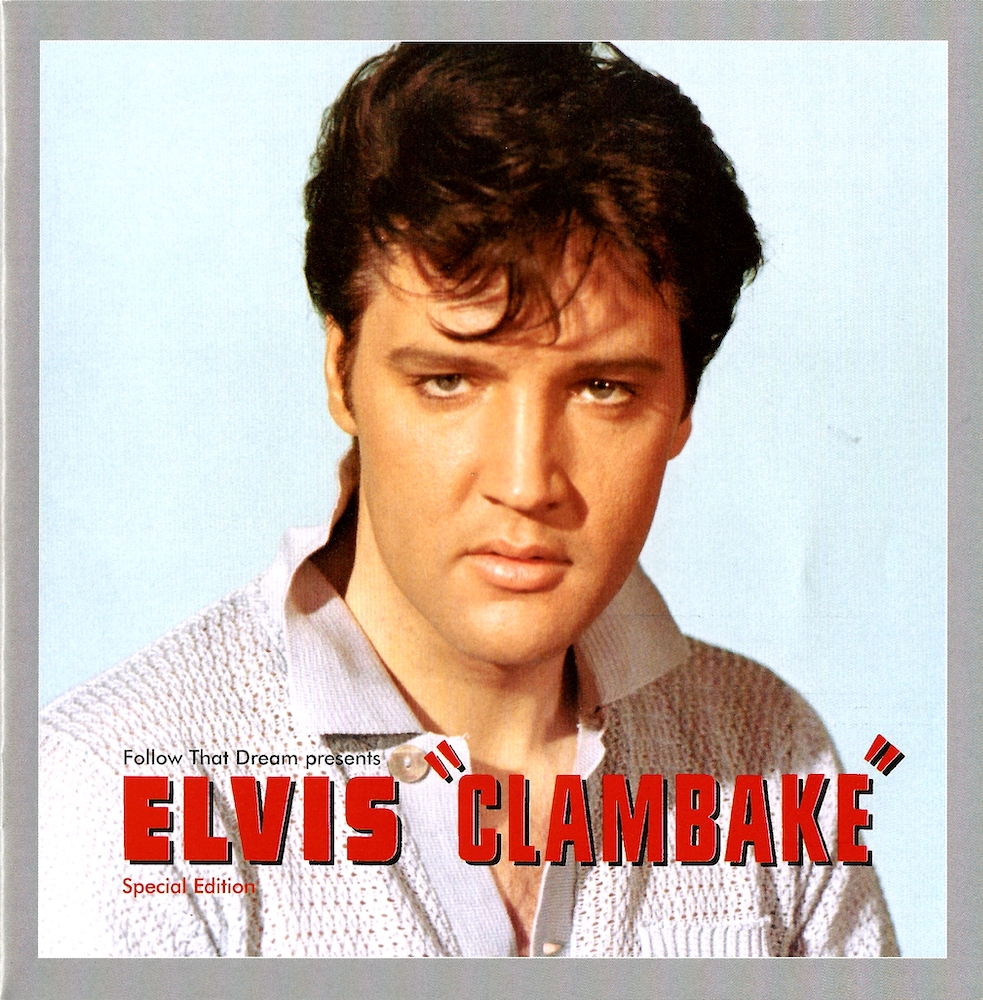
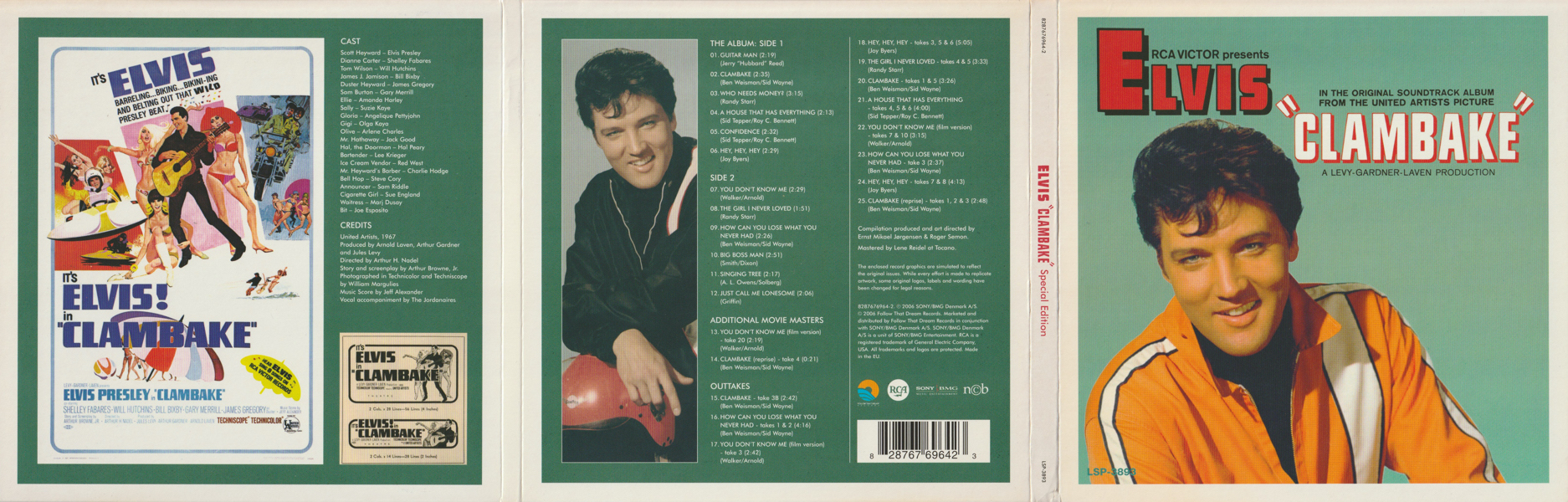
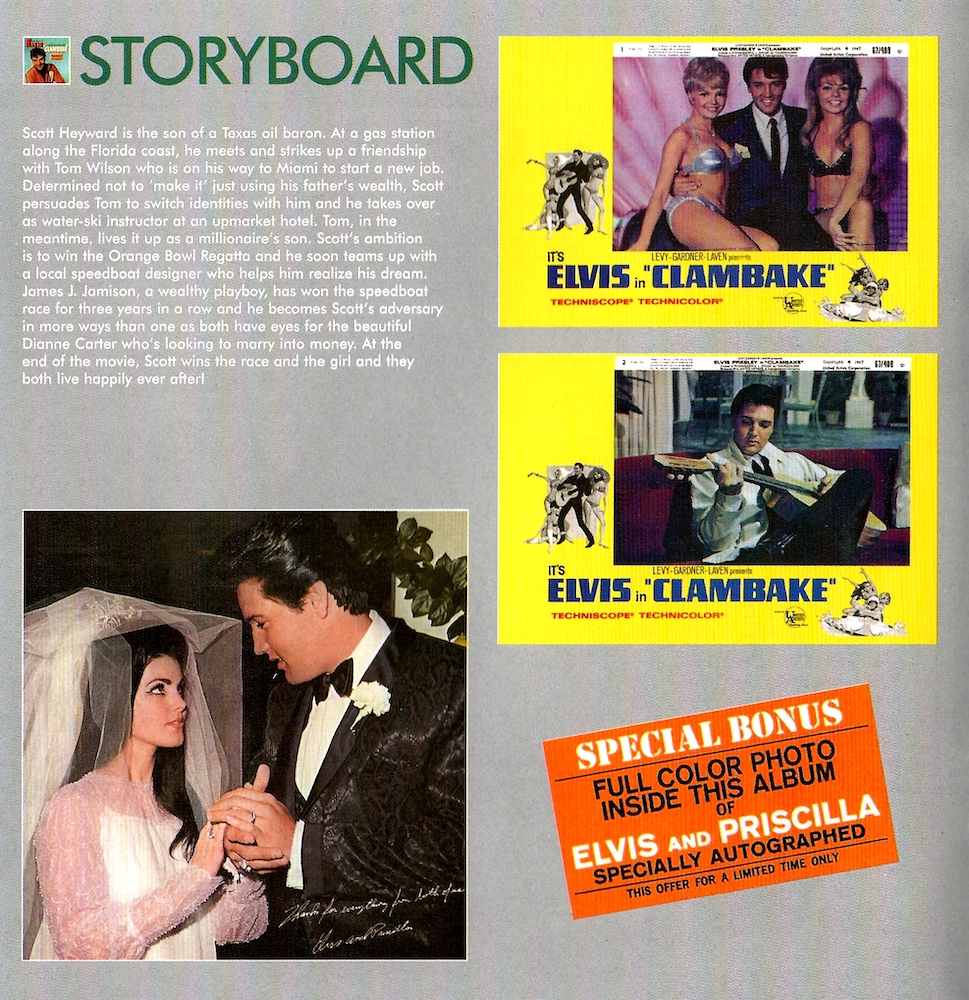
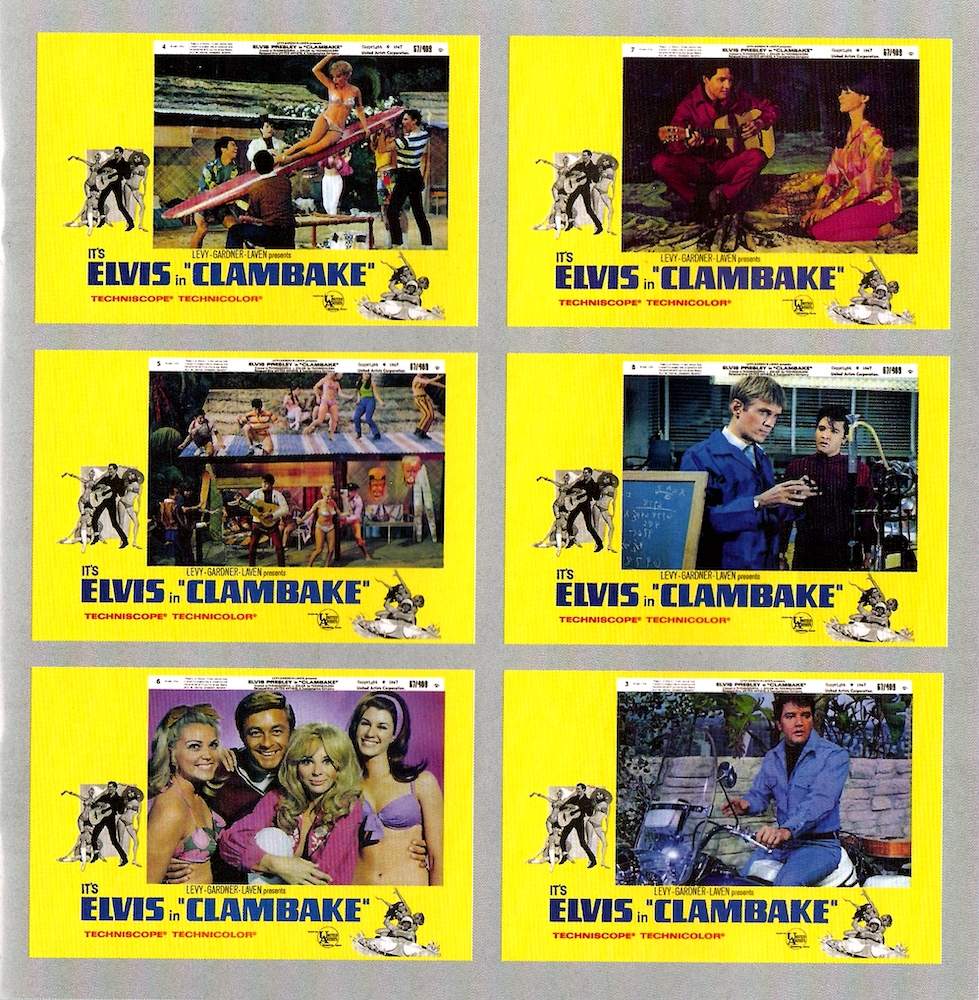
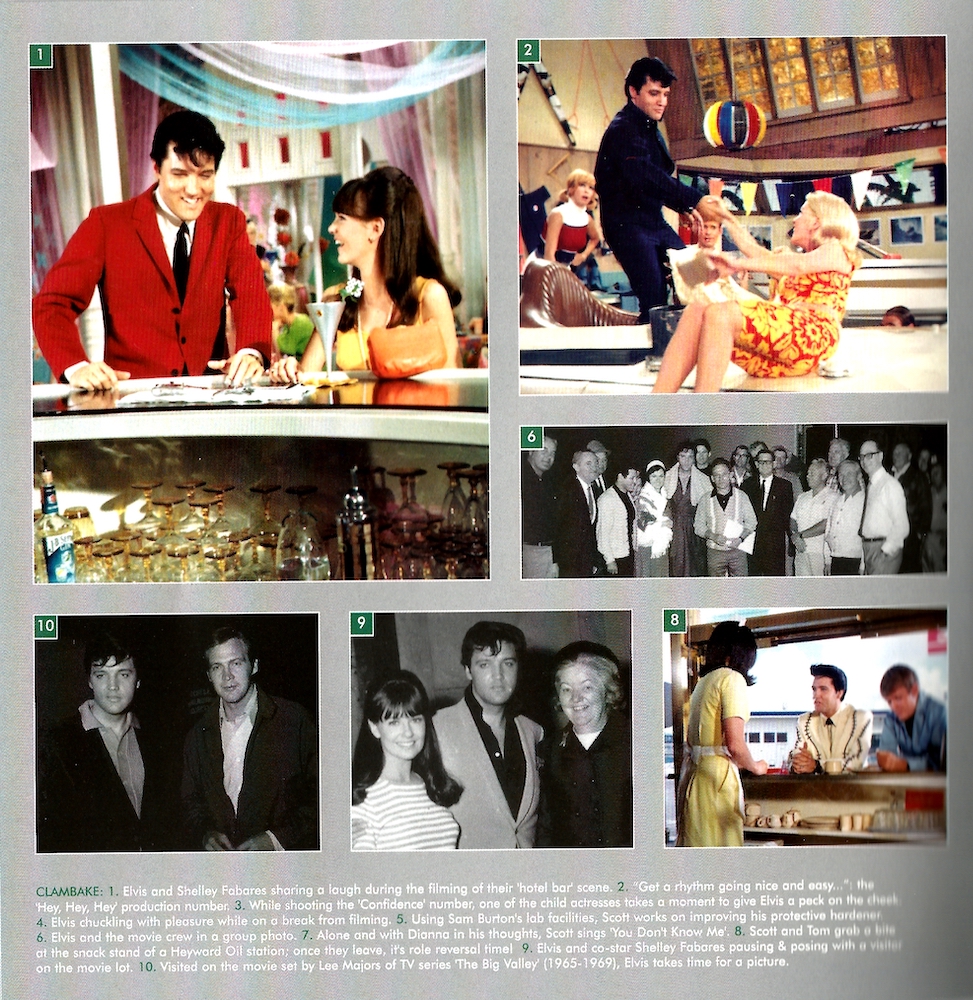
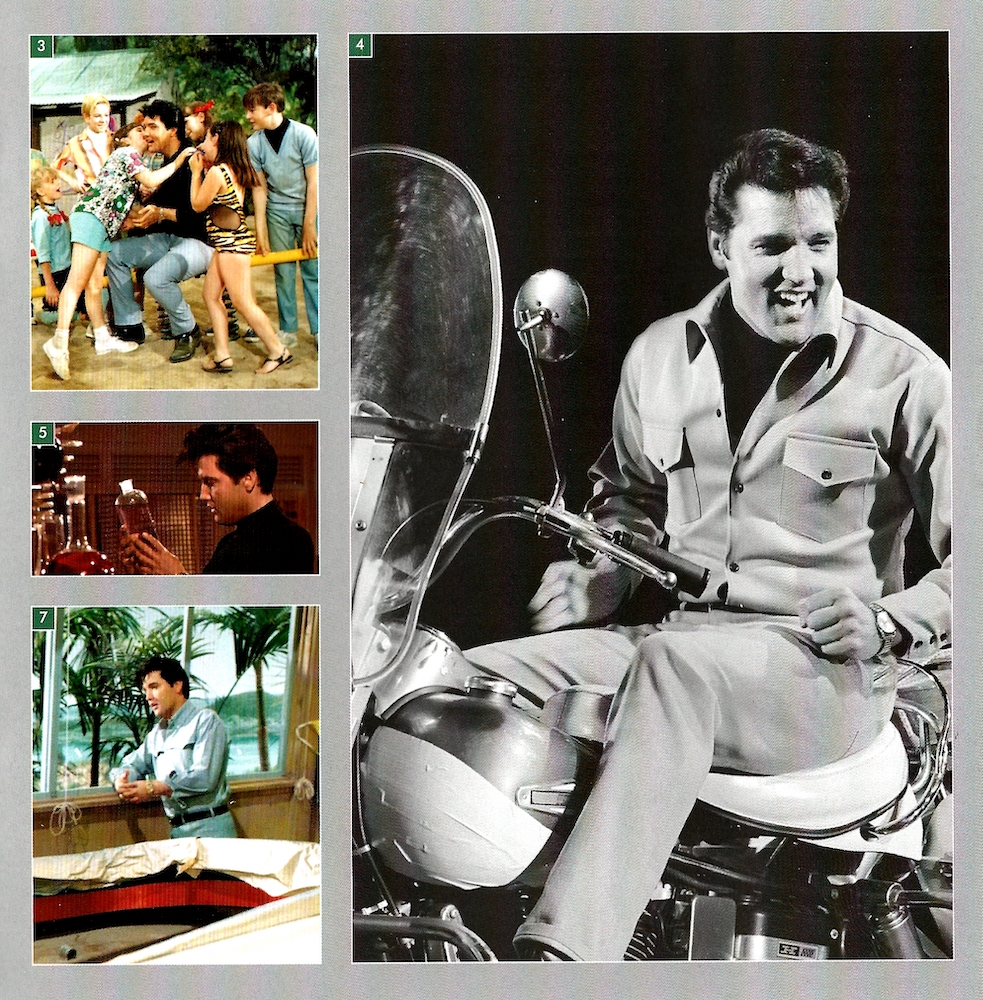
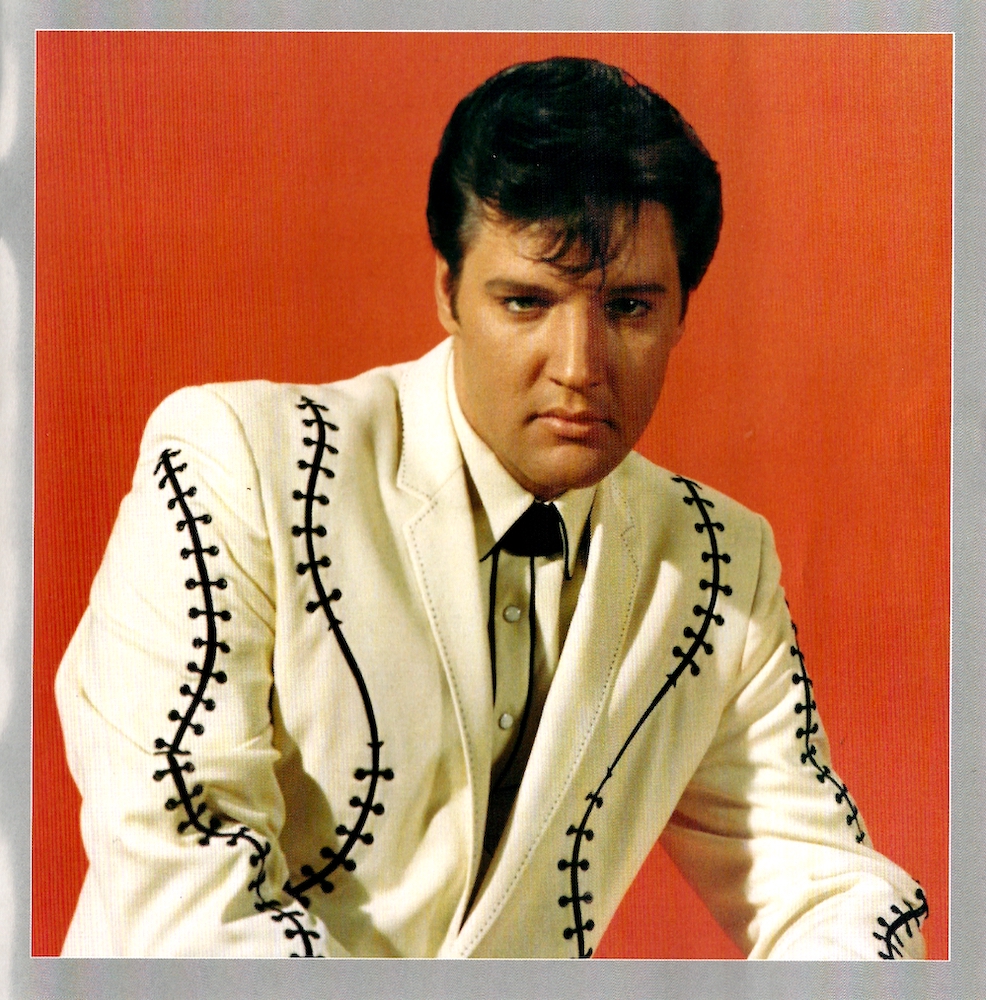
The booklet and sleeve contain the usual mix of photos and memorabilia. Ernst Jørgensen and Roger Semon are credited with “Art Design” and, along with FTD designer Chris Lambeth, they have created an extremely good looking booklet and cover. Definitely one of their best.
Included is the original “Bonus” signed photo of Elvis and Priscilla’s wedding which was new to me, and there are some good shots of Elvis looking both happy and disillusioned, which at the time I am sure he was!
Looking closer at the outtakes ...
‘Clambake’ - The best “fluffiest” soundtrack song here. If recorded two years earlier it would have been perfect for Paradise, Hawaiian Style. Take 3b is the same as featured on the great Silver Screen Stereo (there it was incorrectly listed as being Take 11) and is the most interesting outtake. Although just a vocal overdub, Elvis finds it fun enough that he can laugh at himself as he messes up the lyric. Unreleased Take 1 has Elvis singing one line ‘The Sands Of Time’ before the start but the overdub soon falls apart. On “new” Take 5 you can hear that Elvis is already stumbling on the first verse and that it is never going to be the master. The strange thing is how uninterested Elvis sounds at the start of the final cut, Take 10, that was the master.
‘How Can You Lose What You Never Had’ - Take 1 was previously on Collector’s Gold which had Elvis singing the line from ‘Down In The Alley’ that was actually taken from the start of ‘The Girl I Never Loved’ Take 4. There is some excellent studio eavesdropping here showing that Elvis was in a good mood no matter the quality of his material.
Takes 1 and 3 were featured on Collector’s Gold but here the studio banter isn’t edited. The earlier takes have a slower tempo. Take 3 is similar to the master but Elvis sounds enthusiastic urging the band on @ 01:28 and clicking his fingers. The piano break and saxophone is nicely mixed here too.
‘You Don’t Know Me’ (movie version) - The stand out track from the session but unfortunately the echo added to these studio masters does not improve anything. Elvis was dissatisfied with these results and would re-cut it in the September session later that year. The final studio version would have a very different and fuller arrangement.
Take 1 is a delight for being a much simpler arrangement with Elvis’ vocal nice and forward and less backing vocals in the mix, compared to the movie master. Take 7 is cute and a nice addition to our collection with Elvis fluffing the words singing, "Anyone can tell, you can go to hell" and adding "That’s it!" Take 10 is similar to the master.
My real annoyance is that one of the best parts of the original studio tapes is Take 2 where Elvis and the band discuss the tempo. Elvis says, "Let’s don’t get the tempo too fast fellows" and Felton Jarvis with his normal hipness delightfully adds, "No. Keep it cool and moody". At this point the band starts playing a very cool groove with Elvis confirming, "Oh, that’s good!" This is a real highlight of this studio session - but isn’t featured on this disc! What is going on?
‘Hey, Hey, Hey’ - It was only eleven years before that Elvis changed the world with ‘Heartbreak Hotel’. Would Elvis really want us to have any outtakes of this absolute crap? Look at these lyrics...
"We got a magic potion that will help us win,
I don't know how to spell it but dig right in,
Glako-oxo-tonic phosphate, it's the latest scoop,
But that's all right girls you can call it 'Goop'.
- Hey! Hey! Hey! Hey!
Get a rhythm going, nice and easy,
Come on and use a little elbow grease-y."
In comparison The Beatles had just released their Sgt Pepper LP. The only interesting thing about these lowly overdubs is that Elvis actually manages to laugh about the stupid lyrics. No wonder he tried to stay on the ranch.
The Girl I Never Loved’ (Takes 4 and 5) - A sensitive ballad and there is a treat here in hearing Elvis rehearsing with the band and running over the melody. Elvis also throws in a line from ‘Down In The Alley’. However, the mistake here is that the studio tapes have been adulterated with unnecessary echo which removes the intimate atmosphere of Studio B. Now it sounds like Elvis is singing in the shower! In the past, the benefit of these FTD outtakes has been getting to hear the genuine tapes of Elvis’ studio vocals. This is a waste; even the old album master sounds better!
‘A House That Has Everything’ (Takes 4, 5 and 6) - Another nice soundtrack ballad. Again it is nice to have more studio eavesdropping while Elvis runs over the melody before the beginning. Take 4 is a false start while Take 5 stops after thirty seconds when Elvis and the band drift off key. The final Take 6 is similar to the master but again these are all covered by unnecessary echo. How annoying that again the LP master sounds better.
‘Clambake’ (reprise) - This is actually the most interesting part of the soundtrack, a totally lighweight soundtrack-song but with a blues twist! Take 1 was featured on Silver Screen Stereo with Elvis spontaneously singing, "Well I went down to New Orleans, thought I’d find myself a girl there" beforehand. There is a real blues feeling and the following two takes capture the same feeling. Elvis is in good humour, hums along and backed by only an acoustic guitar there is a great vibe. It is a very nice way to end this deluxe soundtrack and what a shame that Elvis didn’t try some other blues numbers at the same time.
Verdict: This is the sound of Elvis at the crossroads trying to break free from his movie contracts and heading for renewed musical creativity. Unfortunately there are too many sub-standard songs here along with several missed opportunities, plus a disc mastering fault. Of course ‘Guitar Man’ and the studio songs are fine but we already have those and in better quality. This FTD soundtrack series is a great idea but certain albums, like Double Trouble, Paradise, Hawaiian Style or Clambake were always going to be a hard sell. However if Clambake does bring back happy memories then this FTD, along with its great packaging and some very nice studio moments, is for you.