Review by Piers Beagley - Elvis Information Network
Let Yourself Go is the fifty-seventh FTD release - which permits us have a glimpse into the making of the 1968 NBC-TV Special.
Throughout the CD you can hear very clearly Elvis' highly charged emotions. And there is no doubt at all that this CD is not for people who are unfamiliar with the original and complete version of the NBC show, since it very much feels like a “work under construction”. But what fantastic work it is - which makes it perfect for this FTD “Collectors” label.
FTD's first ever release was Burbank '68 featuring Elvis’ fabulous jam session from June 25 1968, as well as the powerful June 29 black leather stand-up show. With the deluxe '68 Comeback DVD released last year, along with the Memories double BMG CD - plus Tiger Man we have nearly all the material available from these crucial L.A. recordings that would revitalise Elvis and his popularity.
Now FTD releases the final part of the journey Let Yourself Go as their fifty seventh CD letting us glimpse into the making of that TV Special. And right from the start, and Elvis' (NBC) peacock impression you know that this is going to be great fun. Within the first minute Elvis shows his good humour, intense commitment as well as professionalism.
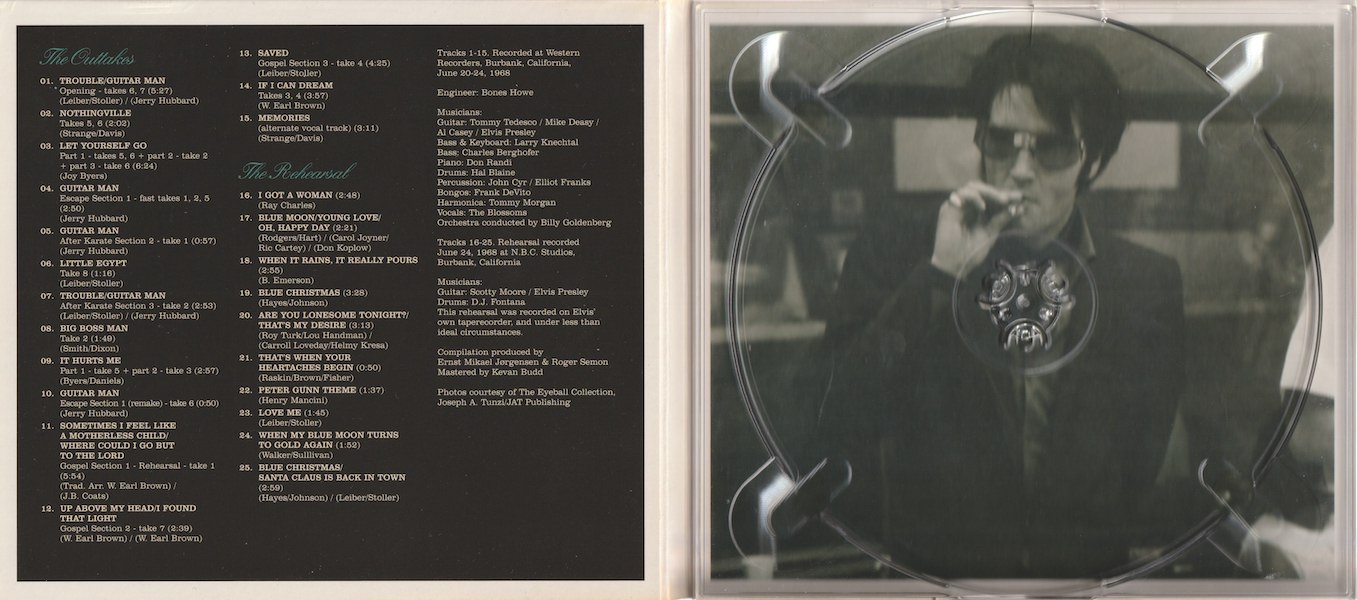
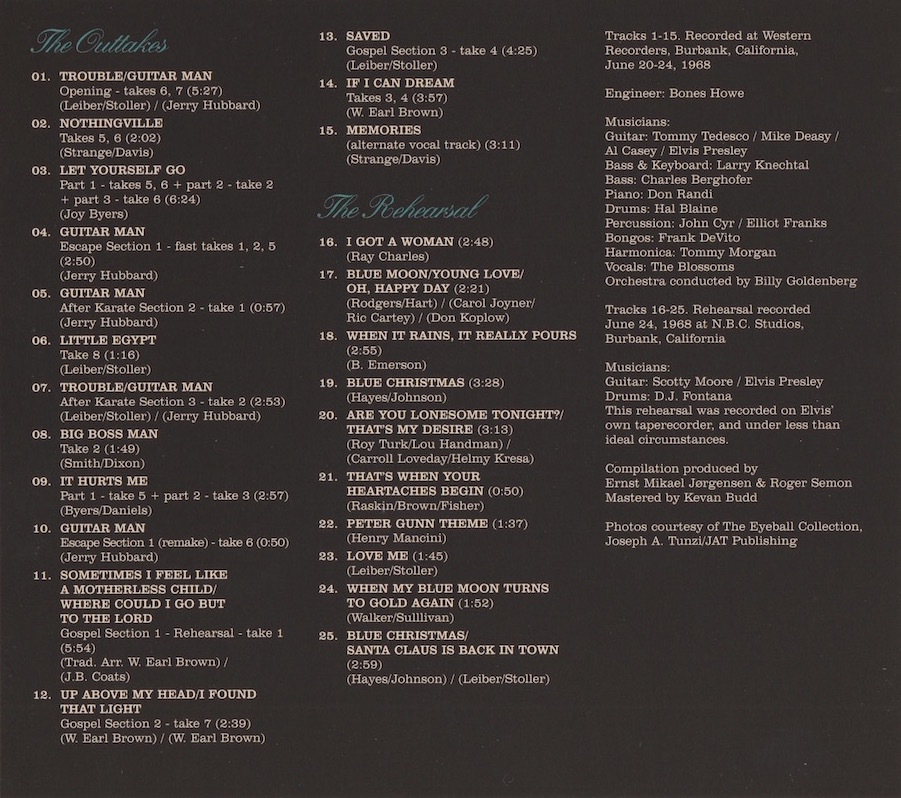
The first forty-eight minutes are from the Western Recorders Studios rehearsals and the sound mix by Kevan Budd (Elvis At Sun, Elvis Presley, Loving You etc.) is sensational, drawing up Elvis' vocal and using less overall audio compression than previous releases.
On the very first track, ‘Trouble’/’Guitar Man’, listen to Elvis' anger and passion. His growl @0.50 is the sound of Elvis kicking open the door to his prison cell of movie contracts and dreadful scripts.
Listening to this (tip: play loud through big speakers and imagine yourself there) you wonder that had Elvis not been forced to do all those dreadful movies, would he have needed to come up with this anger and power that makes the ‘68 Special such a turning point? It is also interesting to hear Elvis recording with a full orchestra which seems to spur him on to even greater vocal power.
(Note: Elvis did record with an orchestra at Western Recorders back in May of the same year, but can hardly have had
as much enthusiasm being for his twenty-eighth movie soundtrack.)
Had Elvis’ last movies Speedway or Clambake been "family hits" and big box office successes and had the last movie singles 'A Little Less Conversation' or 'Your Time Hasn't Come Yet, Baby' made the Top Ten, would Elvis have sounded like this caged tiger breaking free?
So maybe if the Colonel had supplied good scripts and better movie songs, it is possible that the musical revelation of the '68 Comeback and the '69 American Sound sessions might not have happened. This time we can all be thankful that the Colonel was out-of-touch.
Let Yourself Go also cleverly demonstrates how all the disparate parts of the show were brought together to create the masterpiece that we all know. In general, it presents us with an early "messed up" outtake followed by an "almost there" version. But the real enjoyment is the freedom that you can hear in so clearly in Elvis' voice, as well as his enthusiasm for what he was doing. It had been a long time since he had shown such a level of enthusiasm and commitment to any musical project.
Want to know more?
'Trouble’/‘Guitar Man' (opening - Takes 6 and 7) - similarly sets the scene, as it does in the NBC-TV Special. There is some real hilarity as a band member imitates the sound of a dog. Elvis’ laughter, "Get that damn dog out of the studio!" is incredibly reminiscent of the same fun as "Shoot that damn dog" on the Jungle Room sessions eight years later. Take 7 is all the more enjoyable because Elvis knows that it is only a rehearsal. It’s obvious that the band's timing is out from the start but Elvis keeps on going. The final master was a splice of the much later takes 21/32. Listen out for Elvis' enthusiasm @ 4.19 as he urges the band along.
A very smooth 'Nothingville' follows (Elvis mucks up the lyrics in the first take "Goddamn it, hold it") before the real highlight of an almighty 'Let Yourself Go'.
The CD will annoy some pernickety fans since it doesn't follow the exact sequence of the recording sessions, or the TV show, but it still has a nice flow of its own.
'Let Yourself Go' - Kevan Budd has worked from the studio tapes and so this demonstrates the real power of Elvis with his voice upfront and driving the band. (Note: On the double Memories CD Elvis’ vocals are completely buried amongst the mix.) Elvis manages to blast some real soul-power into this swinging-sixties (Speedway) soundtrack song. It shows what Elvis could achieve if he believed in what he was doing. The Elvis - A Legendary Performer Volume 3 edit (spliced from part 1 Take 1 and part 2 Take 2) has always been a favourite but here we get the interruptions for the carnival musical inserts. This, indeed, shows how the final sequence was assembled - i.e. the “Making of”. Elvis throws in some enthusiastic growls and off-sides, "Oh yeah, baby". And when Elvis sings, "Take a real deep breath and put your warm red lips on mine" it carries an unbelievable sexual interpretation here that the original never did! Sensational.
The second throw-away 'Trouble’/‘Guitar Man' presents us with more rehearsals as Elvis immediately realises the band is playing too fast. Elvis sings along playfully but laughs as he explains, "Wait a minute, they're too fast man". The treat is that Elvis then keeps going a-capella after the band stops, clapping his hands to demonstrate the tempo he wants. With plenty of fun and laughter Elvis is surprised when engineer Bones Howe jokingly announces "That's a take."
'Little Egypt' (Take 8) - Once again, the studio tape mix is majestic compared to the muffled Memories, or the original version. Elvis' vocal is full throttle and comments at the end "This is a Arthur Rank production" to the sound of the huge gong. It is another lightweight sixties’ movie song that Elvis manages to reinvent. This was the final complete take before the master, Take 10.
On 'Big Boss Man' (Take 2) - the next similar take was the master, Elvis throws in some one-liners, "Are you horny tonight?" as well as "When the Swallows Come Back to Capistrano" an old favourite of Elvis'.
'It Hurts Me' (Part 1 - Take 5 and Part 2 - Take 3) - Again a fabulous edit of this split take was issued on Elvis - A Legendary Performer Volume 3 and this is another fabulous rich version showing the depth of Elvis' vocal. On Memories the orchestra is higher in the mix. Again Elvis chooses a relative B-side chart failure (#29) to prove that everyone was wrong. Did the Colonel really think Kissin' Cousins was what mattered? This take, while never a master, with Elvis' empowered ending, "Yes darling, oh darling.." is a great addition. The dramatic finish is also totally different from the spliced string ending of the released version.
Gospel Section
'Motherless Child’/‘Where Could I Go But To The Lord' - Starting with a rehearsal - this - and Take 1 - are sensational. Elvis' soulful adlib on the rehearsal "Oh, sock it to me baby" sets the scene. Very light and laid-back, Elvis' misses the first word so it could never be a take, so even better then to hear Elvis and the band continuing for a complete rough run-through. At points, the horns are out of key and Elvis is reticent on the lyrics. At 05.28 he misses a line, "God damn it!" It is just fine though as the gospel soul shines through and the band continues with Elvis apologising at the end laughing, "I'm sorry about that." Another highlight.
'Up Above My Head’/‘I Found That Light' again helps us understand how the whole gospel section was assembled. As Elvis says, "All right. Let's get it on". Again Elvis is somewhat reticent with the lyrics.
'Saved' (Take 4) - A later version than the fabulous Take 1 on the FTD Easter Special this is still another powerful addition. The band and Elvis miss the tempo mid-song and Elvis seems out of breath as he throws in too many adlibs - watch out for his "Wooo" @ 3.09! At the end Elvis starts to go into the “blues” ending, as featured on Memories, but the band doesn't follow.
'If I Can Dream' (Take 4) - Previously released on the He Walk Beside Me compilation but now sounding even better. Interestingly, Elvis drifts way off key and changes melody at the end. It is still a fascinating and powerful version. The next Take 5 would be the master we all know which Elvis lip-synced his black-leather stand-up performances to.
'Memories' (Alternate Vocal) - A delicious rich vocal with a different ending with Elvis quietly intoning “Memories, Memories”. But being a vocal overdub, it has to sound similar to other versions. Interestingly Kevan Budd leaves the final microphone thump in the edit. This is missing on the Second To None version.
(Note: There are two vocal overdub takes of ‘Memories’ with the second (#2) being the master, and the other (#1) is heard here.)
The Rehearsal
This June 24 NBC dressing-room rehearsal was recorded by Joe Esposito on Elvis' own tape recorder one day before the rehearsal released on the Burbank '68 FTD. And maybe Joe worked for better recording levels on the second day because the sound here isn't as good.
Two tracks have been issued before. A shortened 'When It Rains, It Really Pours' on Memories and 'I Got A Woman' on the Platinum box-set. Kevan Budd has worked his magic and the audio improvement on 'I Got A Woman' is fabulous, and isn't messed with by the odd fade-up at the start as issued on Platinum: A Life In Music.
This session seems a little more unstructured to the following day's, which is no wonder as the studio TV jam session taping was only two days later. There are some real highlights in hearing Elvis discussing the similar melodies of 'Blue Moon‘/‘Young Love’/‘Oh Happy Day', "I tell you there are five hundred songs with that same chord".
These rehearsal jams with Scotty Moore, D.J. Fontana and friends were arranged to help Elvis relax into the setup that director Steve Binder has envisioned. Listening to the discussions and off-the-wall songs that Elvis chooses makes you so wish that Steve Binder had run a camera into the dressing room as he had at one time considered.
Elvis chooses 'When It Rains, It Really Pours' as a favourite but acknowledges "Goddamn that's high!" At times the background chatter annoyingly overloads the music but every moment still deserves an official release (it has been out on bootleg before). Interestingly on 'Are You Lonesome Tonight?’ Elvis tries out the line, "Do you gaze at your bald head and wish you had hair" the line that would cause him to fall apart on stage the following year!
A brief mention of 'That's My Desire' (what a shame that Elvis never laid that one down) and 'That's When Your Heartache Begin' are reminiscent of the Million Dollar Quartet jam over a decade before. And hearing Elvis’ delight in singing 'Love Me' makes one realise how strange it was that the song never made it onto the TV Special LP.
It's also great to get a full-length jam on 'When My Blue Moon Turns To Gold Again' with Elvis edging it on to two minutes and a sublime ending. The following day’s jam on Burbank ‘68 while better recorded doesn't have quite the same excitement.
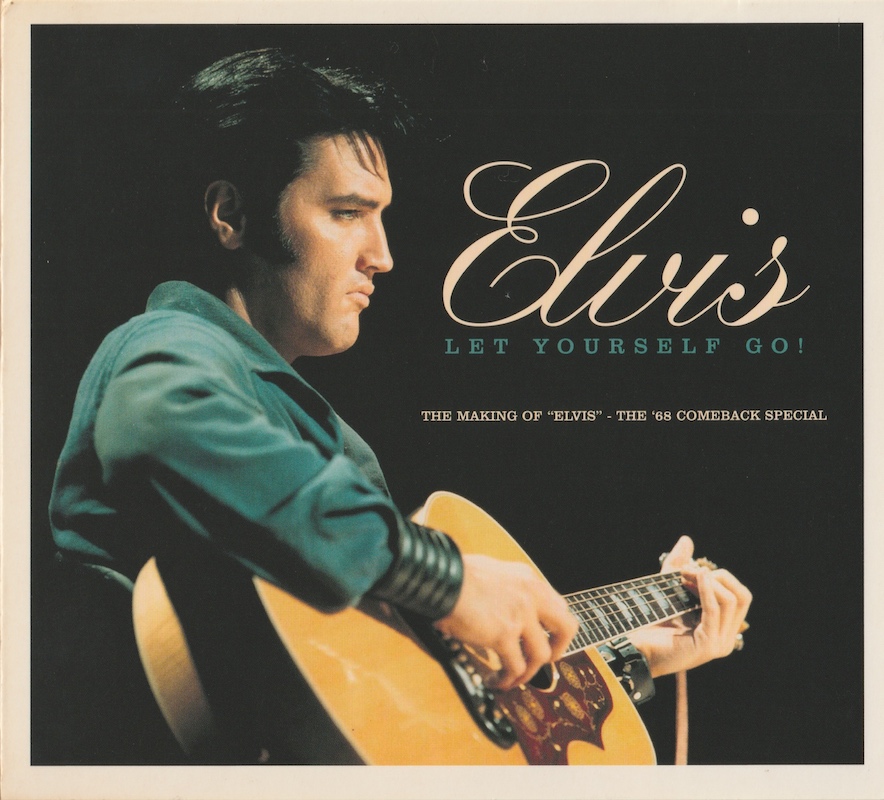
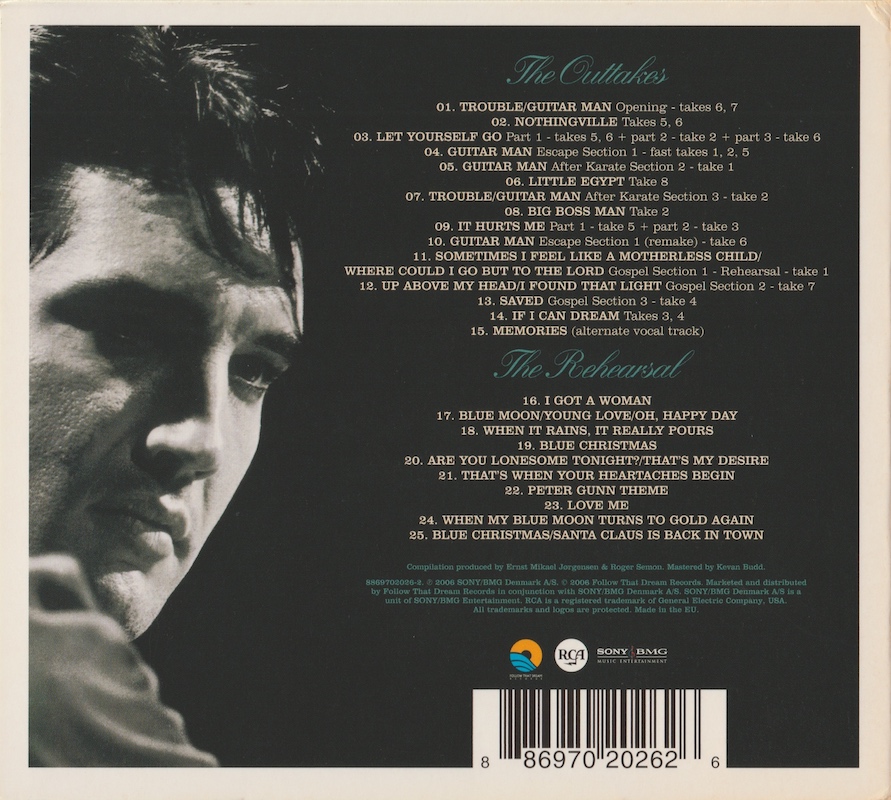
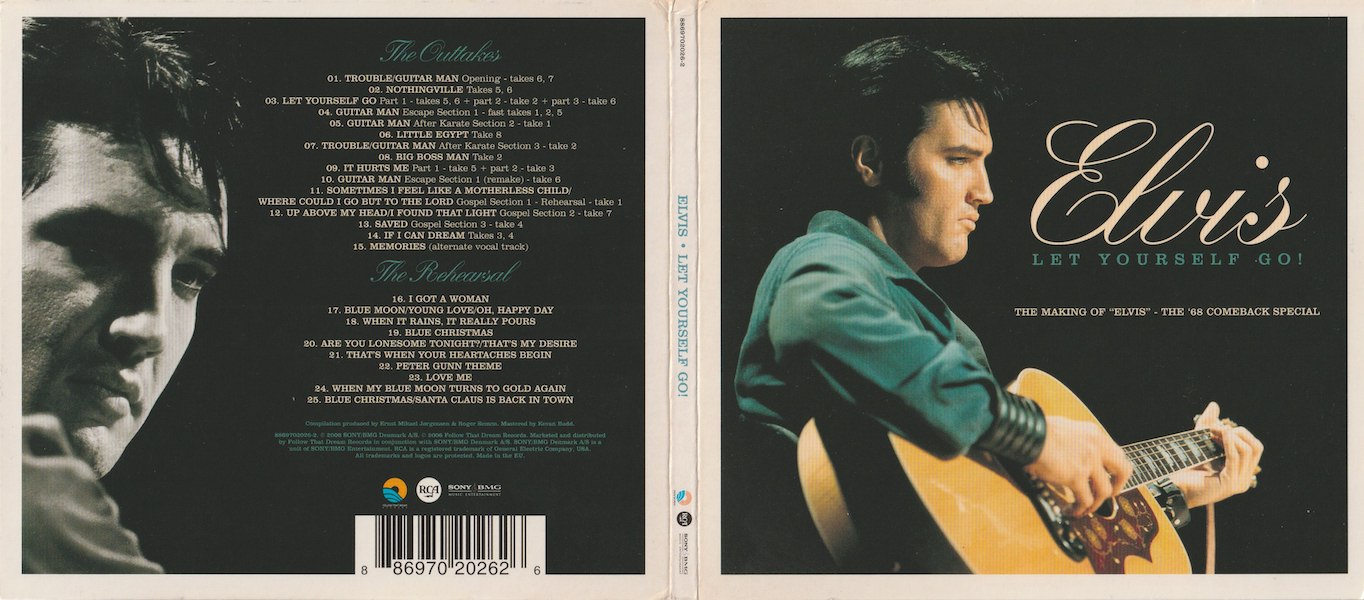
The front cover photo certainly captures the magic of those session, I am however a little surprised that they used exactly the same photo as the one (black and white) on the inlay of the Burbank '68 FTD.
Interestingly some fans have been getting complacent about this release yet Burbank '68 ran only fifty two minutes and we all loved it. Here we have even more with seventy two minutes of glorious pure excitement!
Verdict: Let Yourself Go is one of the FTD highlights of 2006. Of course you should own all the previous ’68 TV Special releases to fully appreciate this “Making of”, but with Elvis showing off both his good humour and intense commitment this is a very powerful CD. After all June 1968 was an absolutely crucial moment in Elvis’ career and if these sessions had ended up as “lightweight movie fare” Elvis’ legacy would have been sadly diminished. So, what you waiting for?