Review by Piers Beagley - Elvis Information Network
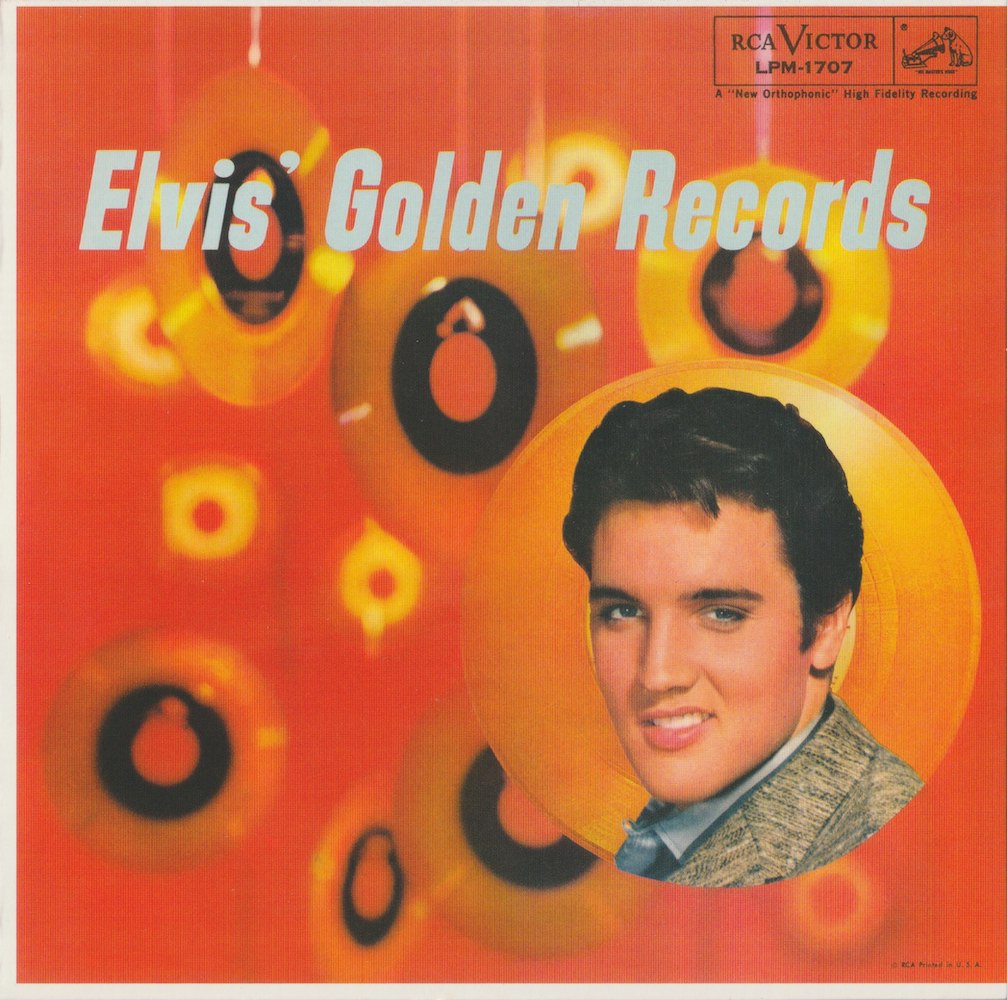
In the modern era of Greatest Hits compilations it is odd to consider that before this album there was a time when you couldn’t purchase ‘Hound Dog’, or other classic Elvis singles, on any Long-Player.
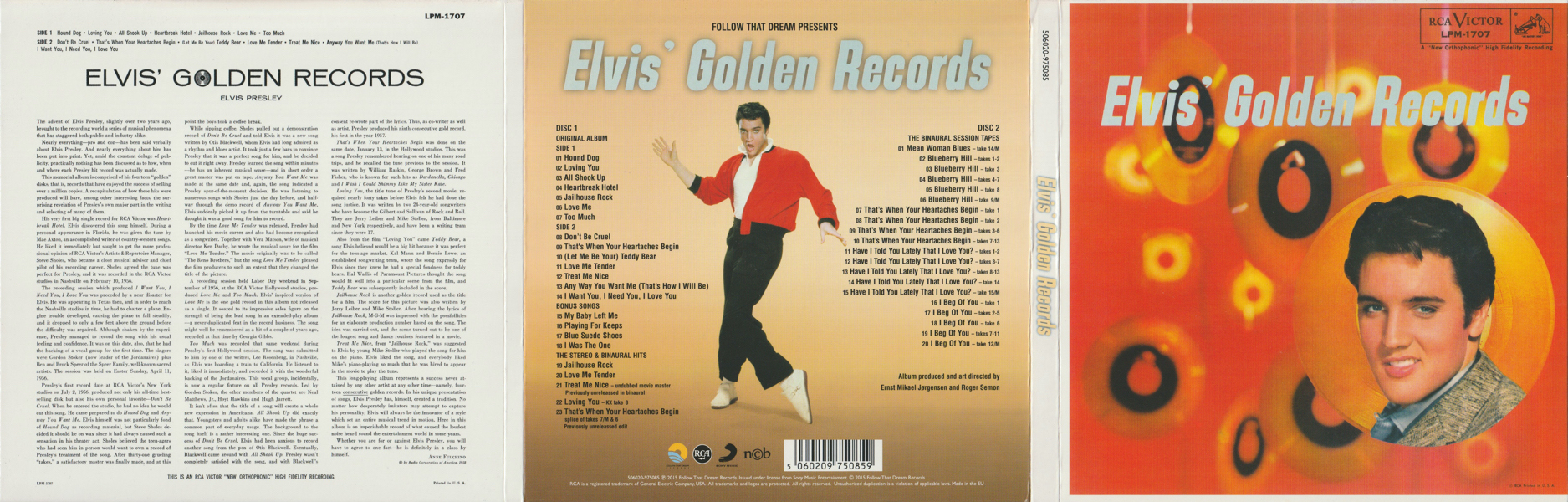
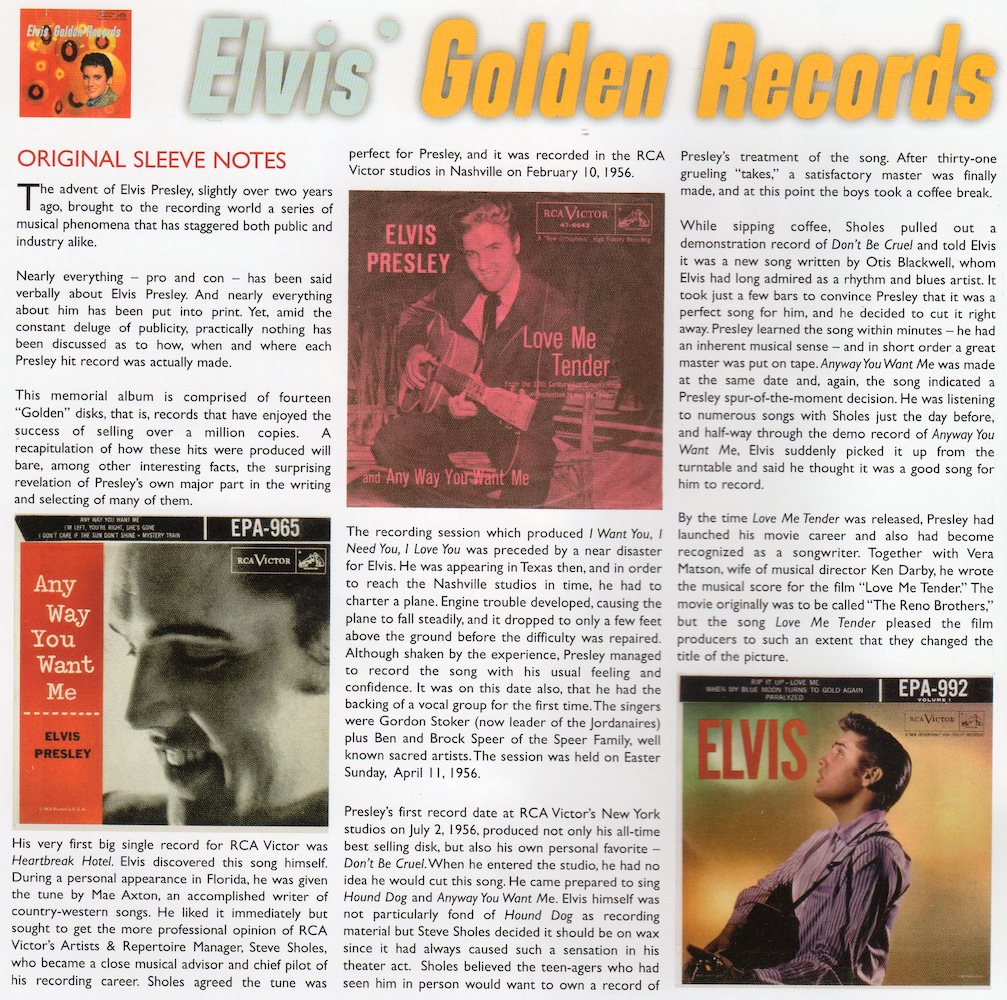
As the original sleeve notes by RCA’s Anne Fulchino stated,
“No matter how desperately imitators may attempt to capture his personality, Elvis will always be the innovator of style which set an entire musical trend in motion. Here in this album is an imperishable record of what caused the loudest noise heard around the entertainment world in some years. Whether you are for or against Elvis Presley, you will have to agree to one fact - he is definitely in a class by himself.”
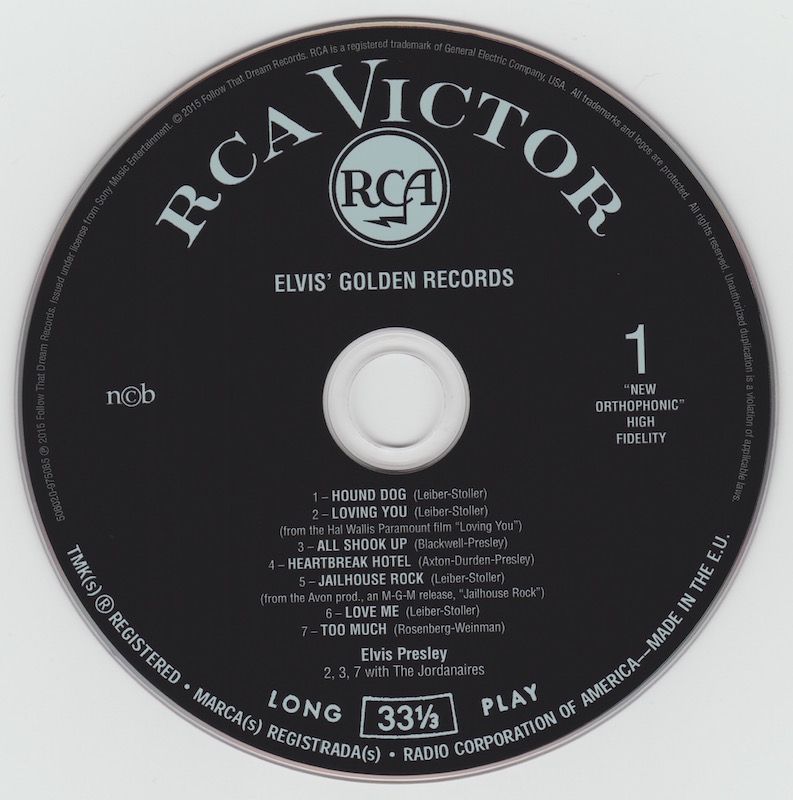
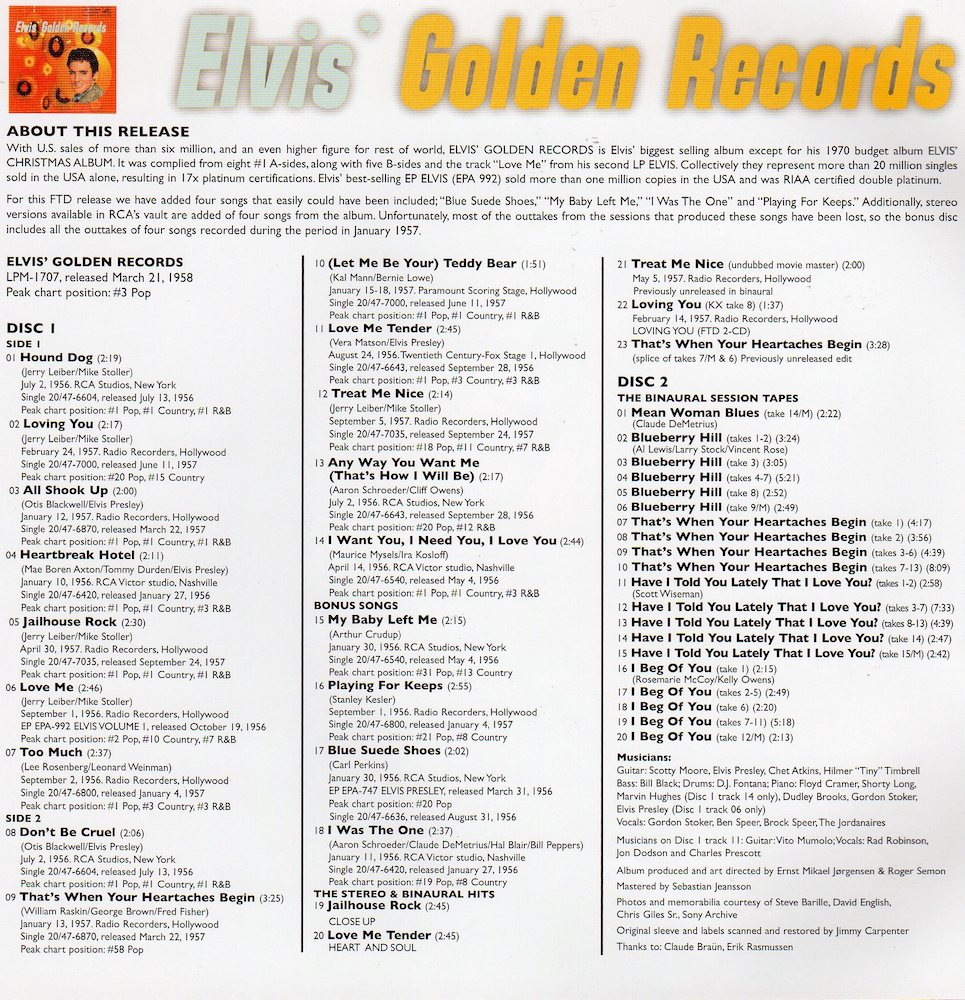
Playing the original album is an interesting reminisce even if, at times, it seems a rather offbeat playlist. The rather mundane ballad ‘Loving You’ seems oddly placed as the second track, straight after the massive selling ‘Hound Dog’. It is also strange since ‘Loving You’ had already been out on the soundtrack LP only eight months previously. It is also odd that ‘Love Me’ from Elvis' second album would be repeated here. And who would have chosen ‘That's When Your Heartaches Begin’ over ‘I Was The One’ or ‘My Baby Left Me’? Nevertheless the fourteen tracks, including eight #1 singles all recorded within an 18 month period, is the confirmation of Elvis’ astounding impact at the time.
Packaging
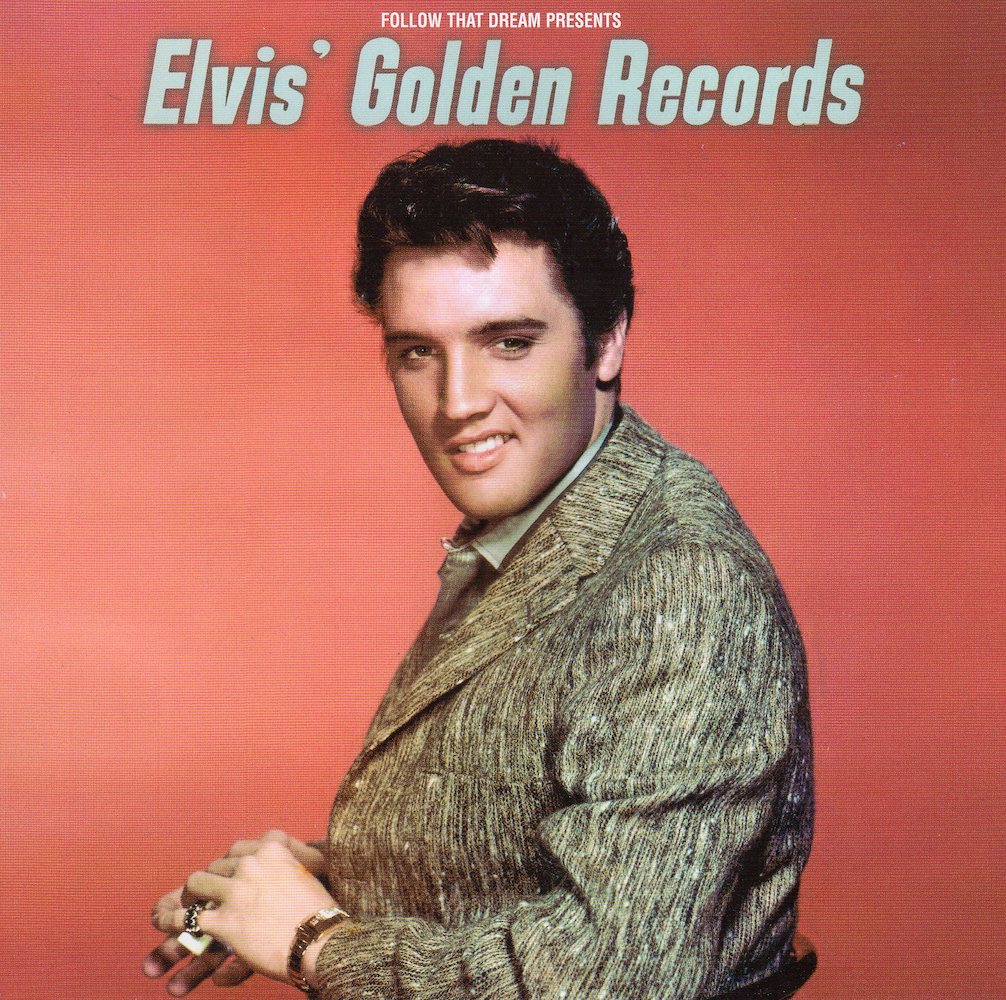
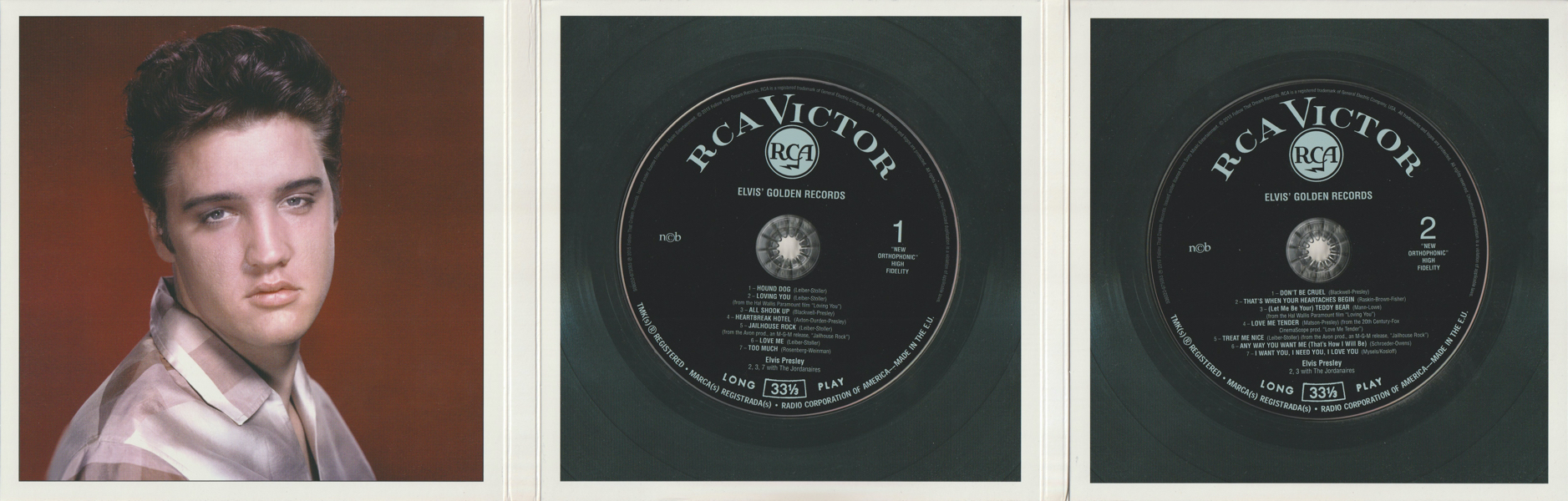
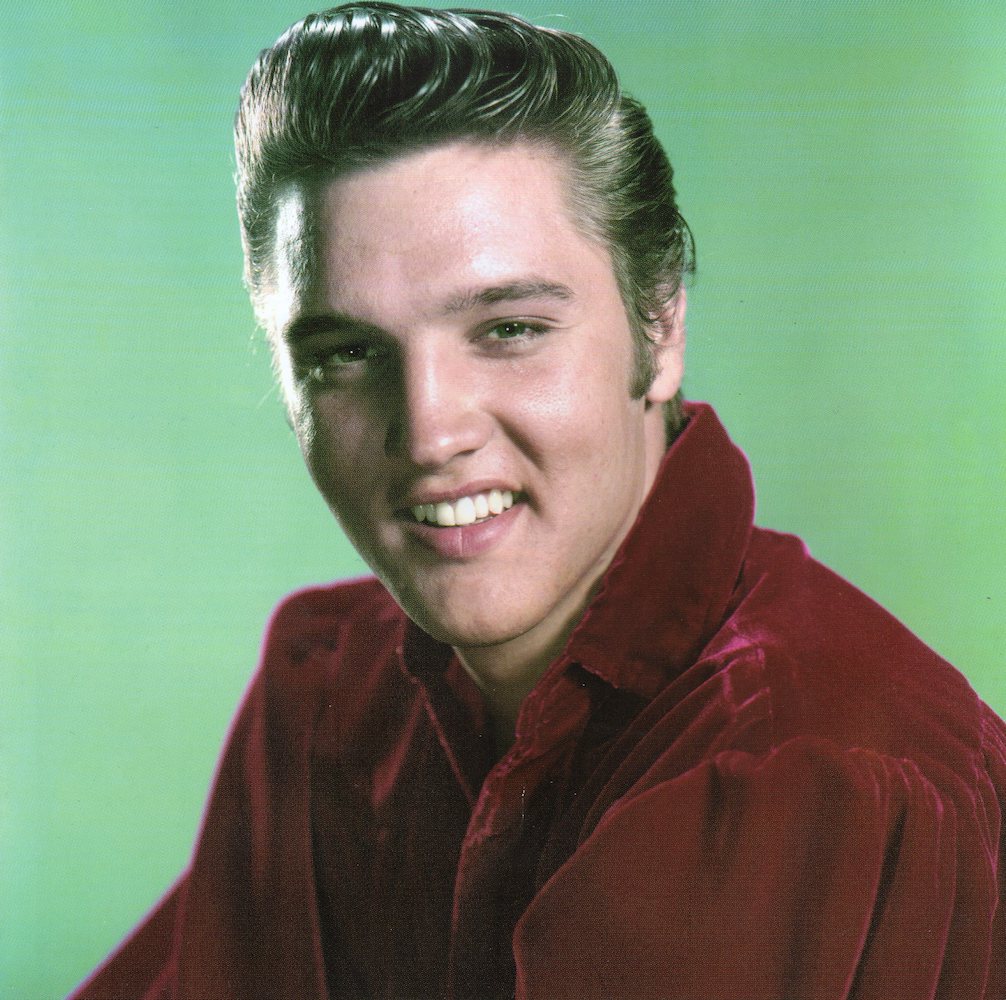
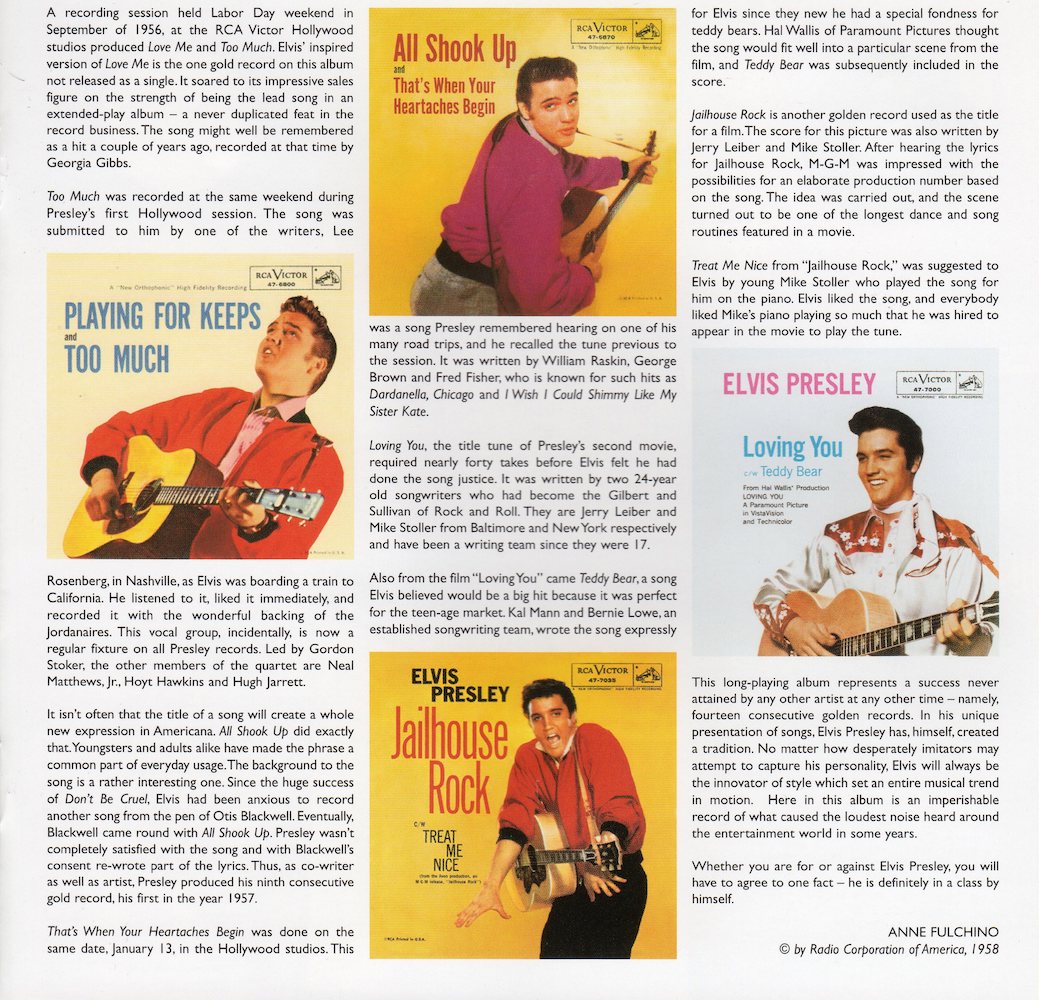
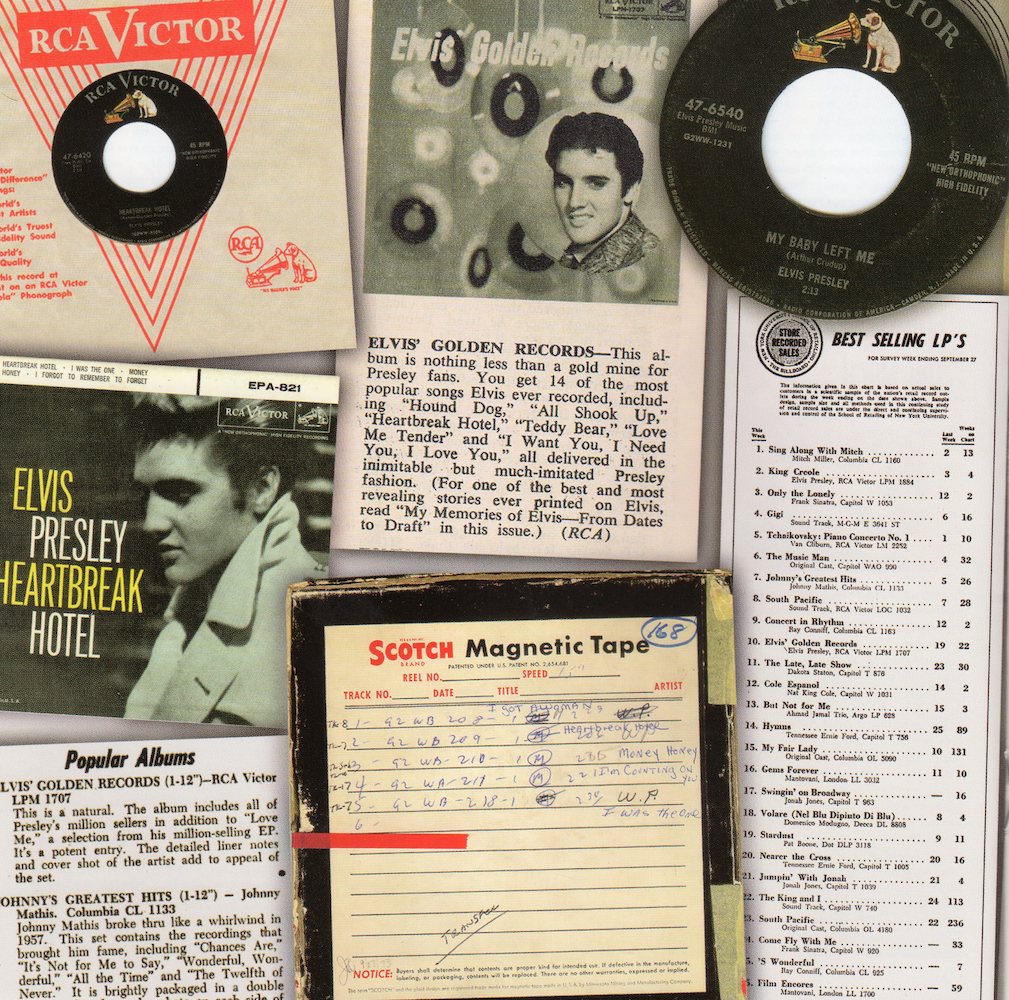
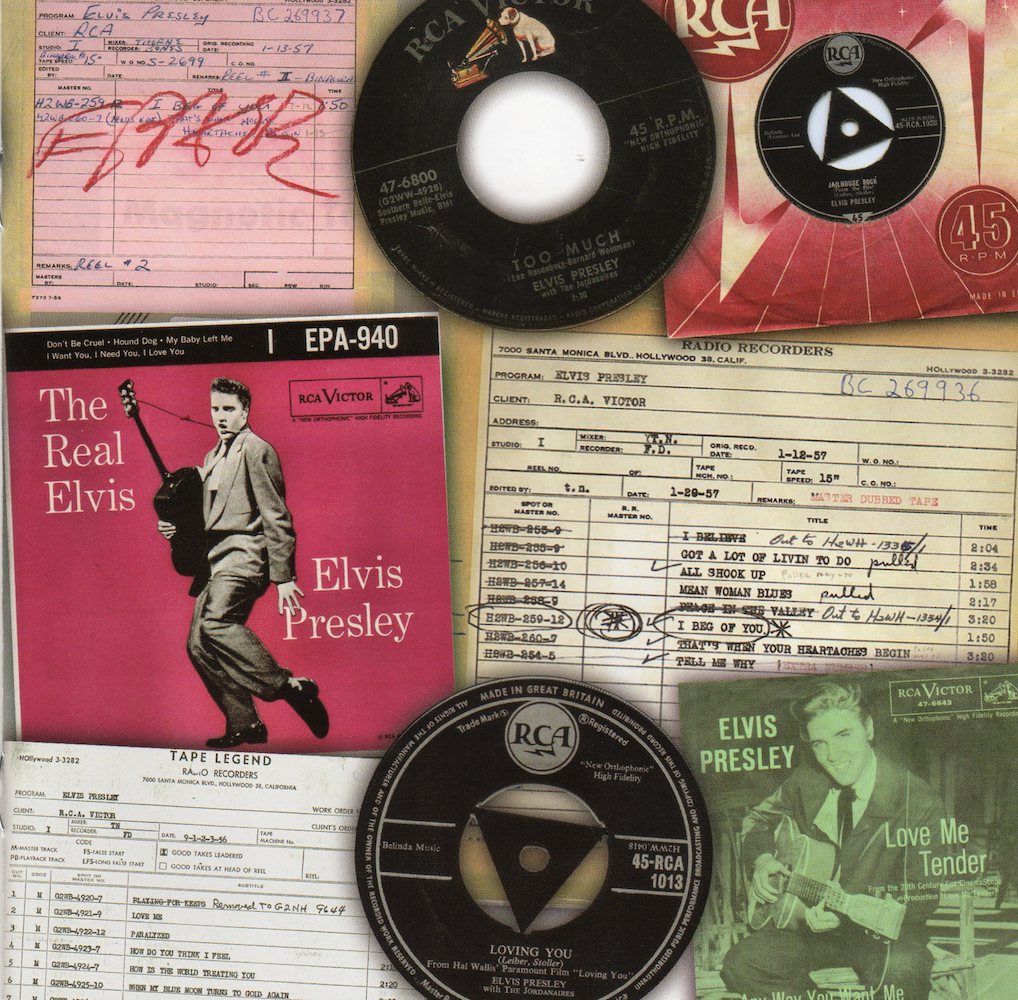
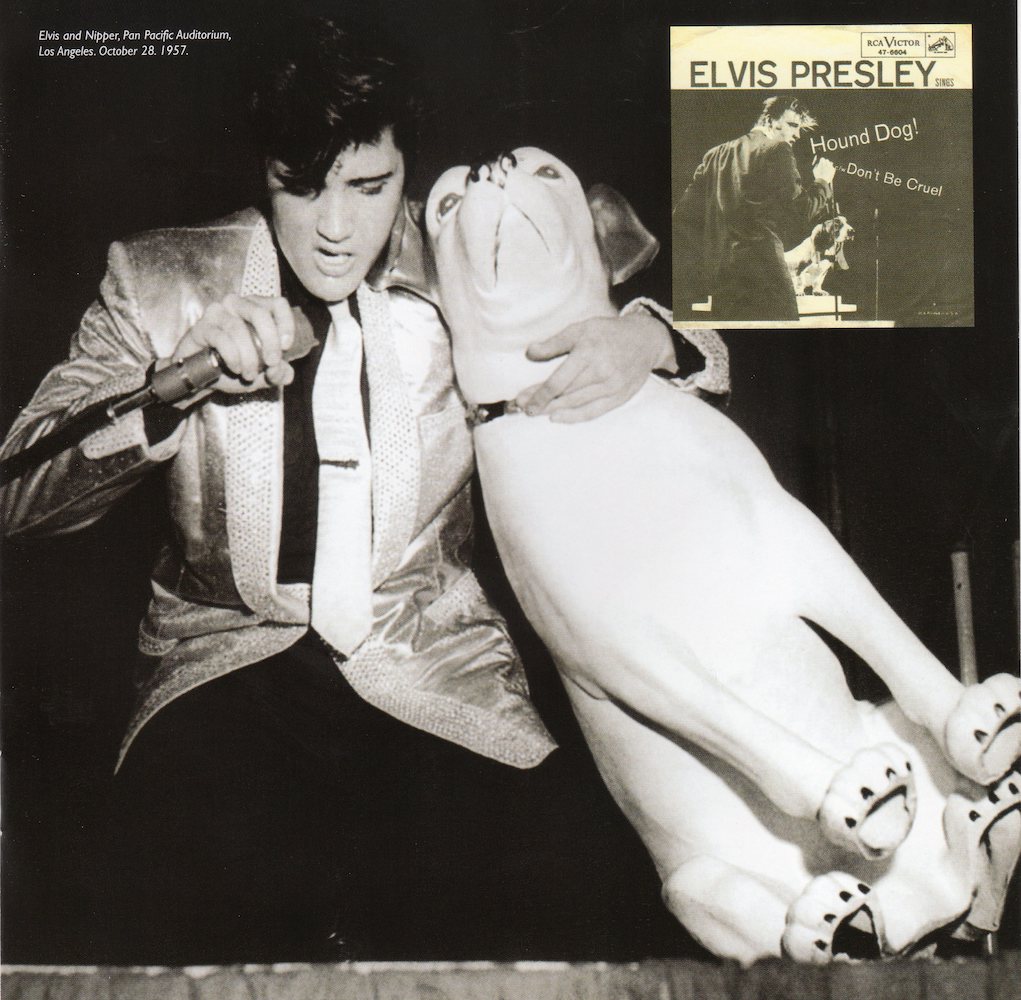
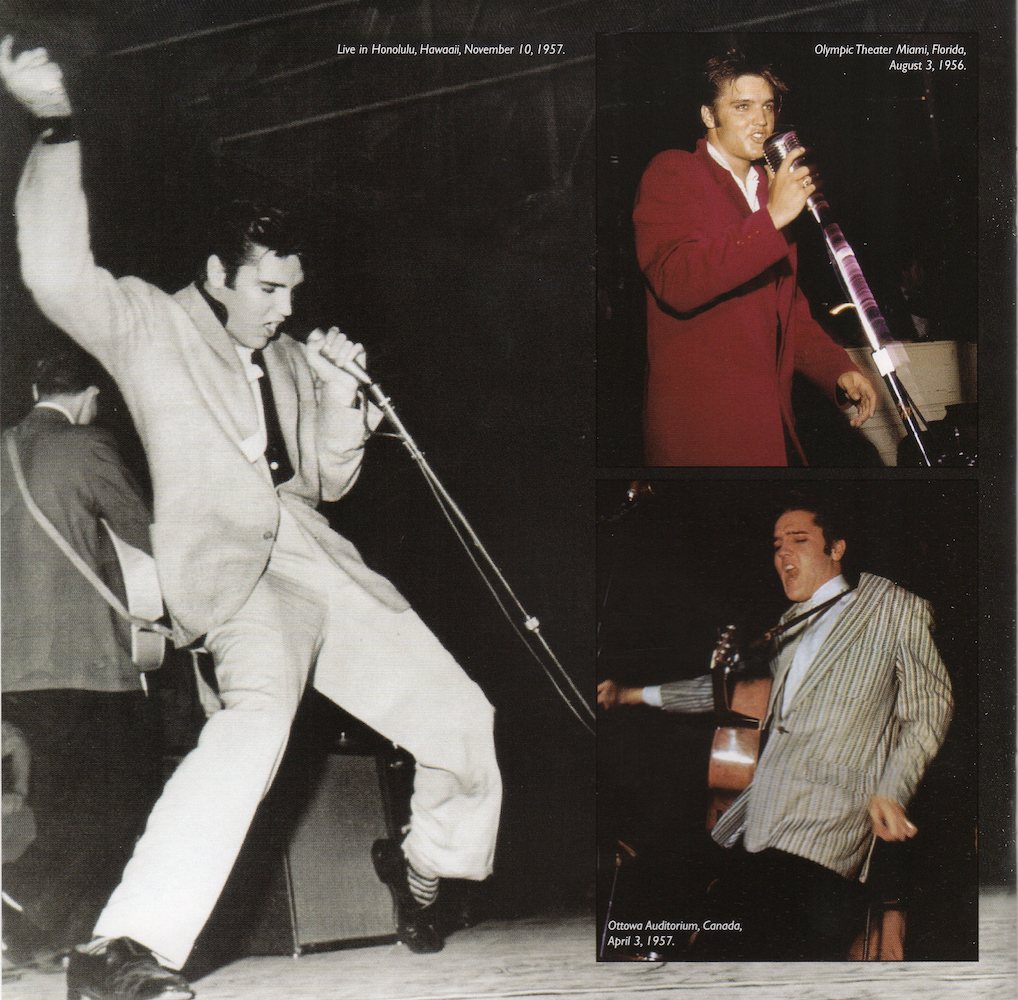
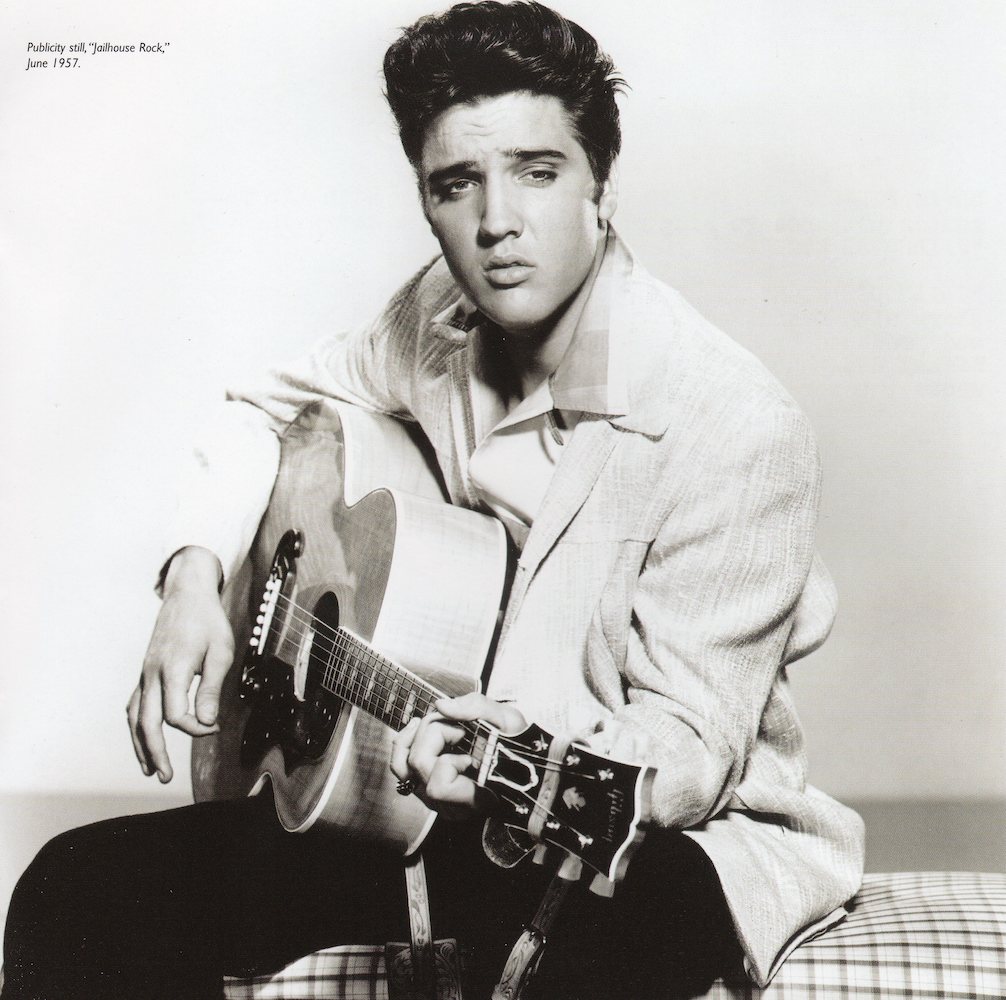
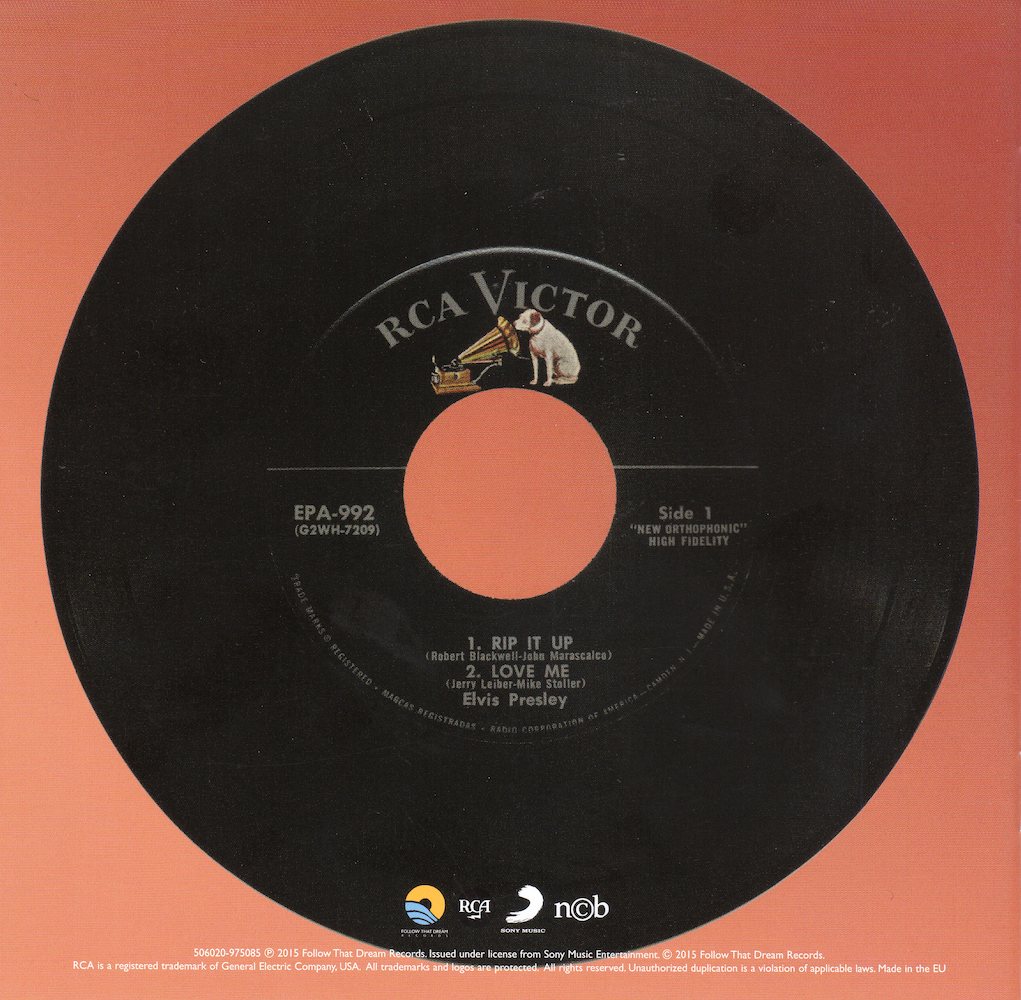
The 12-page booklet features some beautiful quality studio shots, plus the original album sleeve notes, single covers, along with the usual memorabilia plus a few photos of Elvis in concert from the time. The contrasting studio shots of Elvis from 1956 and 1957, with his hair going from greasy brown to fluffy black, are an interesting comparison.
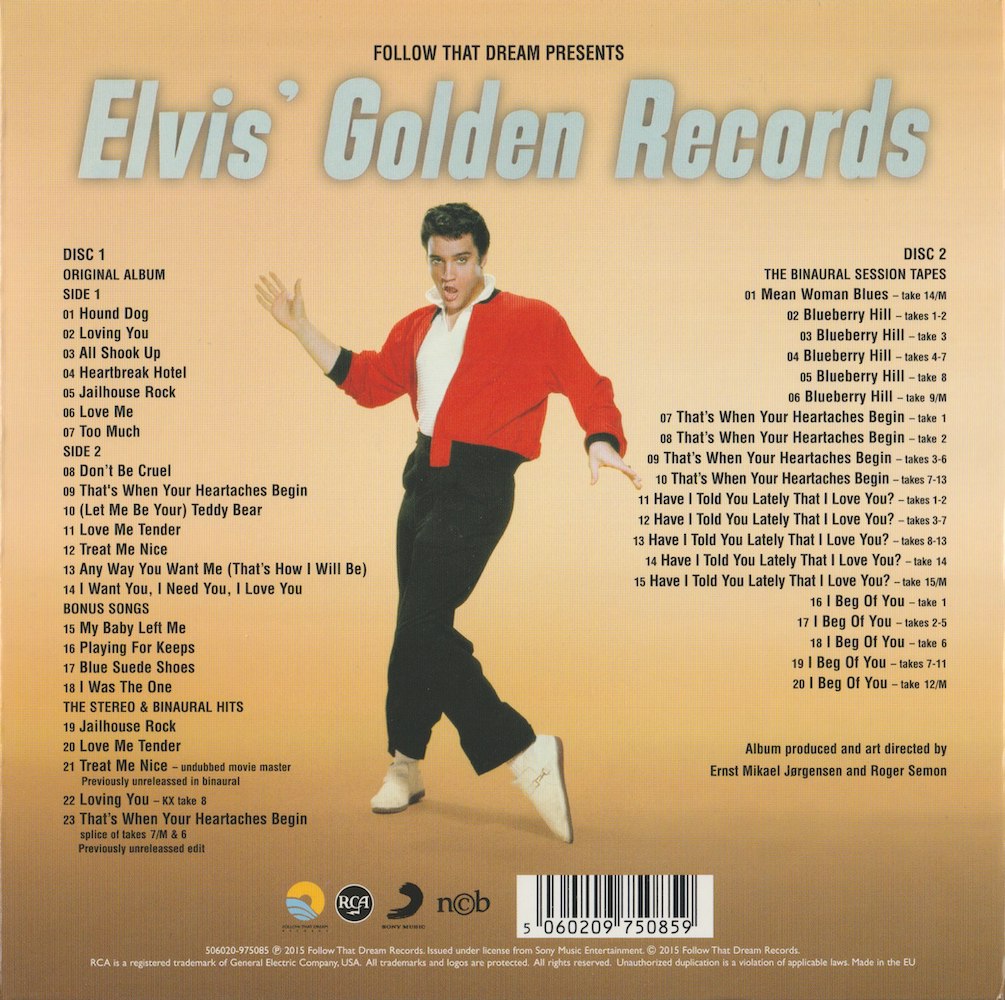
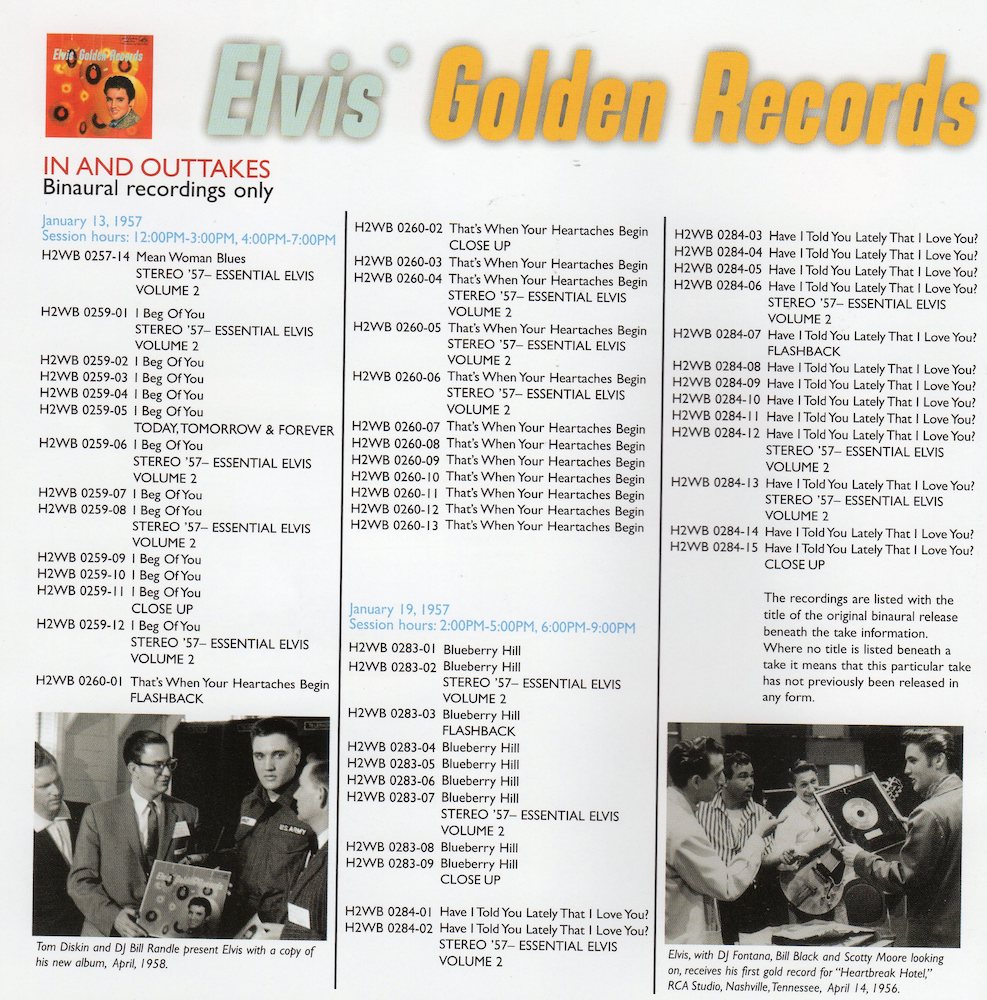
With so few outtakes available, the second disc focuses on the binaural 1957 session outtakes with ‘That's When Your Heartaches Begin’ being the only connection to the original Golden Records album. But how different the echo drenched single release sounds to the dry session tapes on disc two!
The booklet, therefore, includes the “In and Outtakes” session details of the 1957 sessions. A little annoyingly nowhere does it tell you that the final master of ‘That's Where You Heartaches Begin’ was a splice of Take 7 and 14. The booklet also misleads you into believing the master of ‘I Beg Of You’ was January’s Take 12 when the single version was in fact a re-recording from a month later.
The Music (Disc One - 57 minutes)
The original album is followed by four alternate songs that could have easily been selected for inclusion. Rather strangely none of these would be chosen as extra tracks for Elvis’ Gold Records Volume 2 which would have made it a much better value 14-track compilation instead of the paltry 10-track LP which only got to #32 on the US charts.
Five “Stereo and Binaural” hit versions follow. These include the marvelous stereo versions of ‘Jailhouse Rock’ and ‘Love Me Tender’, as well as alternate takes of ‘Loving You’ and ‘Treat Me Nice’ (previously unreleased binaural movie master) plus a delightful alternate splice of ‘That's When Your Heartaches Begin’.
(Disc Two - 76 minutes)
It is a dreadful shame that the binaural session tapes do not exist for ‘All Shook Up’ or ‘Got A Lot O’ Livin’ To Do!’, both recorded at the same RCA session; and, very sadly, only the master take of ‘Mean Woman Blues’ exists in binaural.
Unfortunately none of the tracks ‘Blueberry Hill’, ‘That's When Your Heartaches Begin’ or ‘Have I Told You Lately That I Love You’ were particularly creative recordings and show little development within the session. ‘I Beg Of You’ is certainly the most interesting track included here, yet this version was rejected by Elvis and had to be re-recorded one month later.
In general, this session demonstrates what a hard slog it was sometimes to get to the final master rather than show what an inspirational band Elvis had at the time.
The real bonus here is the fabulous audio quality and on headphones you can hear every minute detail from the studio session, a lot of which would be masked if in mono. You can hear every bump, a real clarity to Bill Black's double-bass work, and Scotty Moore's guitar picking, as well as Elvis' vocal so clear and separated from the rest.
The audio has been mastered with beautiful clarity by Sebastian Jeansson and is the original “dry” studio tape without any added echo or reverb that was used when the best of these tracks were released on the Stereo 57 release in 1988.
Bob Jones, who mastered the original Stereo ‘57 release described the original dry Radio Recorders studio tapes as, “Although the sound was very clear, there was none of the customary acoustic warmth and glow of the issued master” - and some collectors may agree.
Unfortunately, the original tape has become worn, perhaps slightly stretched, which occasionally causes some minor warble on Elvis’ vocal track, especially on parts of ‘That's When Your Heartaches Begin’.
‘Mean Woman Blues’ - Sadly only the one binaural take exists but what a classic rocker it is. This is the one track that would definitely benefit from some added reverb, as fans would surely recall the marvellous dance scene from the movie.
‘Blueberry Hill’. Despite Elvis’ obvious enjoyment of the song this is a track where the group never achieve their usual magic. Elvis' arrangement never captures the love and enjoyment that Fats Domino imparted on “finding his thrill” with Elvis’ final master still being rather slow and pedestrian.
The previously unreleased first take fails immediately. Complete Take 2 (previously on Stereo ‘57) plods along very slowly with the definite feel of a rehearsal. Elvis fluffs the lyrics singing, "All of those vows we made were only to be" and even though it is a fairly rough run-though Elvis asks, "Let’s hear it back just to see". By Take 3 (Flashback) the tempo has been sped up a little with Dudley Brooks adding lots of trills to the piano arrangement.
Previously unreleased Takes 4 to 6, all false starts, show little progress. The audible breaks before the verses sounding empty with Elvis noting, “I don’t know, it’s gonna kinda’ drag”. Complete Take 7 (Stereo ‘57) shows improvement, but now the band goes into an odd shuffle at “The moon stood still”.
Unreleased Take 8 is close to the master and an excellent addition to our collections. Here Elvis falters slightly in the middle at “now we’re apart” and you can then hear him snapping his fingers @1:40 to understandably pull himself, and the band, back on track. Elvis’ vocal fades at the final “Blueberry hill” but there is a great D.J. Fontana drum-roll at the end that would be dropped from the master. Afterwards, there is still further discussion about the breaks within the song.
Elvis’ laugh before Take 9 (master) reassures you that everything was now in place and the final version - with Elvis extending his vocal on the last “Blueberry hill” - was indeed in the can.
‘That's When Your Heartaches Begin’. As this old Elvis favourite proceeds through the rather laborious fourteen takes, these binaural recordings help you appreciate just how tricky it was sometimes for the group to perfect their harmonies.
Take 1 (Flashback) is a fascinating and very rough first attempt. Even with the stumbling piano, Scotty Moore’s gentle strumming and Elvis' voice breaking at times, this is a very different arrangement and a lovely first run-through.
Take 2 (Stereo ‘57) as they headed towards the end of the day's session Elvis was concerned they were taking too long, “Don't want them to be counting in minutes again” he warns. By the second attempt, the arrangement has been changed to a rather gentler mood, similar to the final master. The Jordanaires’ harmonies wander all over the place at one point and Elvis starts to laugh @3:35 but they still manage to complete the take. On previously unreleased Take 3, Elvis is keen to get the song finished commenting, “Let's get it right this time” but Elvis soon calls it to a halt.
Takes 4 and 5 (Stereo ‘57) start with Elvis' voice cracking on the very first line, “fuck it” someone notes in the background! Complete Take 6, if a little unassured on the final few lines, is so close to the master that you know only one more complete take is all they need.
Takes 7 to 13 are all previously unreleased. Take 7 is fascinating for being the first half of the single version. It all goes swimmingly until Elvis gets to the monologue when he gets the words wrong with, “If you bring your sweetheart, if you.. shit!” Elvis notes, “That was the best damn cut of all” and he would be proven right as this would eventually be used as the spliced master, along with the monologue onwards from Take 14.
Take 8 goes nowhere and Elvis starts getting the giggles which soon halt the following takes.
At this point, it is also noticeable that Bill Black’s double bass has begun an annoying rattle that continues throughout the remaining takes. In fact, it is evident on the final spliced single that the beginning of the song has no double-bass rattle and that it only starts after the splice.
As often is the case, after ten attempts or so Elvis starts to over-emphasise his particular vocal mannerisms. This he does on Take 11 singing, “Uh, that’s, err, the, err, end” but then soon stops the cut. Take 12 immediately fails, while Take 13 stops halfway through when it seems both Elvis and The Jordanaires slip off key. The last half of the next take would be used for the final release.
‘Have I Told You Lately That I Love You’. Here Elvis and the band added a cool shuffle to the Gene Autry 1940s‘ country hit, but to be honest the majority of the previously unreleased outtakes here offer very few new insights into the session except to assert that it was sometimes a very slow process of mini slip-ups.
Previously unreleased Take 1 is a delightful rough run-through with The Jordanaires’ harmonies all over the place and you can clearly hear Elvis tapping the back of his guitar. The band drifts off-key and it stops half-way through. “Shit” Elvis laughs and comments that, “I can’t beat this son-of-a-bitch right here!” Take 2 (Stereo ‘57) now has The Jordanaires repeating the “have I told you” backing and Elvis’ guitar-slap has changed to handclaps. This is an appealing attempt as, even though The Jordanaires start chatting away mid-song making it a definite rehearsal, they still continue to the end - albeit without the final repeated verse. “Is that too short?” Elvis rightly asks.
Takes 3 to 5 are unreleased but go nowhere with Dudley Brooks playing the wrong piano notes at times. “What’s the piano doing in there?” queries engineer Thorne Nogar. The Jordanaires continuous backing-vocal gets dropped, but the takes soon halt with Elvis beginning to sound a little serious saying, “Okay, let's go!”
Take 6 (Stereo ’57), however, is a delight with Elvis back to slapping his guitar and laughing charmingly mid-song when he gets the lyrics wrong on “my heart would break in two if you should lose me”. They still keep going to near the end, at which point it crashes to a stop. “Play that back Thorne and let’s just see what we got” suggests Elvis. Take 7 (Flashback) is very close to the master. Once again Elvis start to throw in those extra vocal mannerisms, “heh, have I told you, arhhh, lately that I love you” but even though they get to the finale Bill Black misses the end note. “Oh, shit!” sighs Elvis. Had this been a 1960s‘ soundtrack song you can imagine that they would have done an insert ending at this point.
Takes 8 to 11 are all previously unreleased but none of them get past the first line. Bill Black now seems to have a problem matching his bass to Dudley Brooks’ piano intro. By Takes 12 and 13 (Stereo ’57) everyone seems to have forgotten the arrangement with the band halting after the first verse, “Damn, there's no break there!” says Elvis. The Jordanaires are still discussing the arrangement - “We’ll give it a try” jokes Elvis - “Shhh, damn Jordanaires are always arguing all the time!” While Take 13 is complete Elvis is once again frustrated by the lack of a proper ending. Take 14 is close, but again the ending fails when Bill Black stops too soon. “I told you I was going to repeat the last line Bill” remonstrates Elvis.
By Take 15 though all the pieces fall into place creating the cool swing of the album release, even if Elvis misses some back-beats while slapping his guitar.
‘I Beg Of You’ was recorded just before ‘That's When Your Heartaches Begin’. This was a real rock 'n' roll growler for Elvis and perhaps the most interesting song included here since this version was never released. Elvis would record twelve takes here and another twenty-two more in February making it one of the songs he would work hardest on in his whole career.
Take 1 (Stereo ’57), and Elvis is in an obvious good mood. “Shush ya’ll and we can make a damn record” he jokes. This is a classic first take, rough-and-ready played with a very static rhythm while Scotty cuts some fine guitar. Even though Elvis laughs halfway through this doesn't stop them finishing an obvious rehearsal. The Jordanaires drift off key and the band break up at the end. This is excellent stuff, “We’re gonna’ fade-out at the end” notes Elvis. Unreleased Takes 2-4 sadly don't get past the intro.
Take 5 is excellent having a smoother rhythm arrangement driven by D.J. Fontana’s loud cymbal. The song now has a proper ending that the band slightly messes up. “Let's take another one real quick” notes Thorne, but they never get past the intro.
By Take 6, Dudley Brooks now adds a real honky-tonk piano sound but the ending still proves tricky. “Time out, again The Jordanaires forgot it. They’re trying to get a new Cadillac this year!” jokes Elvis.
By Take 8 D.J. has dropped the cymbal arrangement and this time Scotty Moore's guitar goes off on a wild tangent, “No, nuh-no, no no” Elvis gracefully sings to bring it to a stop.
Something about the song’s arrangement obviously doesn't satisfy Elvis and on Take 9 he comments, “This thing ain’t full enough on the opening. I think it should be a little fuller, by about four more musicians!”
Take 10 fails because halfway through Elvis sings a very exaggerated and loud, “Hold my hand and promise”, which causes
him to break up in laughter and then
stop.
Take 11 is at a slightly slower tempo with Elvis’ voice faltering at times sounding like it is wearing out. But Elvis knows that they are getting close and you can hear his fingers clicking with enjoyment.
Take 12 - “Zoodley boom!” exclaims a satisfied Elvis before the final attempt. “Just a hair (faster), there’s a certain person dragging just a little bit” he comments. This take includes some classic Elvis vocalizing as he pushes himself to the final take, “Ummm, I don't want no tears a-fallin’” and “Ba-ay-by, you've got me at your mercy” and he realises that they can't do any better. “That might have been it. Goodnight!” jokes one of The Jordanaires and they were right. This was the saved alternate master, although Elvis would return to finish this song one month later.
The February arrangement would be very different with The Jordanaires singing “Bom-bom-bom-bom-bom-bom” throughout the intro to create that fuller sound and the song would also have a cooler ‘Treat Me Nice’ kind of rhythm, compared to the martial beat used on this session.
Note: While I personally would have preferred the 1957 binaural session tapes to have been gathered together in one FTD package it is understandable that, with so few outtakes of Elvis' classic singles and others (like ‘Jailhouse Rock’ and ‘Loving You’) already featured elsewhere, including half of this 1957 session on disc two makes sense as a bonus CD.
The fact that the wonderful ‘Is It So Strange’ is omitted implies that A Date With Elvis is being considered as a future FTD Classic Album.
Overall Verdict
Putting together a classic album double-package for Elvis’ Golden Records was always going to be a little tricky. However, the first disc, featuring the original album along with the nine bonus songs, works very well with the packaging nicely complementing the album.
The second disc of binaural outtakes is a neat bonus, even if the multiple previously unreleased outtakes do not provide as many interesting insights into Elvis' recording sessions as on other FTD releases.
Nevertheless this is a quality package well worth adding to our collection - “Zoodley Boom”!