Review by Ian Garfield - Elvis Information Network
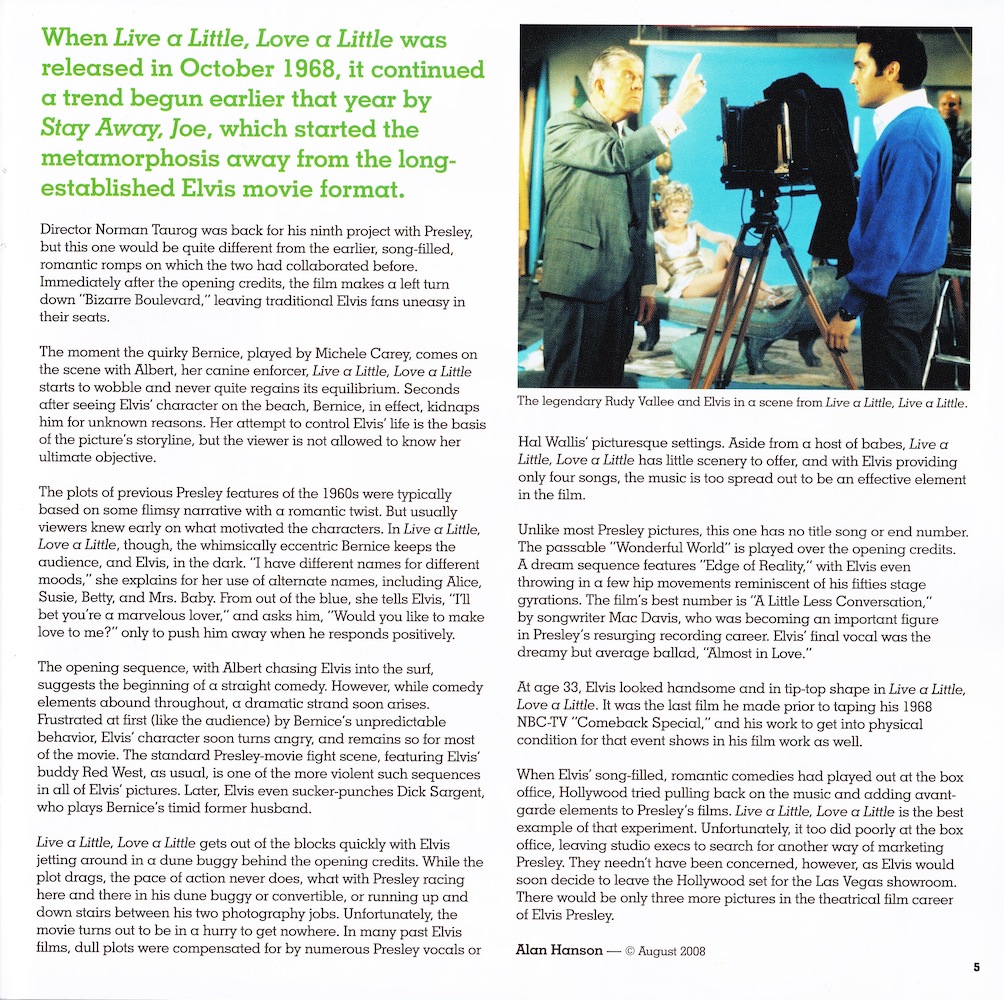
Live A Little, Love A Little would be Elvis’ twenty-eighth movie which at last featured somewhat more of an adult theme. Norman Taurog was back as director for his ninth and final film with Elvis. This time Michael Hoey supplied an agreeable script and, with some quality co-stars in the film, it utilised Elvis’ strength as a comedic actor.
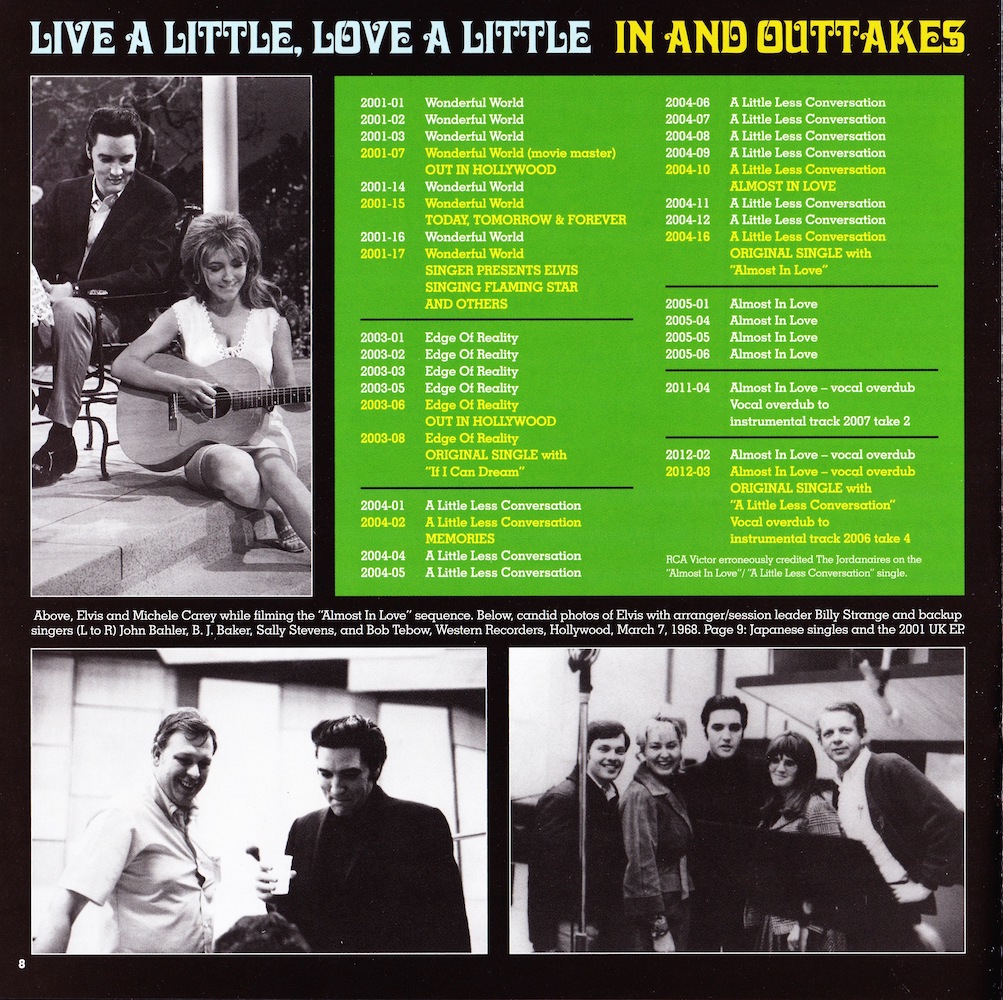
The soundtrack session would be booked for March 7 1968 with only four songs required.
Billy Strange had been booked for Elvis’ cancelled August 1967 session and seven months later he would work for MGM as their session producer with new musicians from LA’s famous “Wrecking Crew” (Beach Boys, Phil Spector etc.).
The session was booked at Western Recorders, an independent Hollywood studio. Drummer Hal Blaine had played on plenty Elvis sessions in the past but the rest of the musicians were new. Several of them, including Hal Blaine, Al Casey on guitar, Larry Knechtal on bass and keyboards, Don Randi on piano, and Charles Berghofer on bass, would go on to play on Elvis’ 1968 NBC-TV special recordings also at Western Recorders.
Another new set of circumstances would be that Elvis would also be recording with a live orchestra. Including the four background vocalists, there would be over forty musicians in the studio. Everything would be well-rehearsed and the arrangements would be written out for all the musicians. Elvis had certainly not recorded in this manner before.
Original Chart Releases
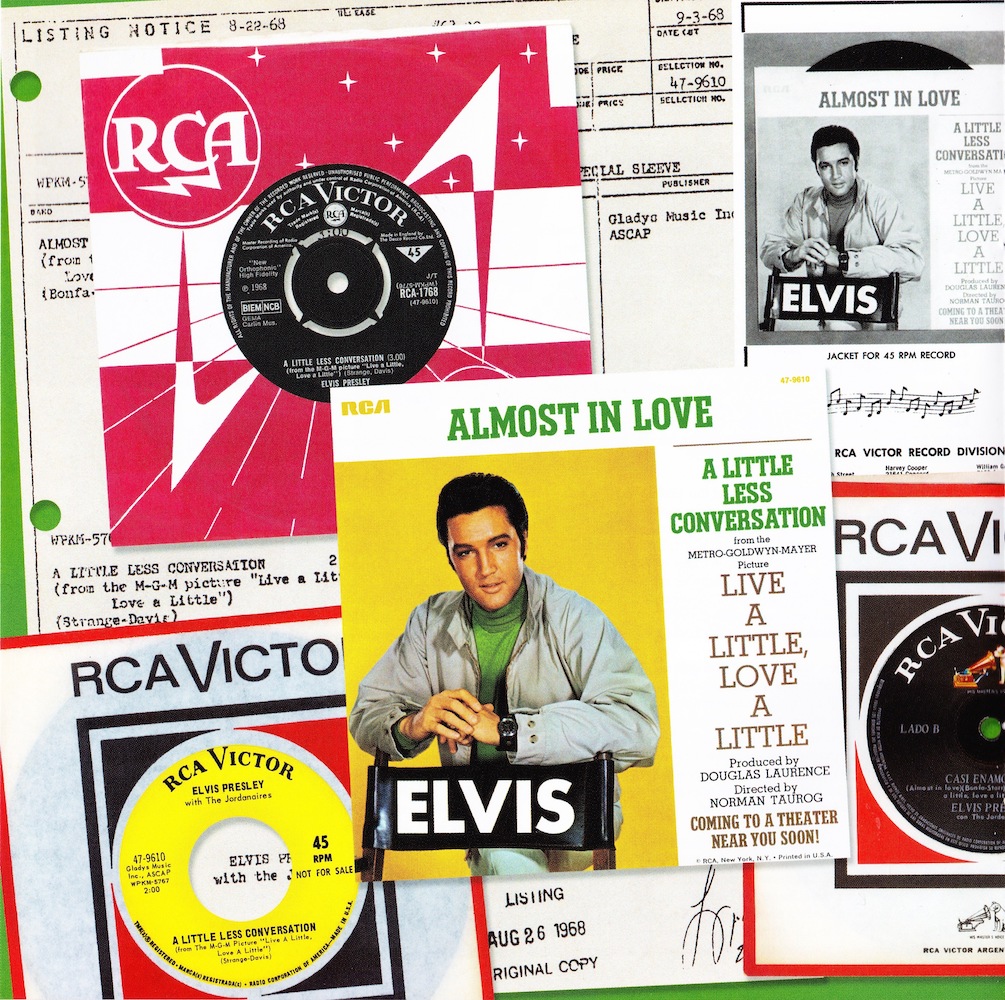
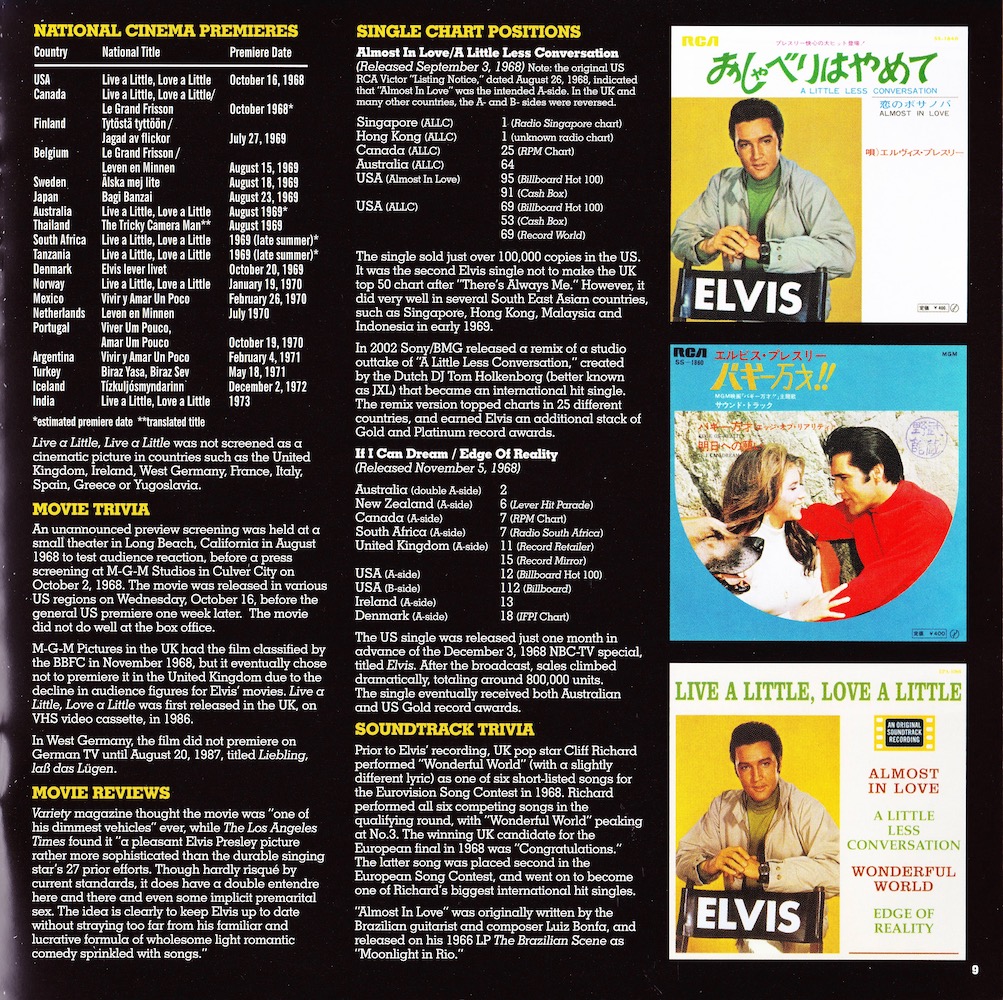
'A Little Less Conversation'/'Almost In Love'. Released in September 1968, it would only reach a disappointing #69/95 in the Billboard charts.
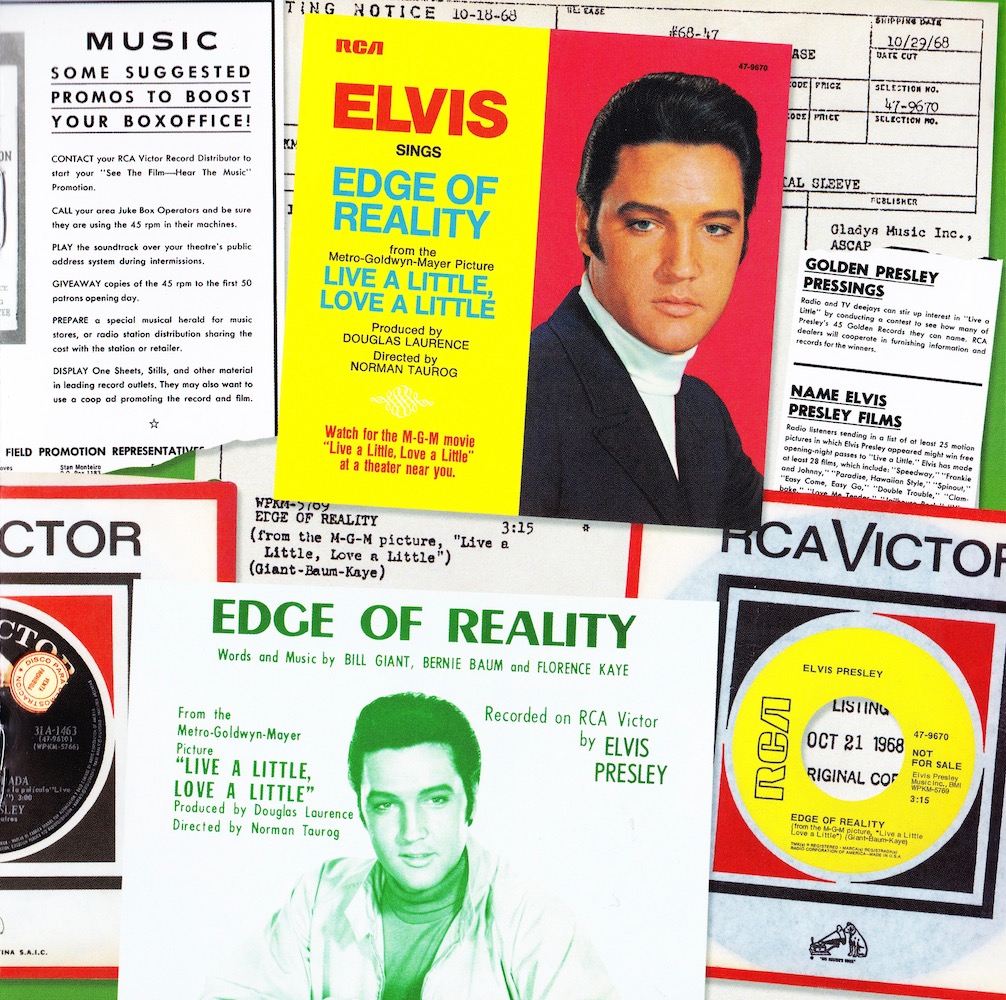
'If I Can Dream'/'Edge Of Reality'. Released in October 1968 as the lead-in single to Elvis’ NBC-TV special, it would get to #12 in the Billboard charts. This was his highest charting single since ‘I’m Yours’ back in 1965.
The single would also go top-ten in other countries with the B-side, 'Edge Of Reality', hitting the number two spot in Australia.
Billy Strange, worked as an MGM producer along with engineer Chuck Britz. Somewhat surprisingly, Felton Jarvis would not be involved in the session.
Until recently only a couple of the outtakes have been released (even on bootleg) but with the session tapes at last discovered FTD released their highly anticipated soundtrack album.
October 2015 was an interesting time for Elvis musicologists. Firstly, there was the anticipated and globally advertised If I Can Dream - an overdub / remix CD of varied Elvis songs with The Royal Philharmonic Orchestra. The publicity for the album noted, “Elvis often talked of his desire to record with a full orchestra”.
In a fascinating coincidence, in the same month FTD quietly released a genuine studio session of Elvis recording “live” with a full 40-piece orchestra for the Live A Little, Love A Little soundtrack. So what does the FTD CD give collectors? How does Elvis work in the studio with a full orchestra?
We examine this new release, as well as looking carefully at each of the four songs take by take to see what this CD has to offer.
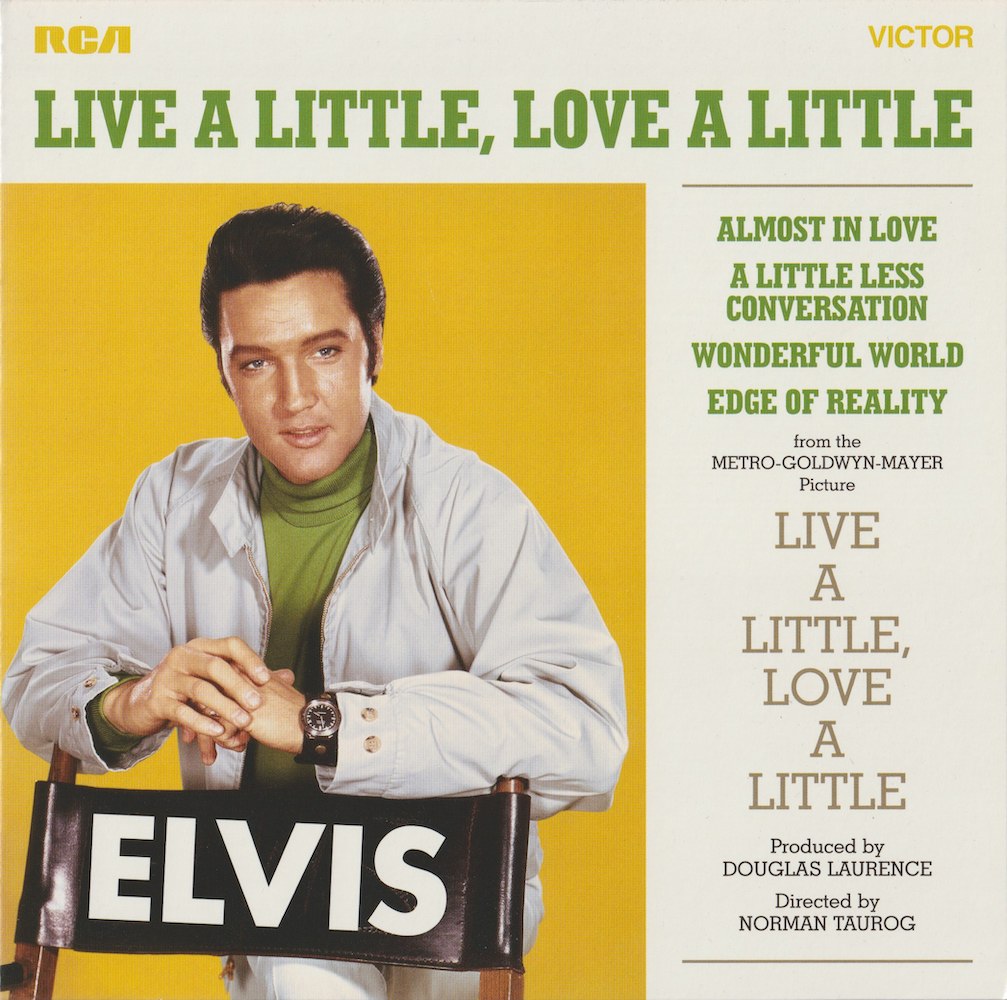
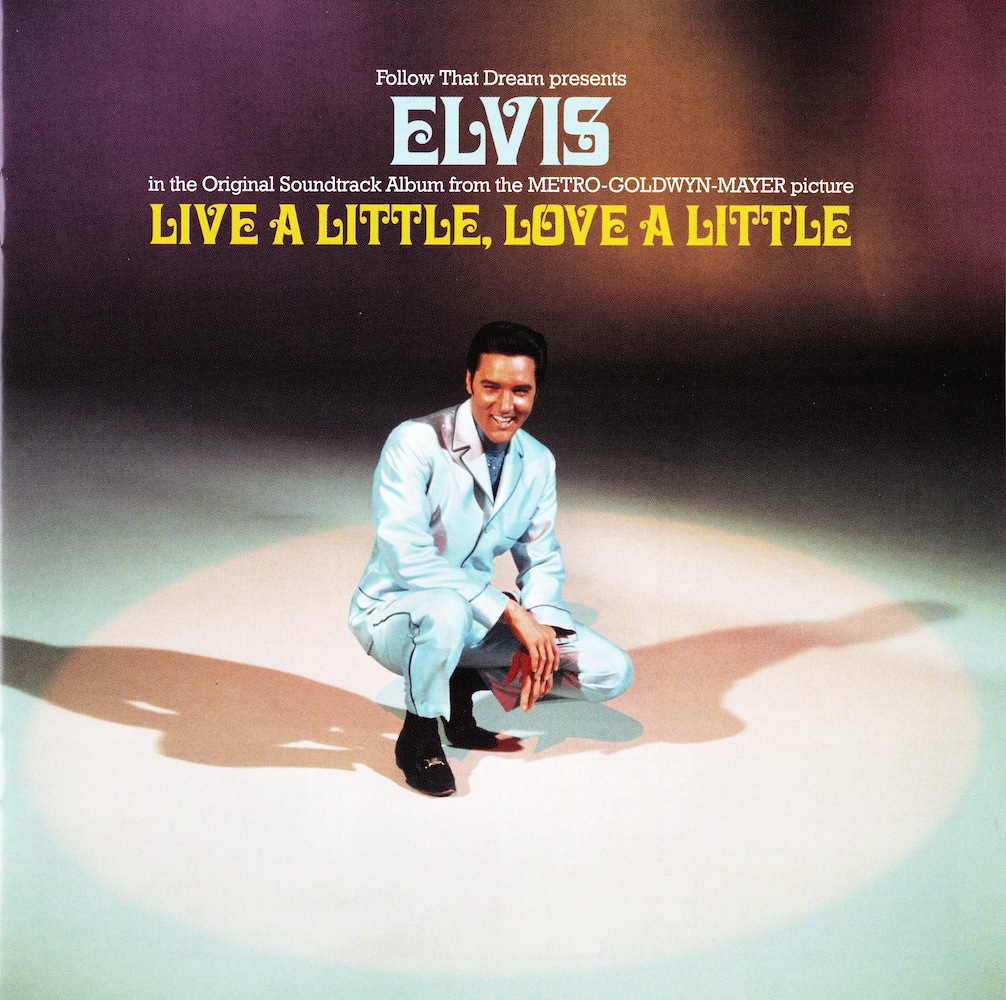
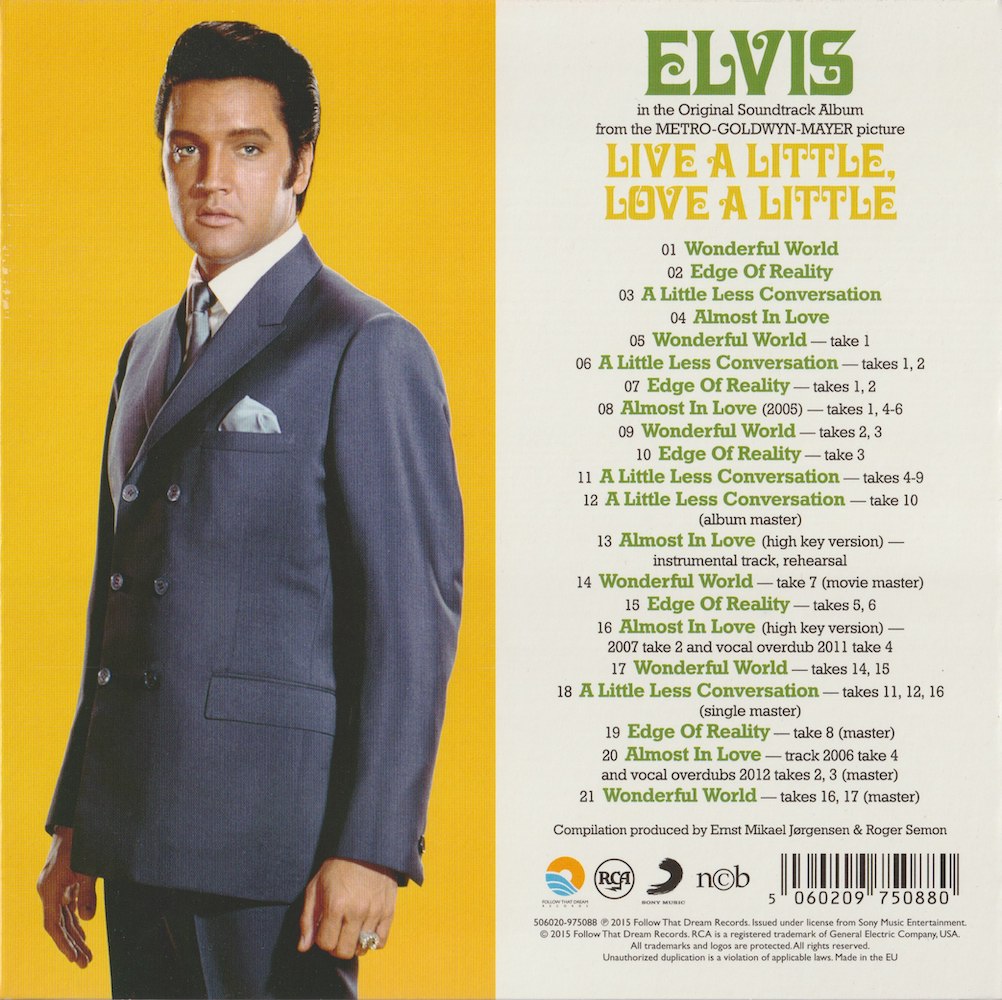
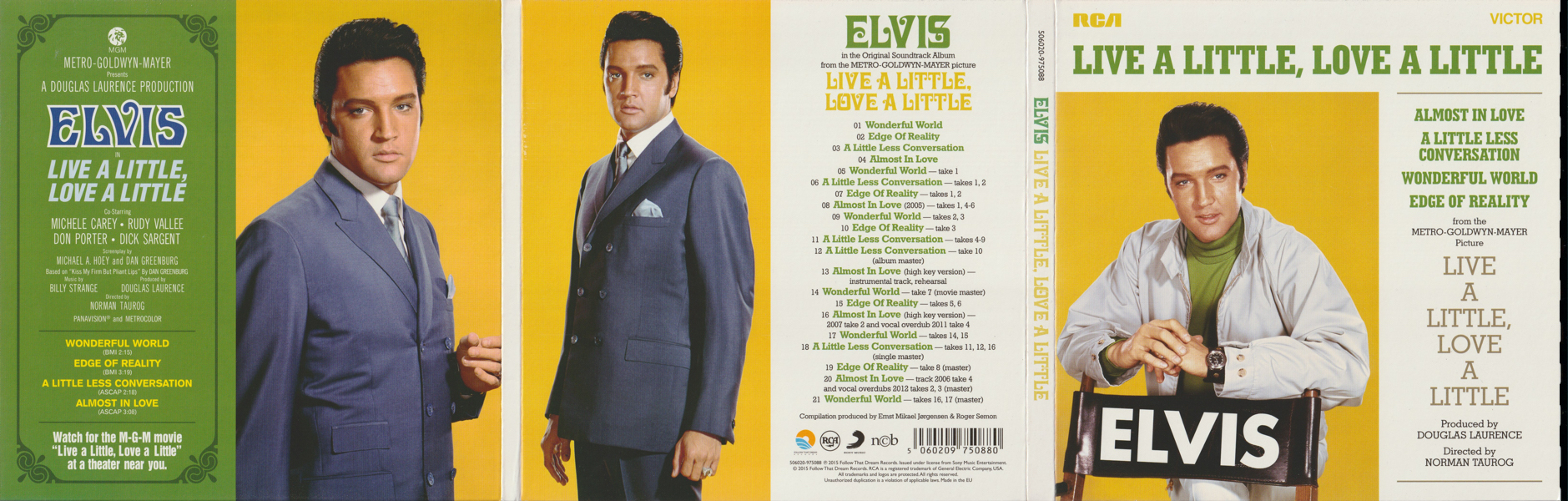
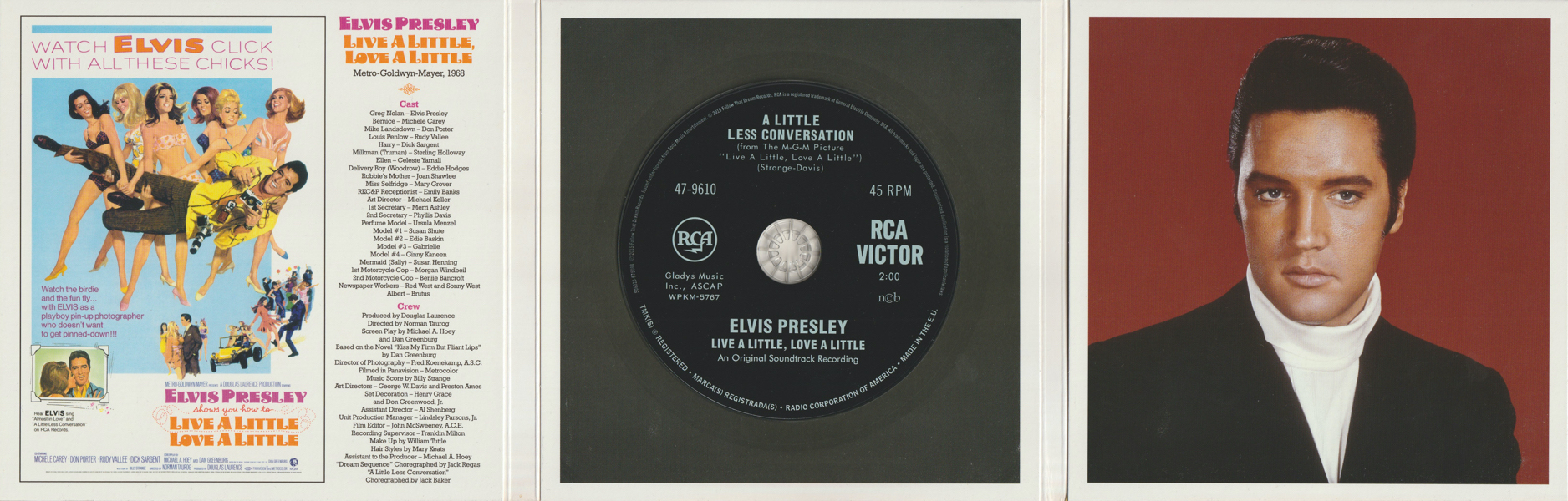
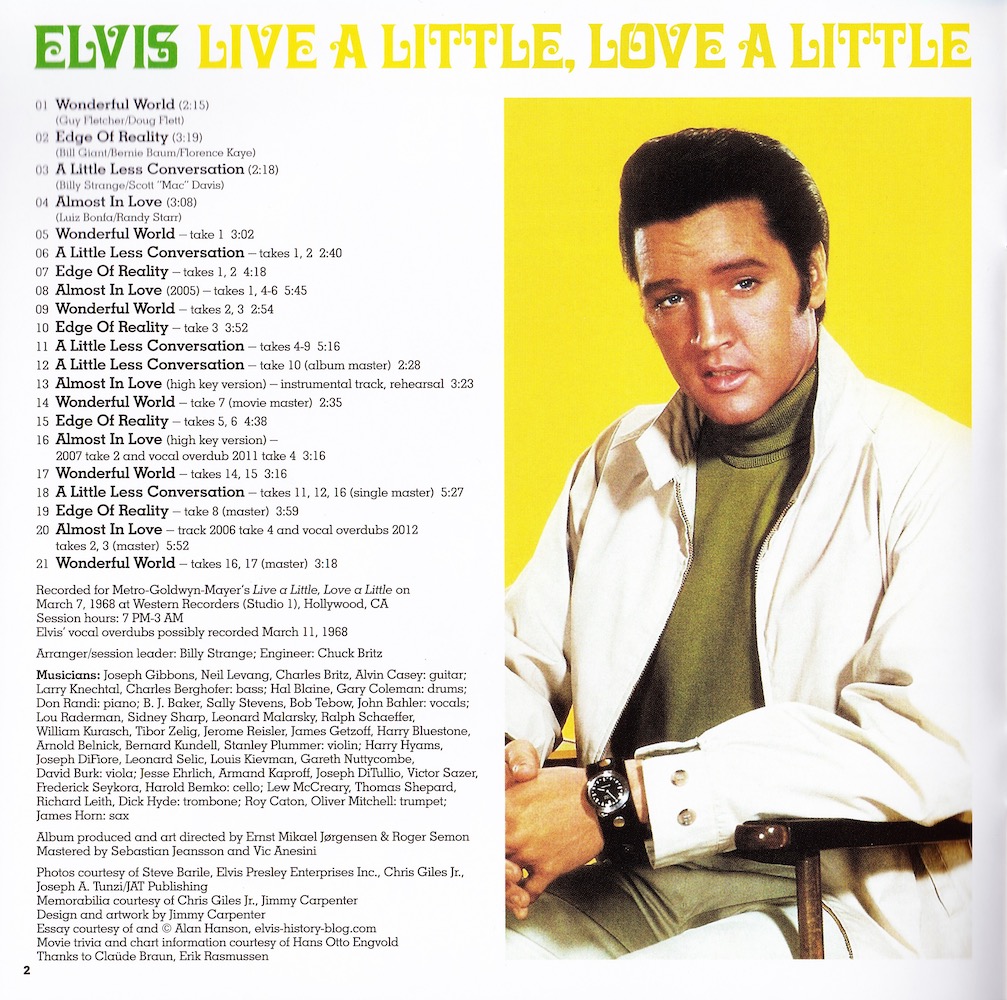
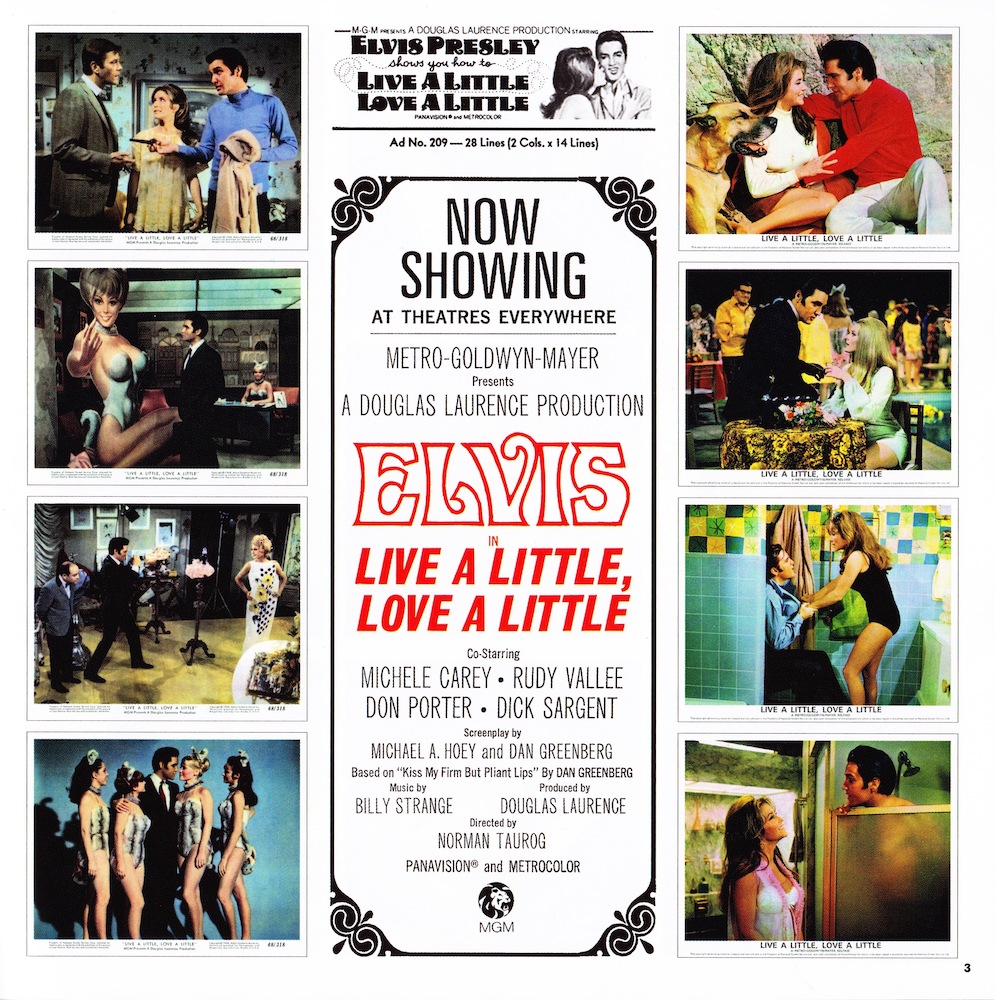
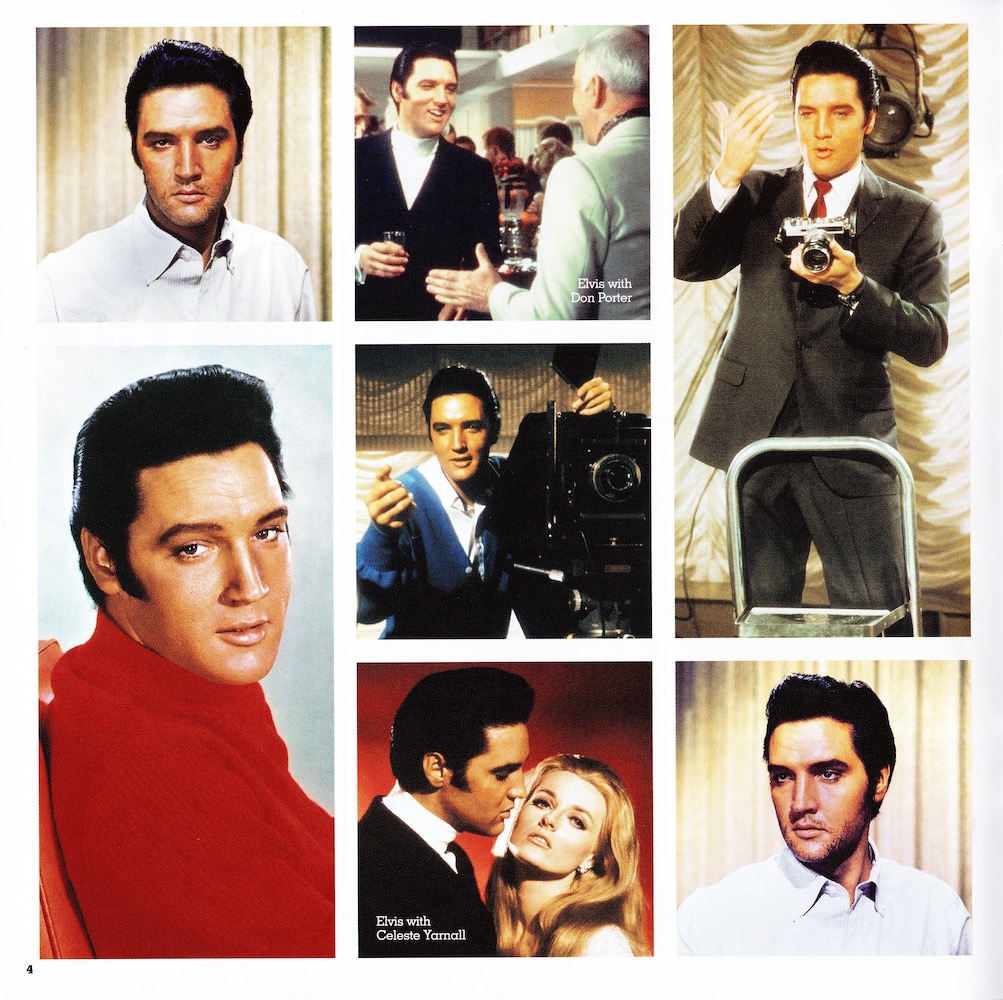
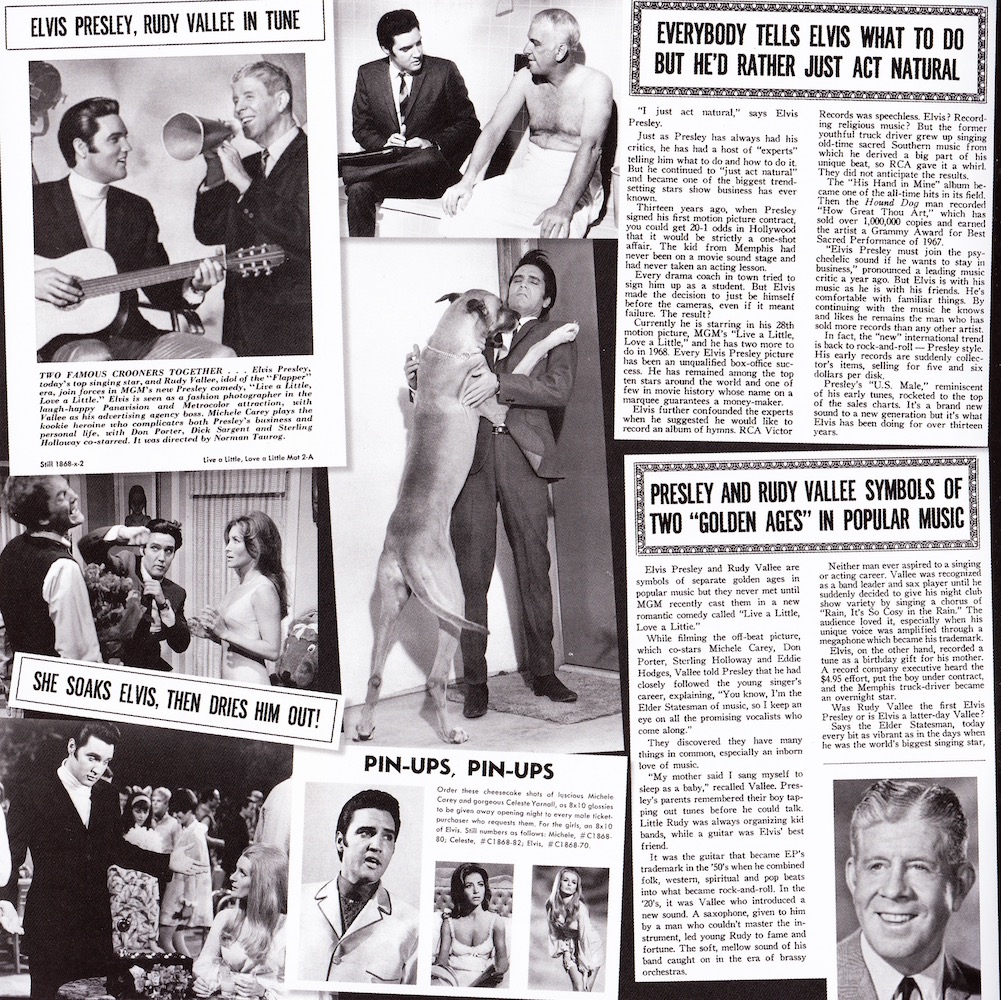
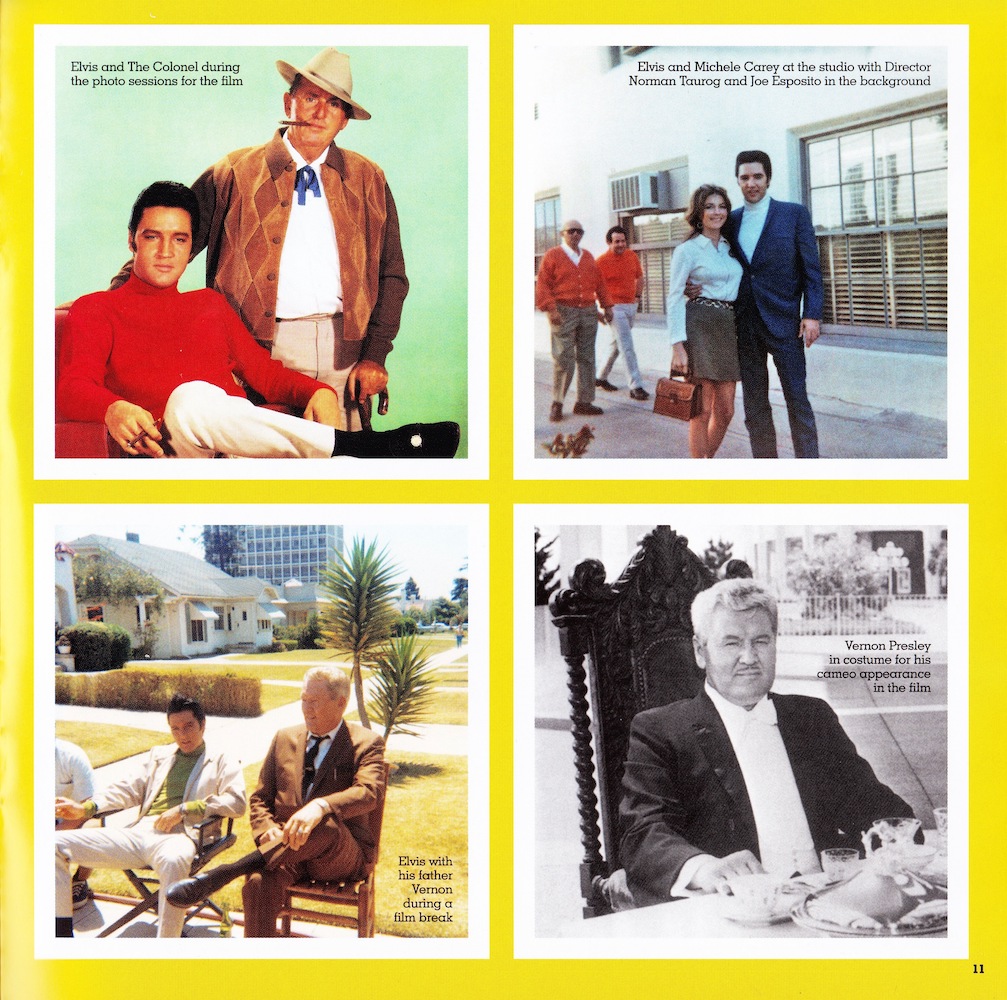
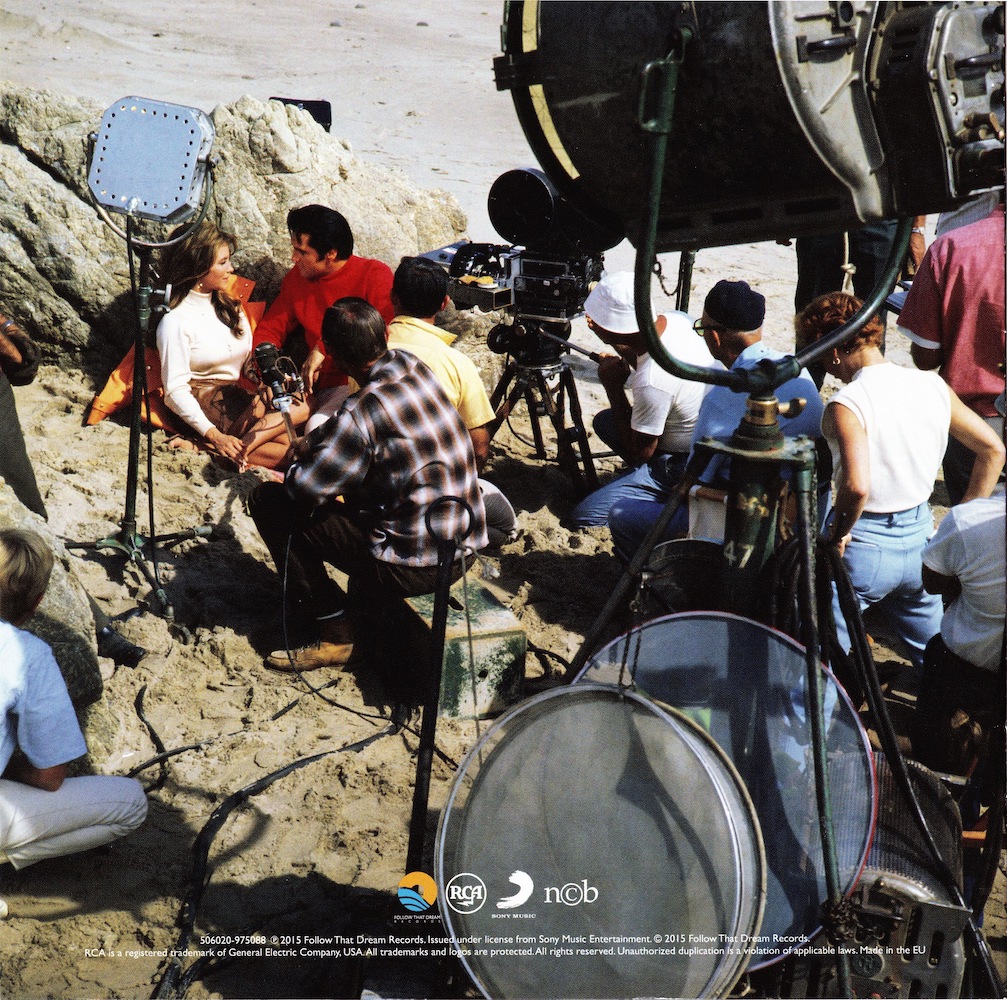
The packaging for this CD is fantastic. The photo on the back cover is a brilliant publicity shot that I have not really seen before. The inside cover of the movie poster is cool, as are all the photos. The twelve-page booklet is an array of movie cards, information, candid shots (Charro preps?), press clippings, record covers and some trivia. Well done!
Wonderful World
Composed by Guy Fletcher and Doug Flett (who would go on to provide the gorgeous ‘Just Pretend’), the song was unlike anything Elvis had previously recorded. Written as a waltz, it was a strange choice to start the session. With a full orchestra and everyone well-rehearsed, the takes only slight differ as, once he has found his feet, Elvis seems to be inspired by the new setting and large ensemble and provides a strong vocal.
Track 1, Master - Take 17:
This was originally available on the Singer/Camden LP Flaming Star.
Track 5, Take 1:
This is a full take and it is nice to hear the first attempt. The track starts with thirty secs of studio banter and preparation; however, we get a full 2:25 version. The studio intro nicely sets the scene as you can hear the orchestra rehearsing while Elvis also quietly practises the lyrics. Elvis does sound in a different key at the start and his voice is not as full and powerful as the master. The orchestra has slight tempo issues and Elvis’ vocal also wanders and fades at times, however, as an obvious rough run-though, it is a great take to add to our collection.
Track 9, Takes 2 and 3:
Take 2 is a short false start. Take 3 presents us with another full take. There is some studio talk at the start and it sounds like the female vocalists getting ready. This is a nice mix with the orchestra more left channel and the rhythm section with female backup on the right channel. Elvis’ voice is getting stronger on this take. Elvis whistles at the fade-out realising the trickiness of getting all the forty musicians to do a perfect take. I have always thought this was a great choice of song to start the movie and hearing the creation of this song with Elvis and the orchestra is exciting to listen to.
Takes 4, 5 and 6 are not on this CD
Track 14, Take 7:
The movie master - which emphasises both the orchestra and backing vocalists in the mix over the later selected record version.
Takes 8, 9, 10, 11, 12 and 13 - not on CD
Track 17, Takes 14 and 15:
Elvis seems happy at the start of Take 14 noting, “Good, good” but it stops for no apparent reason and lasts only twenty seconds. Take 15 is a delight with Elvis’ vocal range stronger, with the rhythm section lower in the mix which reduces the stringency of the waltz arrangement. It also has a longer outro. Another full take; another bonus.
Track 21, Takes 16 and 17 - master:
Take 16 is another short false start and lasting only twenty seconds. It seemed to be going well and with Elvis in good voice, but he breaks and requests “Let’s start again”. He nails for the next take - the master. What a great song!
Edge of Reality
Composers Giant / Baum / Kaye who had supplied so many weak soundtrack songs in the past supplied the stunning ‘Edge Of Reality’. This was radically different to anything they had previously written, although the orchestral arrangement by Billy Strange had a lot to do with the final result. It is worth listening to the full orchestral arrangement on the introduction and realising just how similar the concept is to the “New” If I Can Dream RPO overdubs. Yes, Elvis was already there recording live with a full orchestra in 1968, and with complicated arrangements.
Track 2, Master - Take 8:
This was originally a B-side to ‘If I Can Dream’ and on the Camden Almost in Love album. It was also released as a double A-side that went to No 2 on the Australian charts in 1968. The sublime orchestral arrangement cleverly captures the psychedellic nature of the song - very contemporary back in 1968. This is one of my favourite Elvis tracks and clip from his movies, so how long have I been waiting for this release? They have a great shot of Elvis on the booklet cover of this CD from the ‘Edge of Reality’ segment in the movie.
Track 7, Takes 1 and 2:
Arranger Billy Strange tells the assembled cast, “Big heavy cellos on the intro, as much as you can get!” Take 1 falls apart immediately; however, Take 2 is a full take of 3:42 duration complete with outro. This is Elvis’ first attempt vocally on this track and though not as strong as the master, for a first run-through it is a rich performance. The honky-tonk piano (Don Randi) is also far more prominent in this take.
Track 10, Take 3:
Another full take. The piano is subtler now and Elvis is still working on the phrasing of the lyric “name” during the chorus. The “reality” is more prominent in the outro. Time 3:35.
Take 4 - not on this CD
Track 15, Takes 5 and 6:
Take 5 is a short false start with some studio banter about inserting vocals into a particular section of the song. Elvis vocally only gets to “I walk” laughing, “God damn, sorry!”. Take 6 has been previously released on the FTD Out in Hollywood. It is close to the master with just a few minor differences noted.
Take 7 - not on this CD.
Track 19, Master - Take 8:
A gem of a song!
A Little Less Conversation
A fantastic number that decades later, as an inspired remix, would go on to become one of Elvis’ biggest selling singles of all time.
Track 3, Master - Take 16:
Originally the B-side of the single to ‘Almost In Love’, this is also the version as heard in the actual movie.
Track 6, Takes 1 and 2:
On Take 1 we get the full drum intro on this one and it starts off exciting. However, Elvis fluffs the first line and it is only a short false start. It runs only twenty seconds, but Elvis jokingly asks “Can we get a pick up from there?” Take 2 is a surprise. According to the included booklet it is stated that this take was also on Memories the 1968 TV Special CD and the take used for the 2002 Elvis vs JXL hit. The pre-publicity was stating this was a major find and that they didn’t realise that the acetate used on Memories and also by JXL was Take 2 from the movie sessions.
I really had to take a few listens at this take, because at first, I thought – no way! At the intro Elvis does a slight “Arrrgh”; the mix is mainly to his voice and not so much the bass and on the ending there sounds like a skip (listen at 2:14) with a slightly muddled finish. “lost it at the ending”. If this is the take they used with JXL, then they did a fantastic final production.
Take 3 - not on this CD.
Track 11, Takes 4 to 9:
Take 4 starts with a strong drum and bass intro, but Elvis fumbles the lyrics and goes blah, blah - “gone to hell” and has some fun with the lyrics. Only twenty-six seconds long. Take 5 is only a short intro. Take 6 is a long false start that continues for 1:22 with Elvis ending in a "Hey, hey, ho, ho!" Take 7 is a short false start with Hal Blaine missing on the intro. Take 8 is a short false start, with a “Hey Billy” after two seconds. Take 9 is a long false start with the bass picking up on this one. Elvis gets the “come on, come on” askew during the chorus at 1:28.
Track 12, Take 10 - (Album Master):
As featured on the Camden Almost In Love LP. And while the mix is similar, Elvis’ vocal is not quite as strong as on the single release. He notably starts the song without the animated “Hey…”.
Track 18, Takes 11, 12 and 16 (Single Master):
Take 11 starts with a good intro of drums, bass, guitar and Elvis starting with “Hey”. It is a long false start with Elvis asking “Is Billy strange?” referring to the orchestra leader’s name.
Take 12 is also a long false start with a strong intro and Elvis getting grittier with the voicing of the lyrics, but it is lost on the “wait around” section of the lyrics. Another fun take of Elvis obviously enjoying himself trying to do this song.
Take 16 is the single master, and by now Elvis sounded more enthusiastic starting with the now famous and animated, “Hey!.. A little less conversation”!
Takes 13, 14 and 15 - not on CD
Almost In Love
The original version ‘Moonlight In Rio’ had been written by Brasilian composer Luiz Bonfá, but here the new English lyrics had been supplied by soundtrack regular Randy Starr. While Elvis sang an exquisite vocal there appeared to be an almost “Johnny Tyronne” feel to Billy Strange’s arrangement!
Track , Master - 2012 Take 3:
This was originally an A-side single and also on the Camden Almost In Love LP, although the intro had been edited on the LP.
Track 8, Takes 1, 4, 5 and 6 (2005):
This is Elvis singing live with the band at first. Take 1 has a subtle guitar intro and it sounds like Elvis misses the cue in comparison to the master, and is a short false start. Take 4 is track only with still a solo guitar intro, but it is another short false start interrupted by “What’s the noise?” Take 5 still has the subtle guitar intro, but sounds like another miscue, a short false start. Take 6 is a full take with the subtle guitar with bass intro, and it seems in parts Elvis mumbles some lyrics. He does do a solo of “Almost in love” at the end. Time 3:06.
Takes 2 and 3 (2005) - not on this CD.
Track 13, High Key version instrumental, rehearsal (Take 2):
This has more twinkle of intro guitar, there is some faint humming along and a big band finish. It is a nice instrumental that I am sure some listeners will enjoy singing along to.
Track 16, High Key rhythm track (2007) Take 2 and vocal overdub (2011) Take 4:
This take sounds a little amiss, as Elvis is maybe off the beat a little. Elvis stops midway, but the track continues. Interesting!
Takes 1, 2 and 3 (2011) - not on this CD.
Take 1 (2012) - not on this CD.
Track 20, Low Key rhythm track (2006) Take 4 and vocal overdub (2012) Takes 2 and 3:
Take 2 is a great take for a bit of fun. At the intro at eleven seconds, it must be Elvis clearing his throat, and a long false start with Elvis breaking with “phew” then “Oh shit!”. Take 3 is the master.
Overall Verdict
With a great running time of seventy-seven minutes this release has a lot to offer: Elvis in great voice, four quality songs and all backed by a live orchestra. It is a genuine effort on the movie soundtrack front that backed a movie that Elvis just couldn’t seem to get a smile off his face. There are a few takes missing here. And if there are some full takes left, it makes me think they just may turn up on another FTD compilation similar to CD 2 of Elvis for Everyone!.
So how does it stack up against If I Can Dream for the better October release?
I appreciate the overall quality of Live A Little, Love A Little with Elvis participating with the musicians and the development of the songs. If I had to pick a favourite this would be it, even though it features only four songs. This CD sounds great on a stereo and even better with quality headphones - you are likely to pick up a few more sounds. It also the sound of the "real" Elvis working with a "real" orchestra.
I have been waiting a long time for some extra takes of these songs and I was not disappointed. This was a great time vocally for Elvis and this CD does not disappoint. It's Elvis in 1968 - Great!
Like they said in the movie trailer “Live a Little, Love a LOT"!!!!