Review by Piers Beagley - Elvis Information Network
ELVIS - the original soundtrack recording from His NBC-TV Special is finally released as an FTD Classic Album.
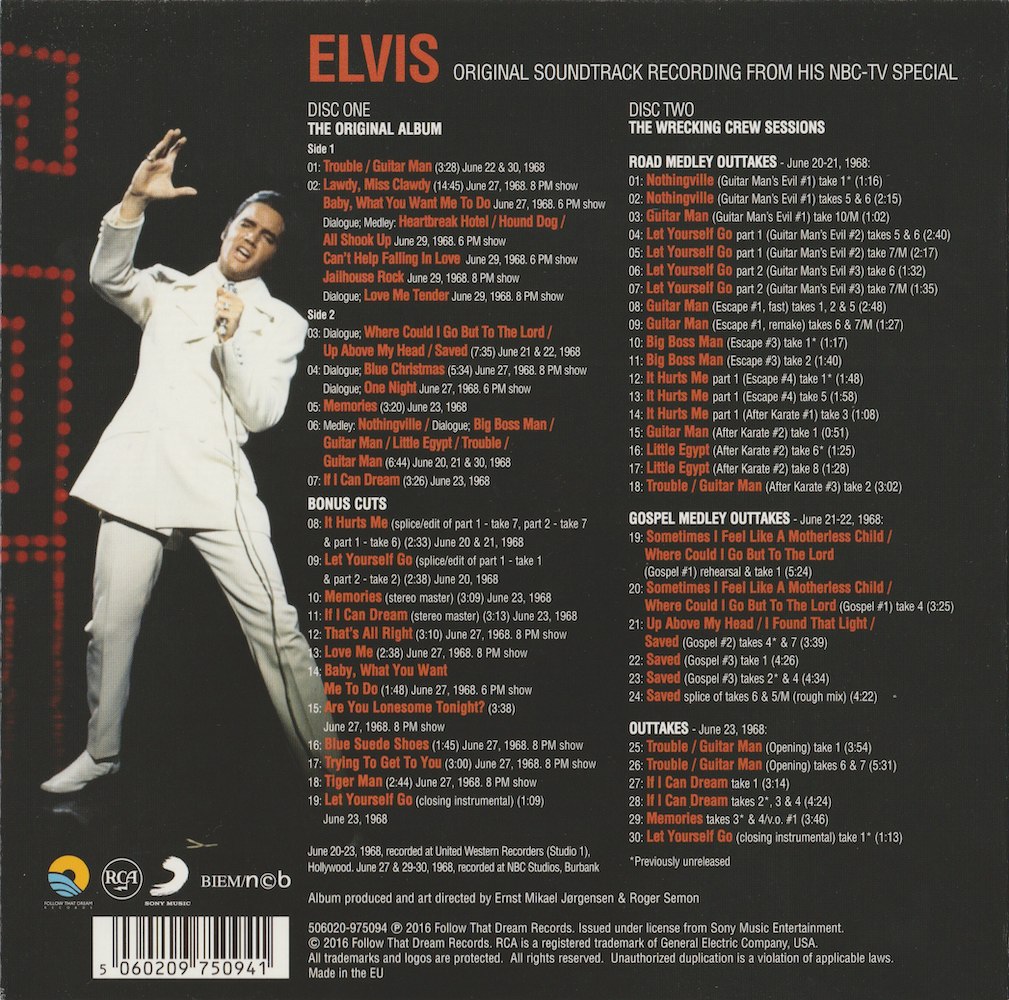
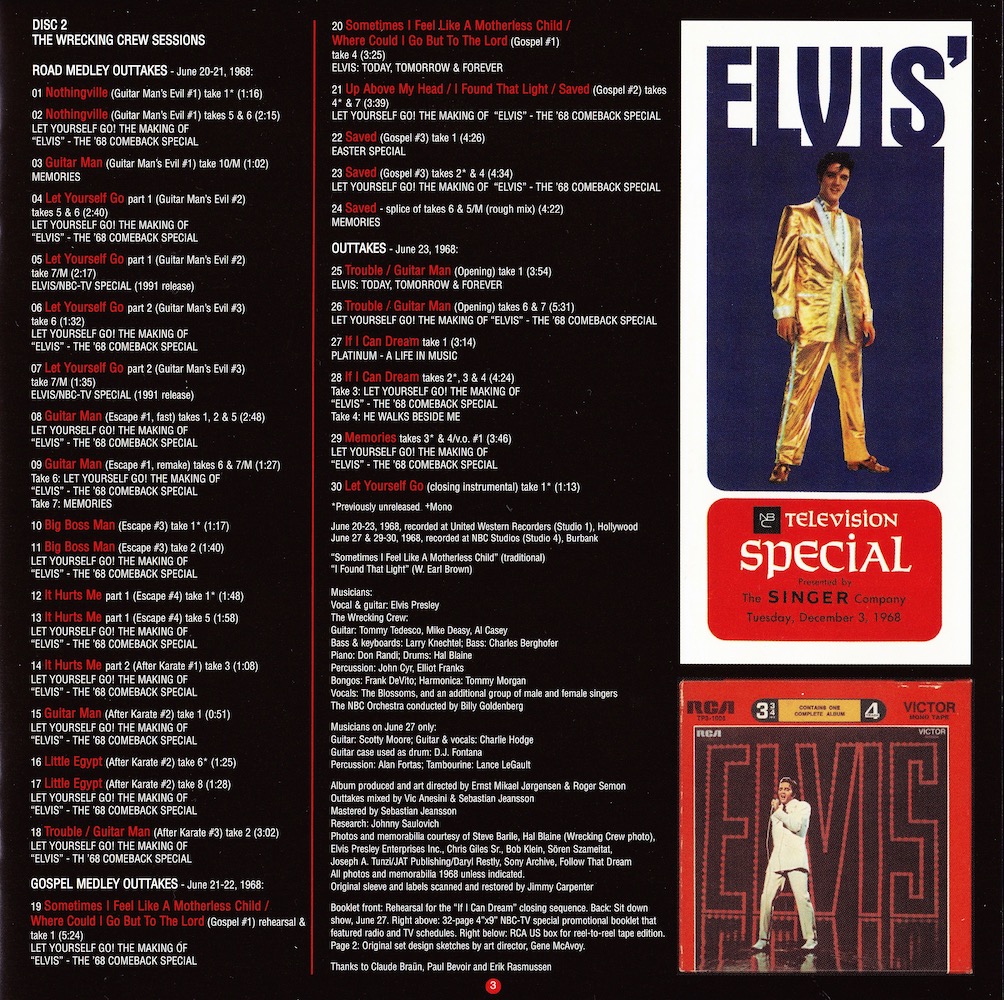
The first disc includes the original album plus the expected bonus tracks, while Disc 2 contains a full 80 minutes of Elvis' studio sessions of June 21-23, with LA session band, “The Wrecking Crew”.
The vast majority of the session outtakes have been previously released, so can this FTD Classic Album really offer anything new?
Two questions here.
1. How many times do RCA/Sony/FTD expect serious Elvis fans to purchase new compilations of the NBC-TV Special all over again? Of course we all bought the original, the extended version, Memories, Tiger Man, FTD’s Burbank ‘68 and Let Yourself Go, as well as the 2008 box-set The Complete Comeback Special - plus all those DVD releases.
2. Elvis’ NBC-TV Special was such a high point in his career - his musical renaissance and the sound of him kicking open the door to his prison cell of movie contracts and dreadful scripts - that can there really ever be enough compilations to satisfy us all?
The obvious answer is that for fans of the Comeback Special there can never really be enough compilations - and joy, oh joy, what a true delight this new Classic Album version is.
To be honest, Elvis' NBC-TV Special was really where it all began for me as an Elvis fan. As a young kid at school this was the very first Elvis LP I ever bought. Looking back I can't imagine how I ever could have afforded to buy an album - it certainly wasn't a present from my parents - although I did start helping out on a newspaper delivery round as soon as I was allowed.
The Packaging
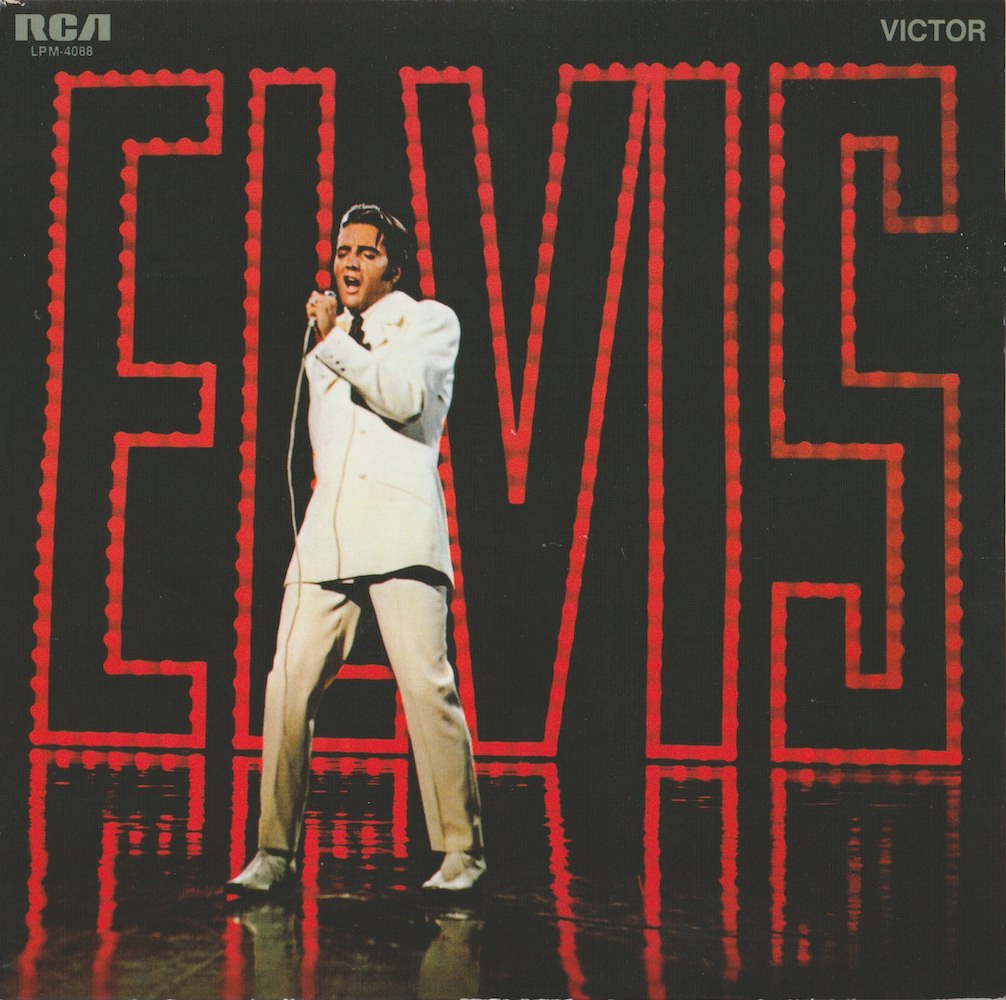
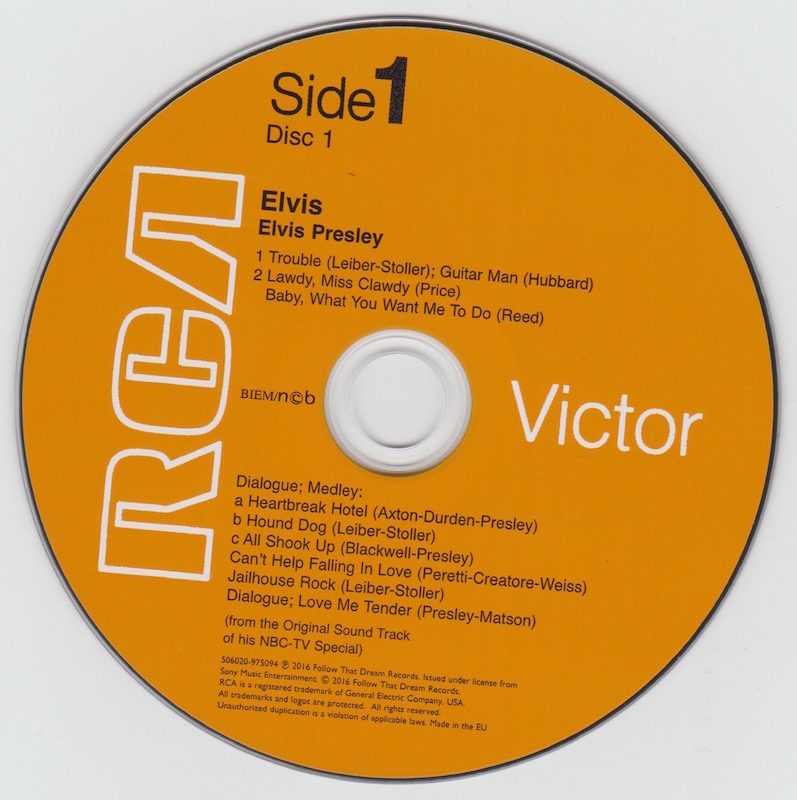
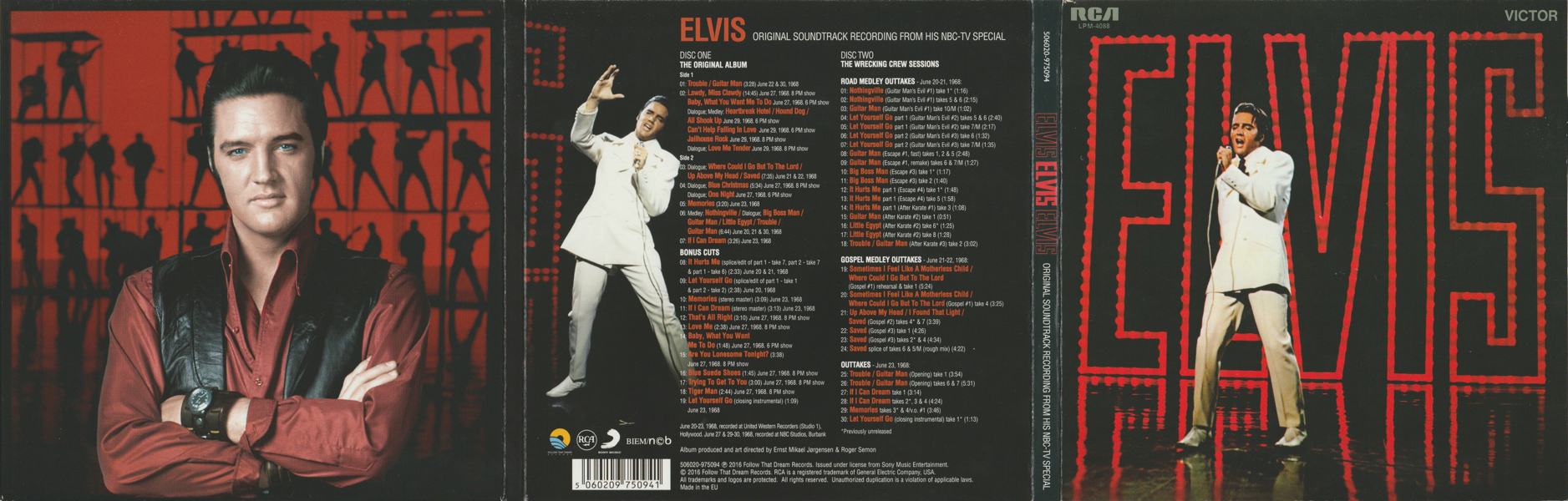
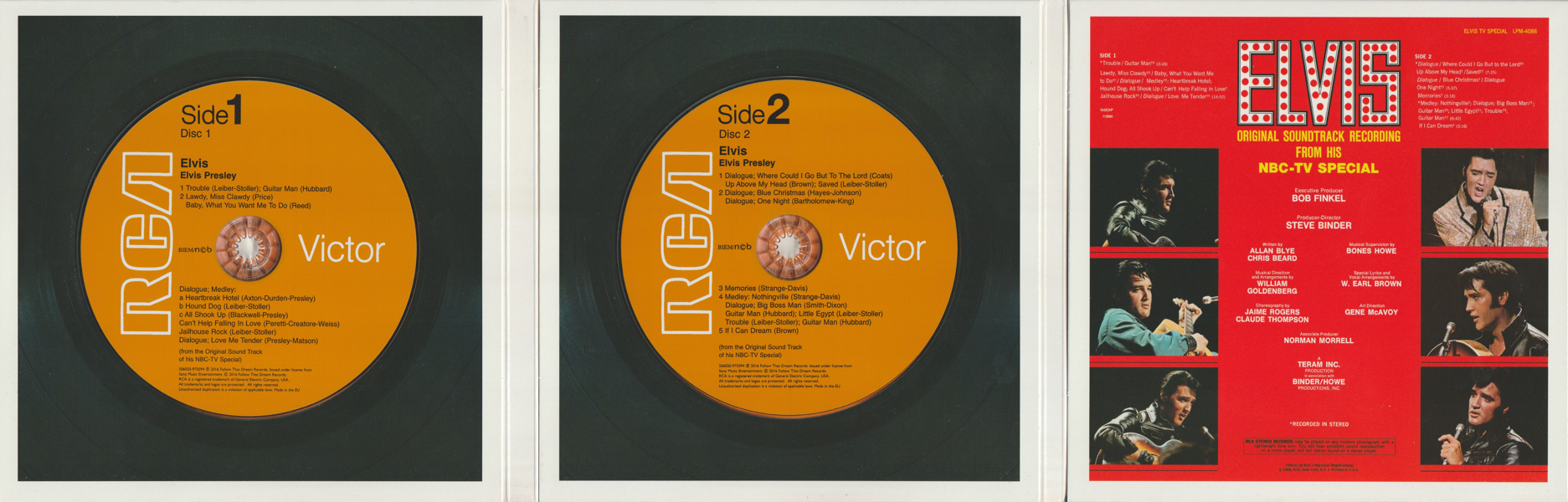
The packaging is fabulous. How terrific to have the original album presented in this stylish 7-inch classic album format. It feels close to picking up the original vinyl version but with a stylish sixteen-page booklet to go with it.
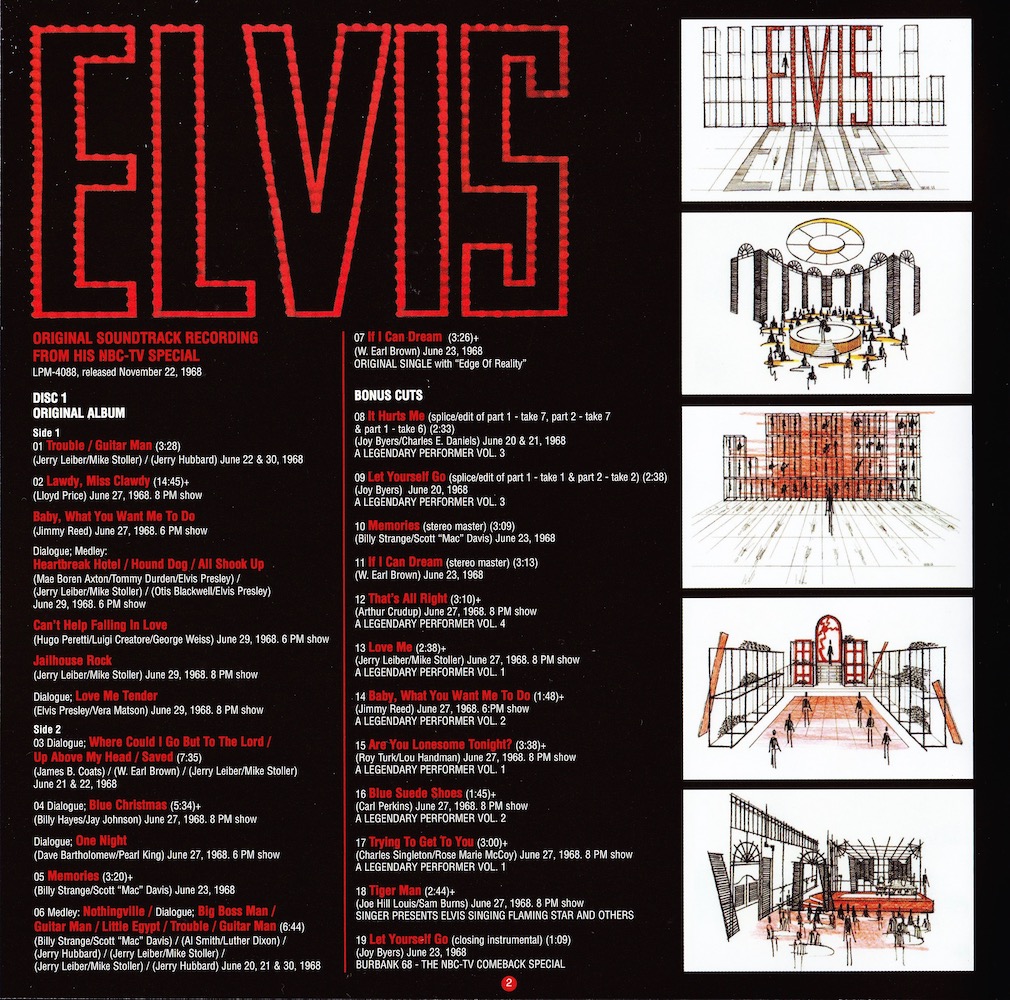
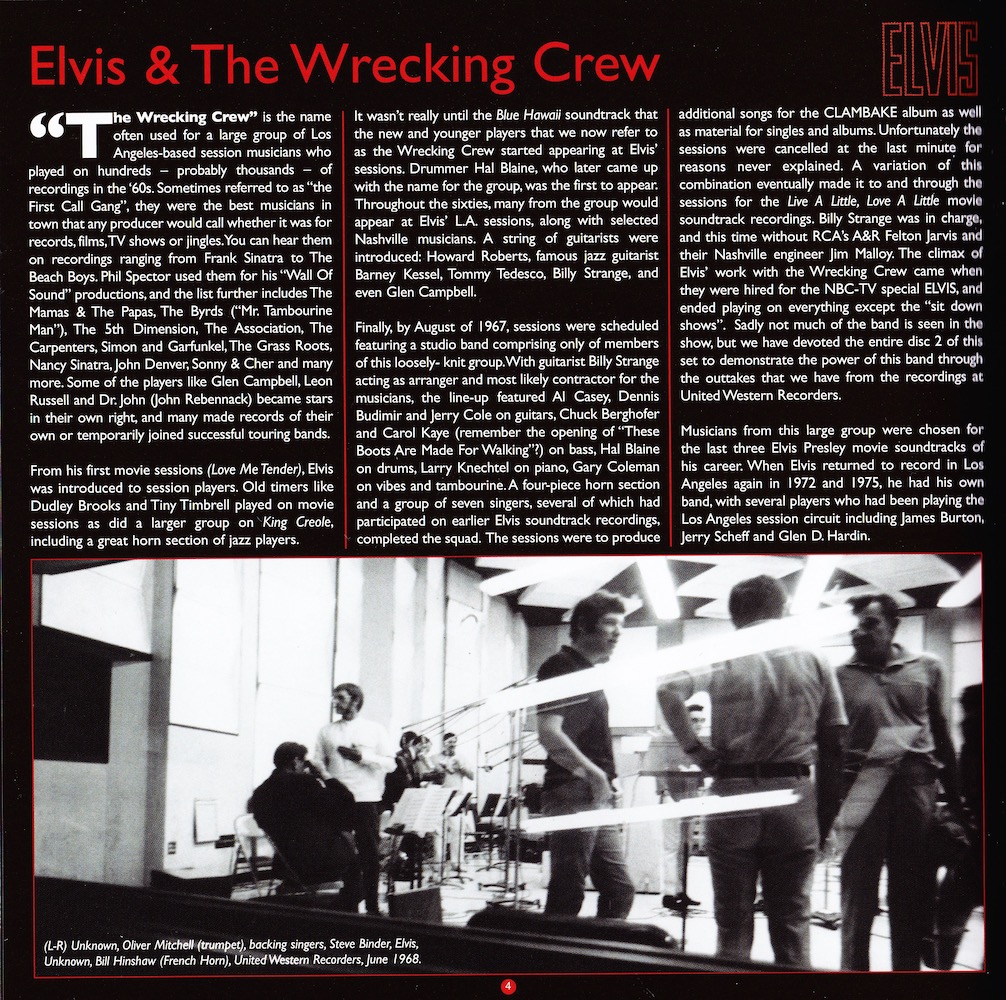
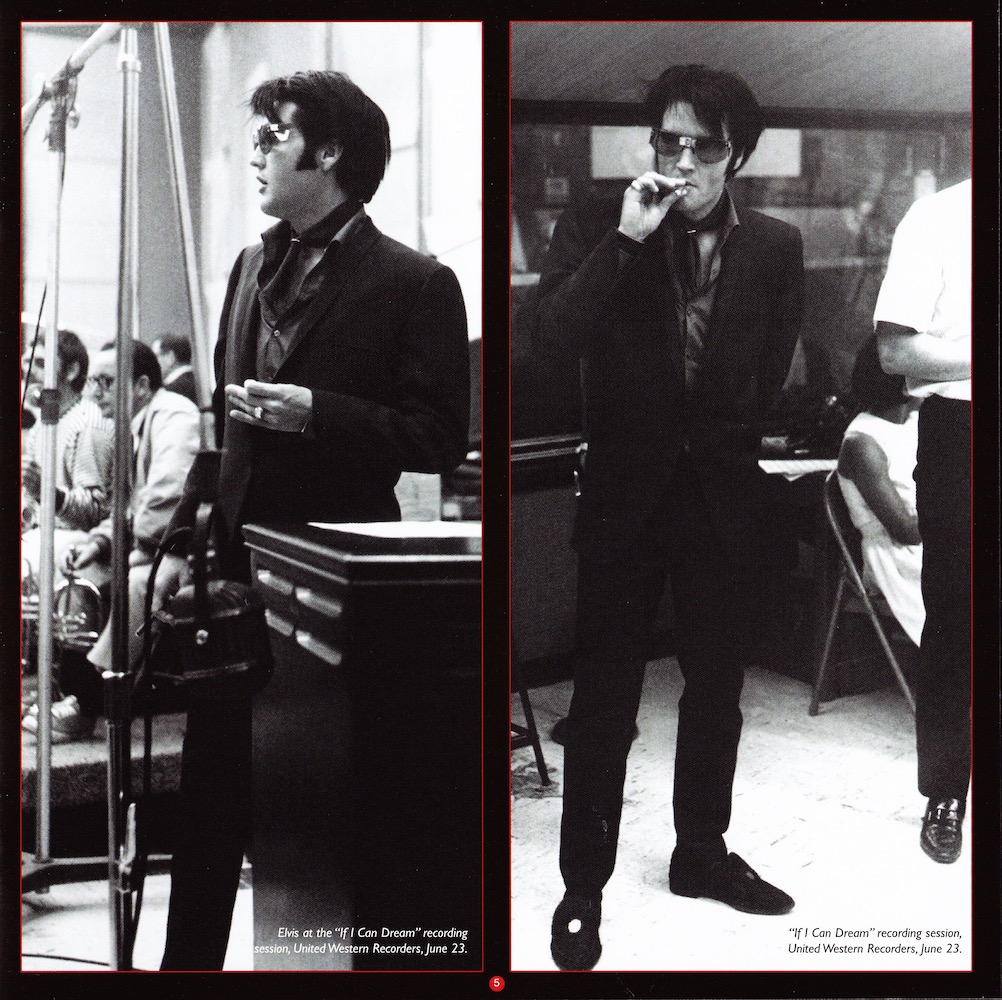
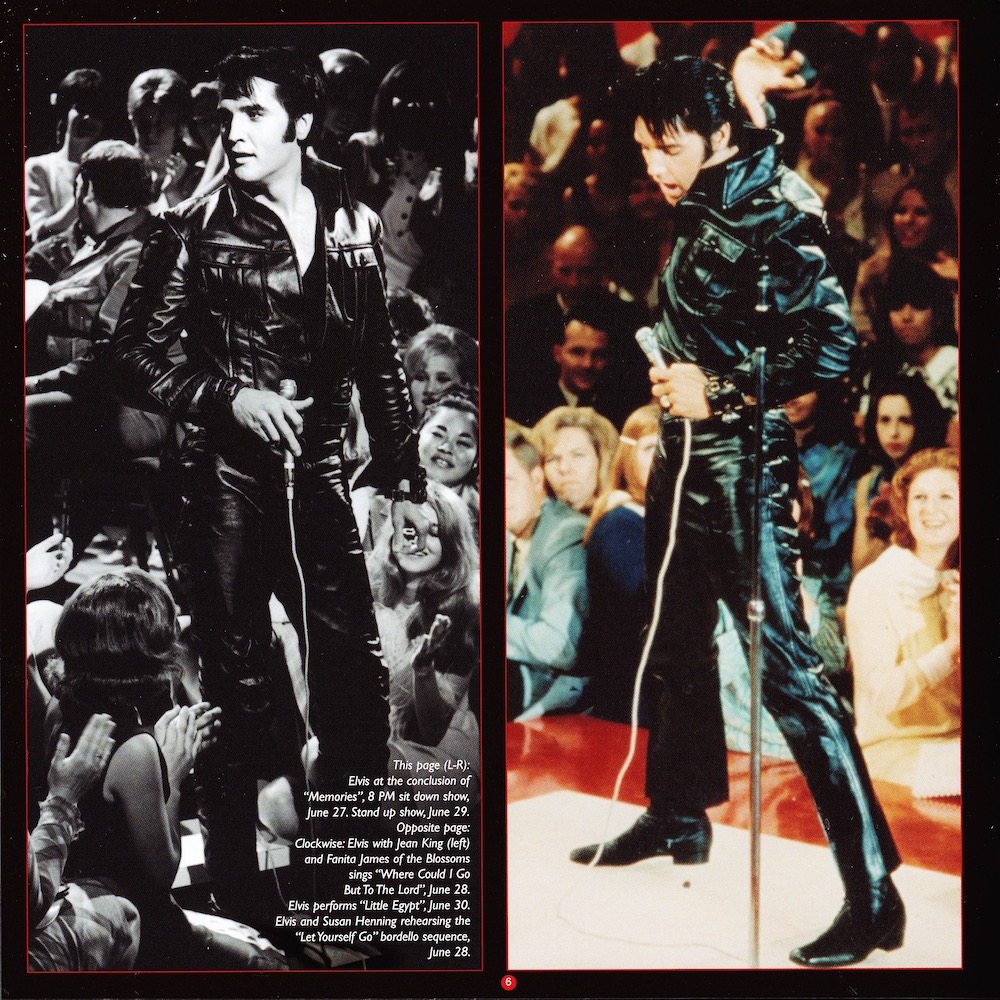
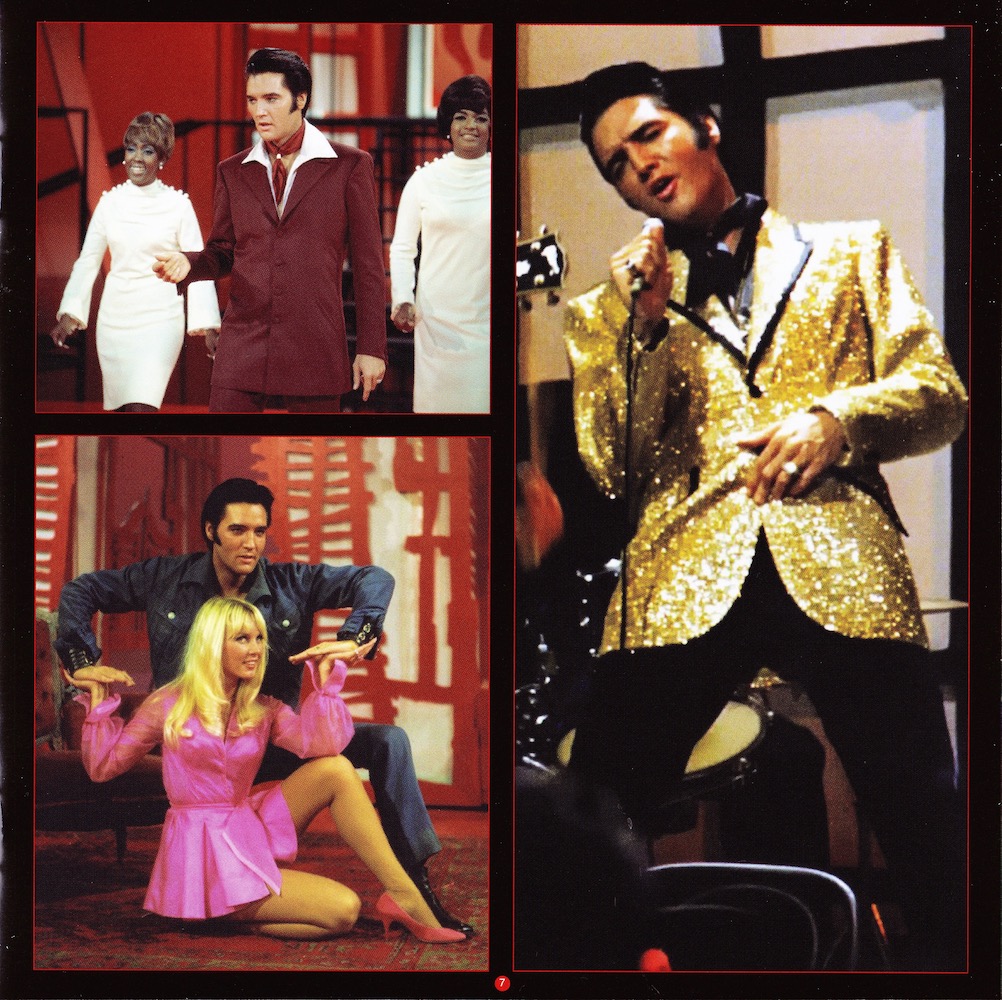
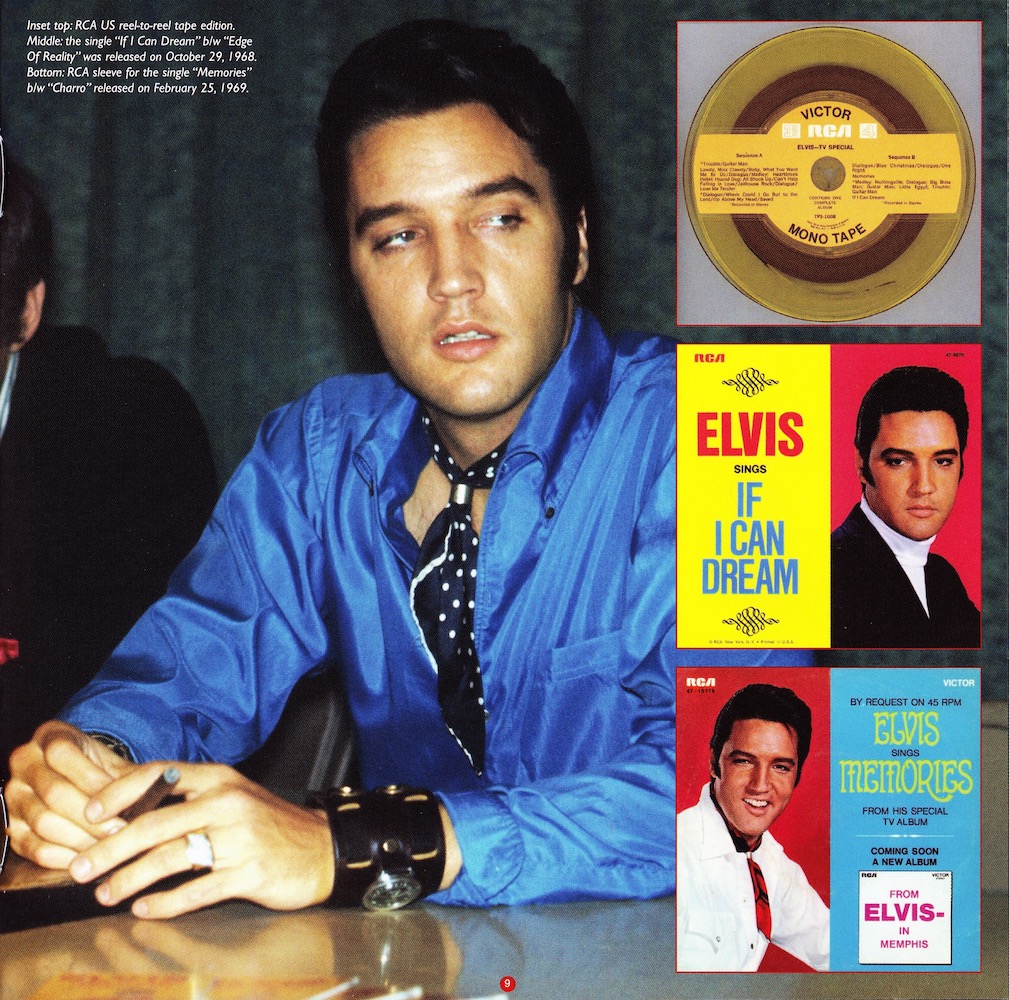
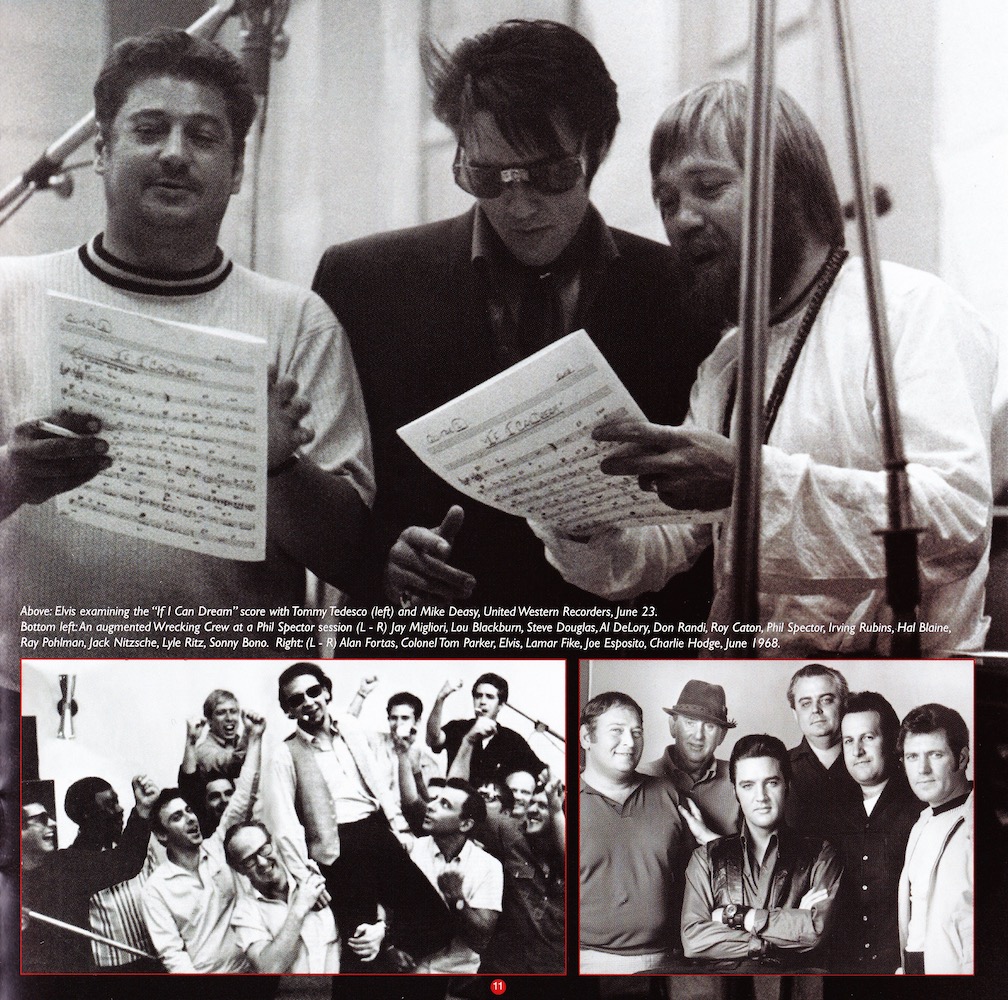
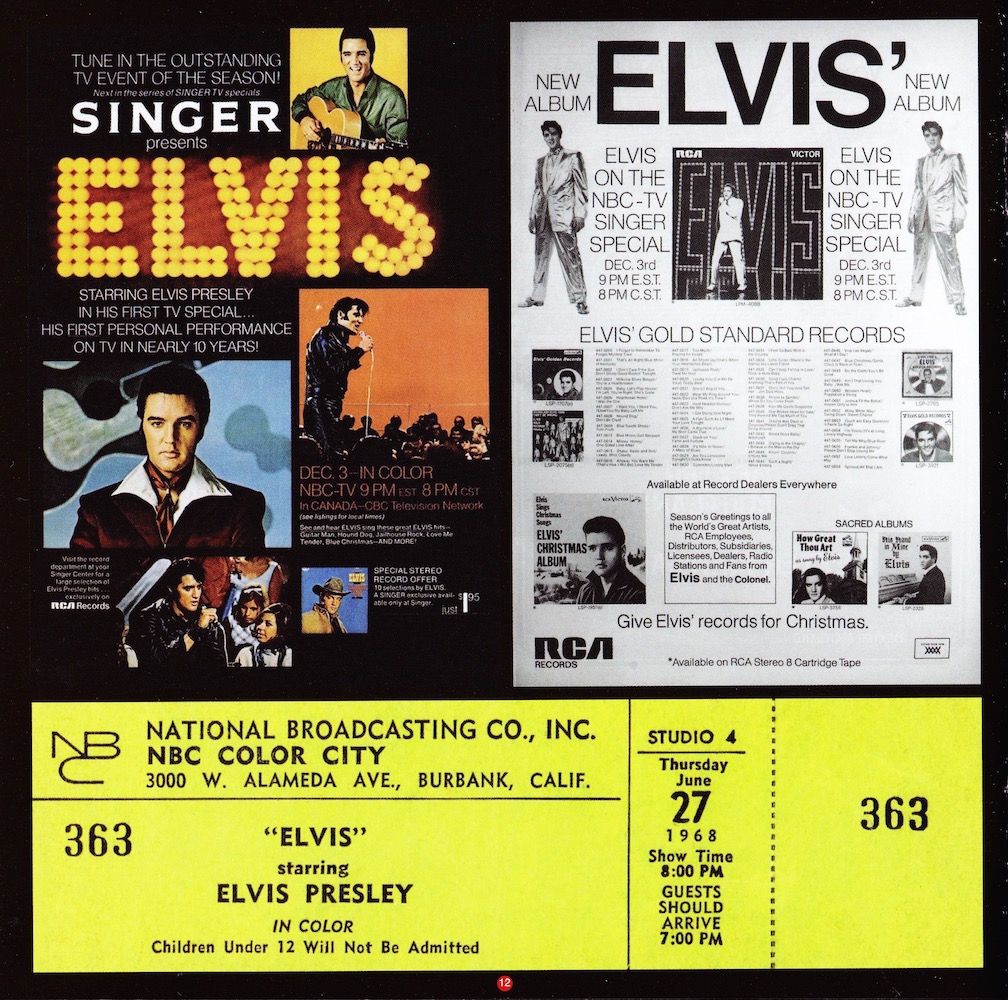
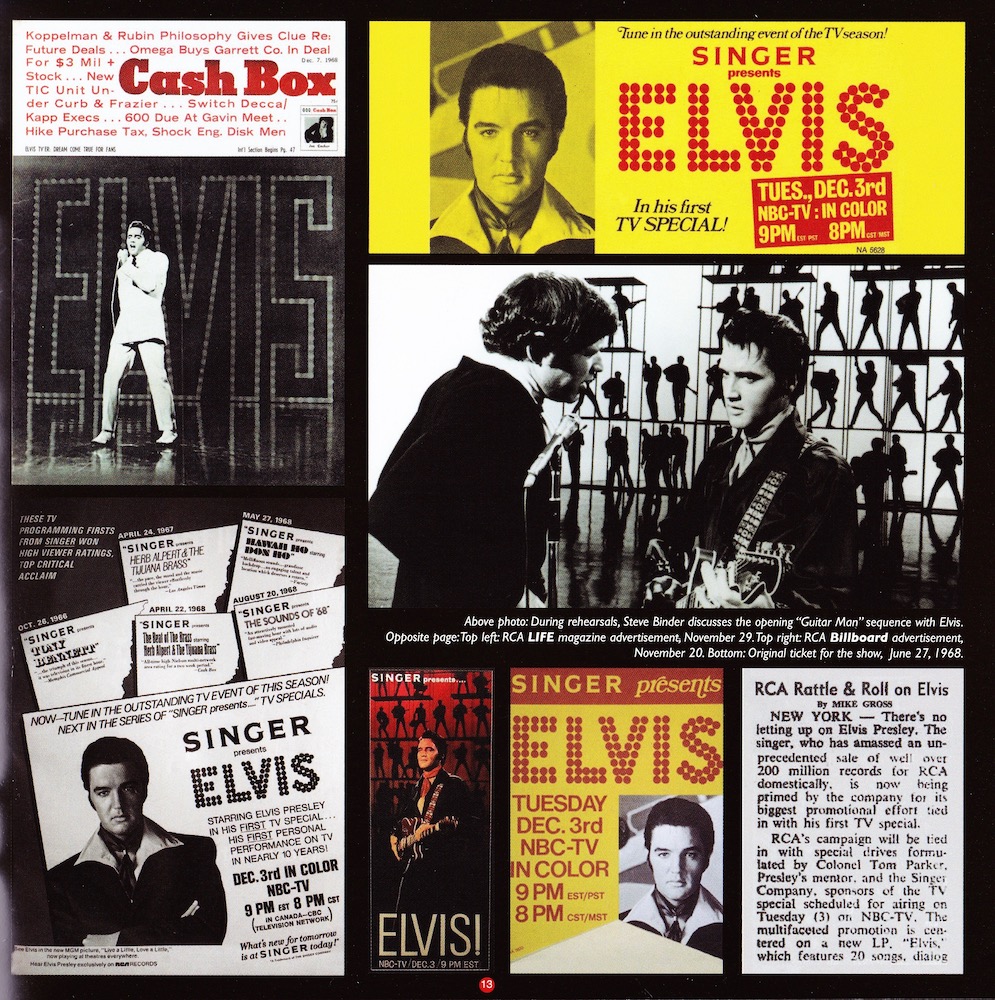
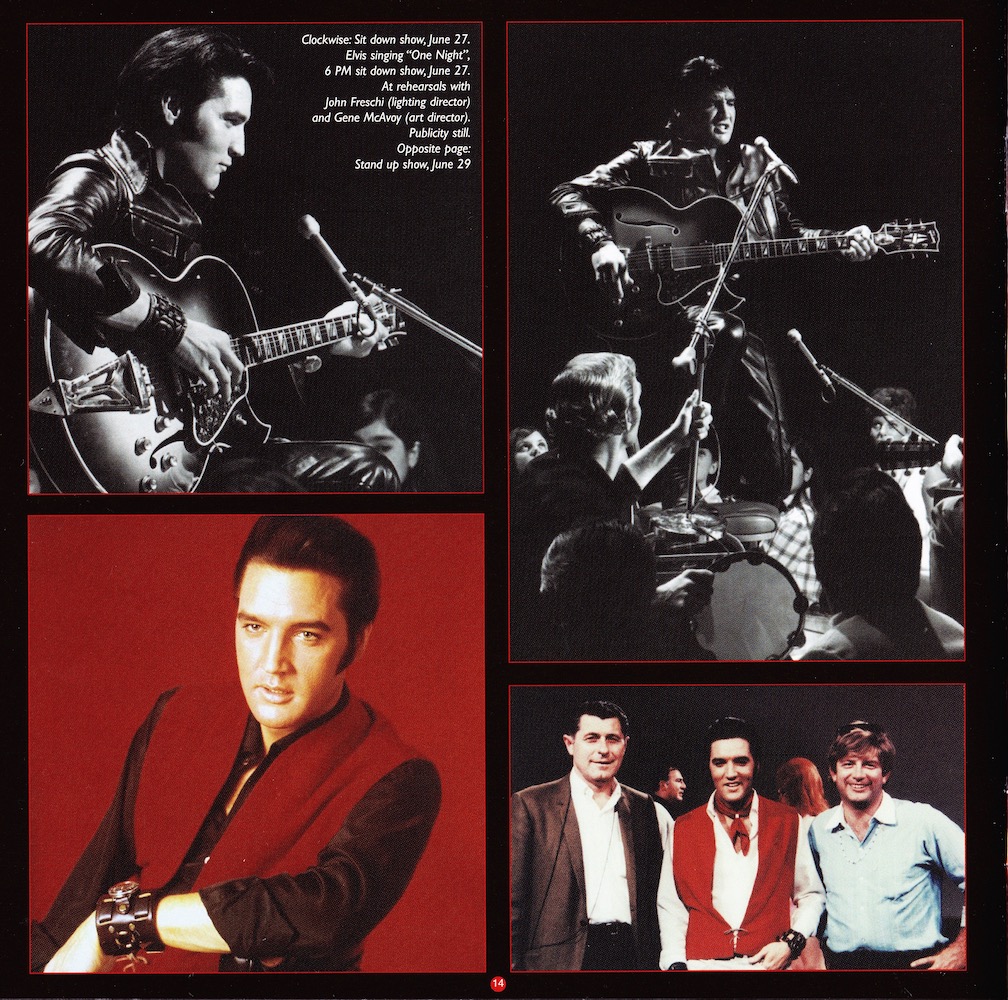
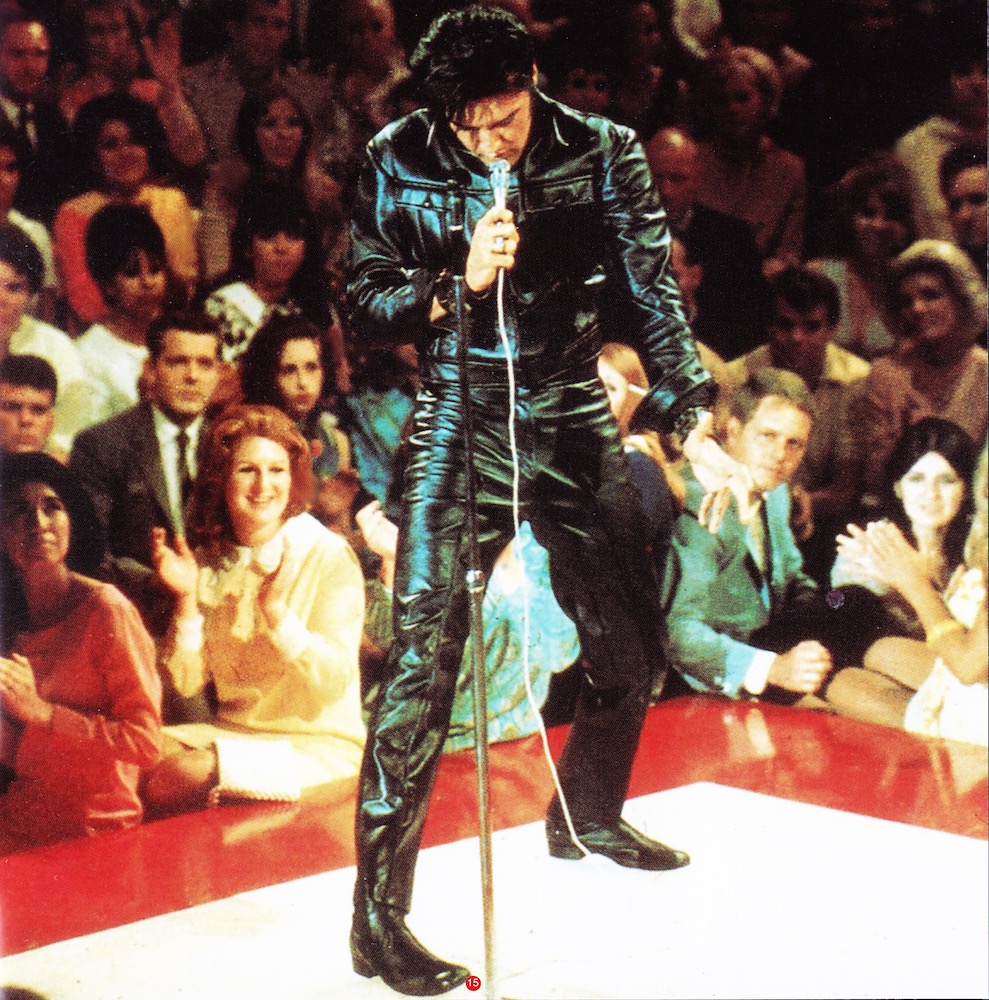
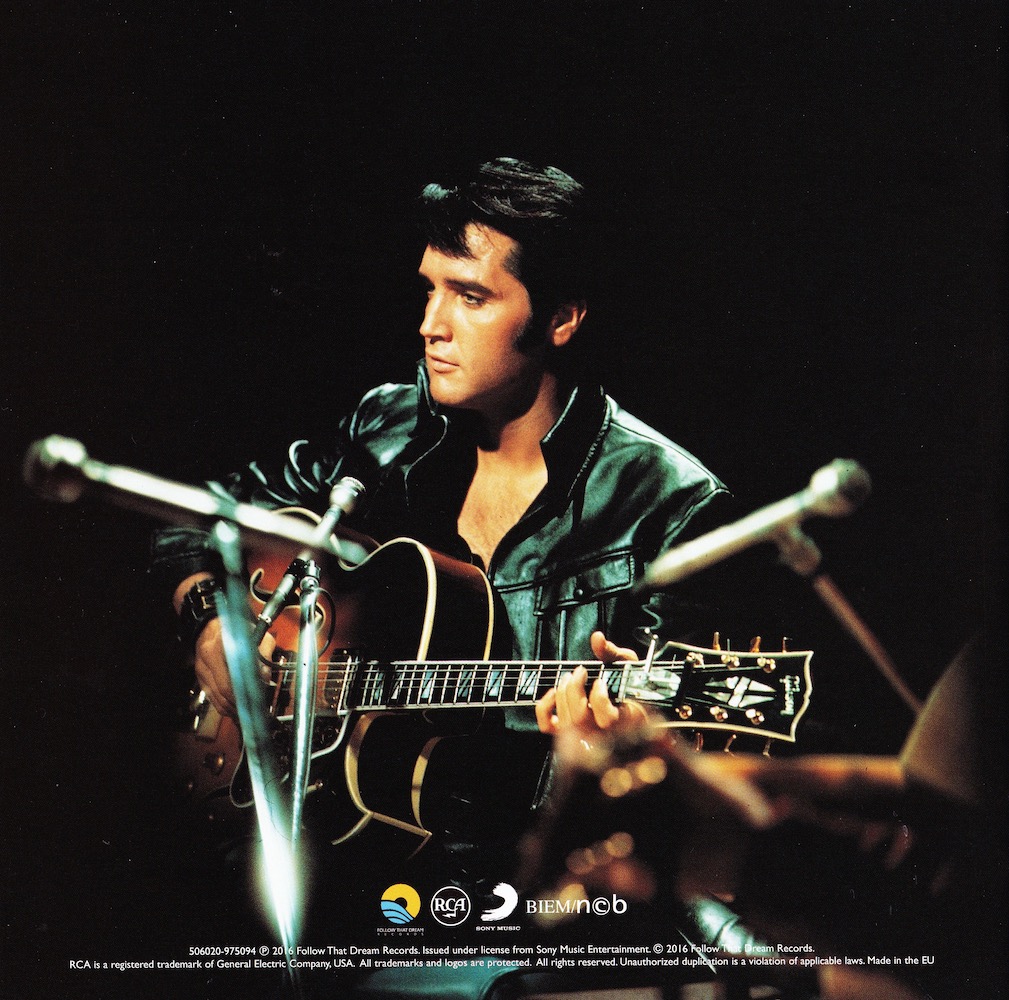
There is a nice selection of memorabilia, several full-page stunning photos, plus a cool selection of images taken from the TV special. Nice also to have four good photographs from the recording session itself.
Elvis’ backing band for the studio recordings were the LA session band nicknamed “The Wrecking Crew” (Phil Spector, The Beach Boys, Simon and Garfunkel etc. etc.). The booklet features a nice explanation of who they were and their importance to this NBC session.
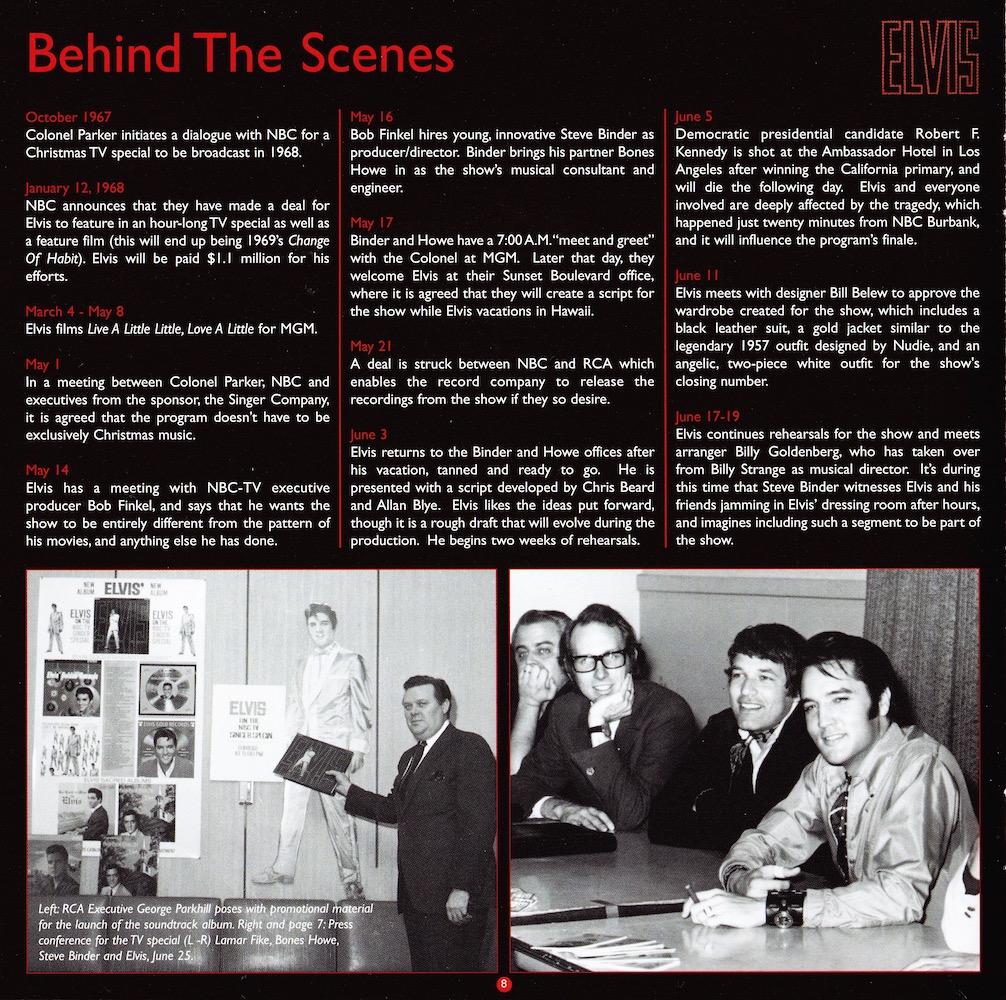
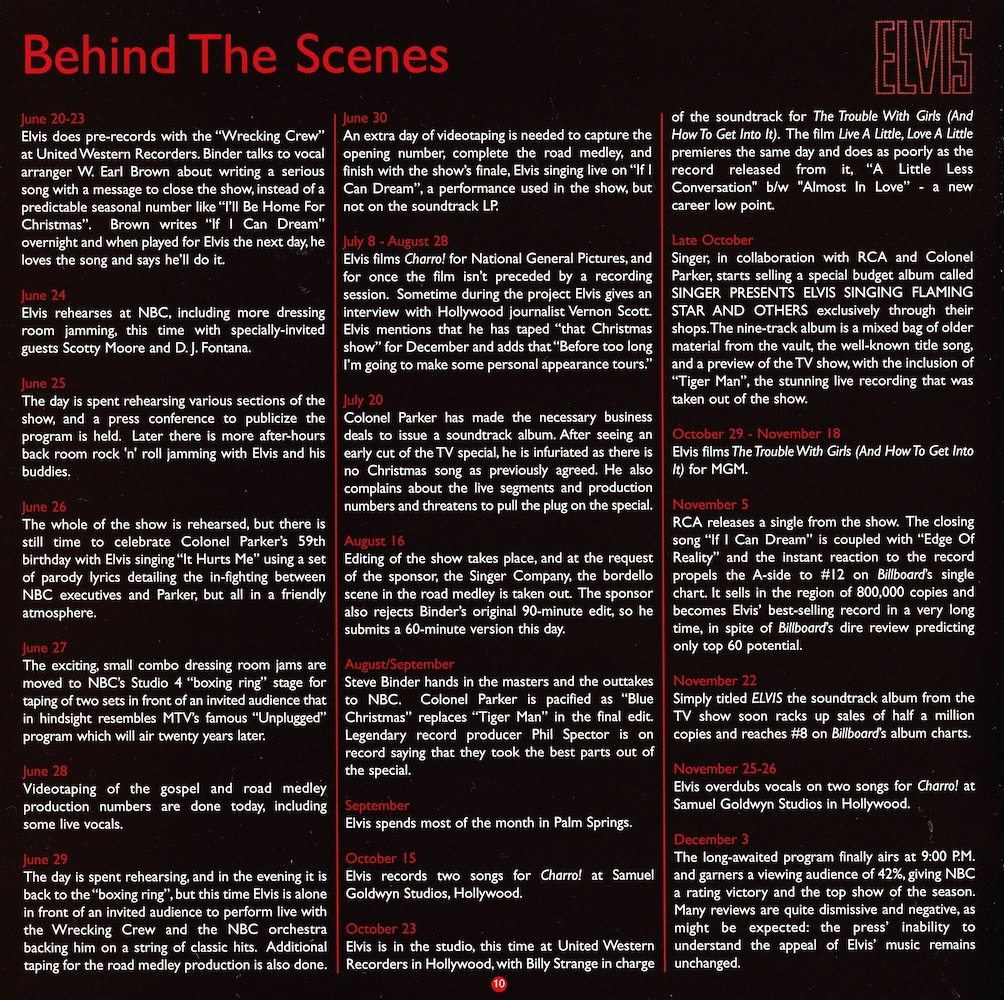
The two pages of “Behind The Scenes” explain the lengthy timeline from the October 1967 first discussions with NBC, through the recording process and to the final TV broadcasts fourteen months later.
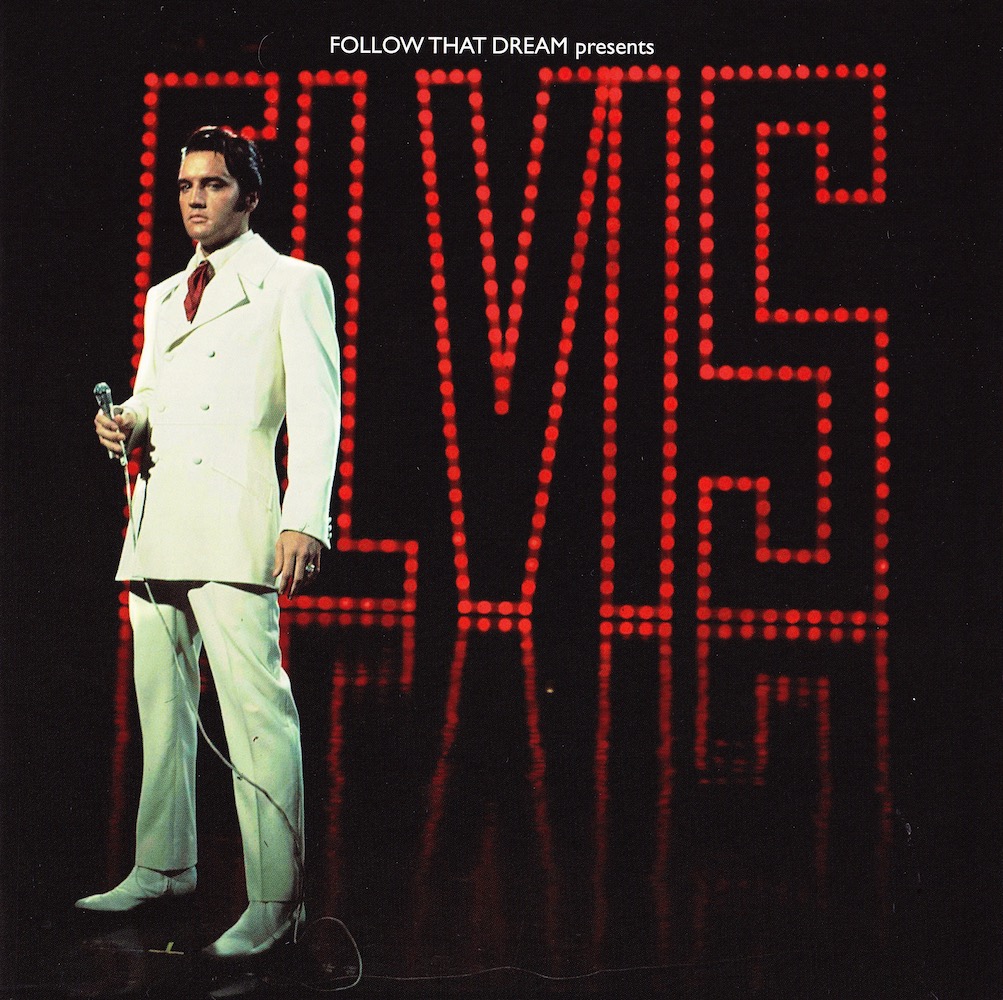
The high resolution photo of Elvis standing the NBC studio looking straight at the camera with his blue eyes is a stunner, as is the alternate shot on the front of the booklet where you can see Elvis standing at his “X marks the spot” on the studio floor.
One oddity I spotted was that the booklet states that Steve Binder talked to composer W. Earl Brown about writing a specific closing song for Elvis and that Earl Brown wrote it overnight during the session.
While a lovely, moving story, this perhaps gives more credit to Steve Binder and conflicts with what the composer actually said in his interview with Ken Sharp in the FTD book, Writing For The King…
W. Earl Brown - “Two books have told how the song ‘If I Can Dream’ was written and both of them have gotten it wrong. They said things like, ‘So and so told me to go home and write it’. That never happened. I wrote it on my own, thinking it might never be recorded by Elvis. I had this thing bursting inside of me that I thought the song should say, that kind of hopeful song like ‘You’ll Never Walk Alone’. I thought that if Elvis doesn’t record it. I’ll give it to Aretha Franklin.”
The Music
Disc One (76 minutes)
The first packed CD of course features the original album plus twelve additional bonus cuts. These are the extra songs from the TV special that were released on various other RCA albums predominantly the Elvis - A Legendary Performer LP series.
How easy it is to forget that the classic tracks ‘It Hurts Me’ and ‘Let Yourself Go’ were not included on the original album, nor for that matter the funky ‘Baby, What You Want Me To Do’.
These are all featured here along with six other key song from the leather-suit sit-down shows plus the fabulous two stereo masters of the singles, ‘Memories’ and ‘If I Can Dream’.
From the dynamite coupling of ‘Trouble’ / ‘Guitar Man’ through to the passionate plea of ‘If I Can Dream’, is there any better Elvis album to feature both his old and the new songs so powerfully performed?
In the Beatles/Byrds era of the time Elvis was taking a real chance using some of his old “soundtrack” songs like ‘Little Egypt’, ‘Let Yourself Go’ and ‘Love Me Tender’ which could have so easily sounded way out-of-date. But the new Billy Goldenburg arrangements and the power of Elvis' vocal push these and every song into something full of soul and passion. It's a real revitalisation, a new breath of life. Did his vocal for ‘Love Me Tender’ or ‘Can't Help Falling In Love’ ever sound better?
The Audio Quality
More importantly for keen Elvis collectors is that this is the best audio remaster we have ever had of the original album. The album master tape has always been of lesser audio quality - probably due to the multiple generations and original editing, but Sebastian Jeansson has worked wonders here. It is a definite improvement over the previous Vic Anesini remaster and sounds fantastic.
There is no possibility that they have found a better generation album original master so Jeansson must have put in a lot of hours to improve the sound yet again for this release. As an example listen to the end of ‘Memories’ and you immediately notice the previously noticeable hum and tape flutter has been fixed.
As a compilation of the best material from Elvis’ NBC-TV Special this first disc is the finest that has been released so far. It perfectly encapsulates the emotion, power and energy of Elvis’ amazing musical renaissance. This will be the version I will always play from now on.
Disc Two (80 Minutes)
Back in 2006, FTD released their look into the making of the NBC-TV Special, Let Yourself Go. It featured a forty-eight minute exploration of the United Western Recorders studio sessions and has now been expanded and upgraded into a packed eighty-minute selection of the best of “The Wrecking Crew” sessions.
Listening to this (play loud through big speakers and imagine yourself there) you wonder that had Elvis not been forced to do all those dreadful movies, would he have needed to come up with this anger and power that makes the ‘68 Special such a turning point?
It is also interesting to hear Elvis recording with a full orchestra - which seems to spur him on to even greater vocal power.
Note: Elvis did record with an orchestra at Western Recorders back in May of the same year, but can hardly have had as much enthusiasm being for his twenty-eighth movie soundtrack.
Unlike the “Making of” Let Yourself Go FTD, this version features the sessions in chronological order - and what a wonderful ride it is, packed full of sheer delight.
The second disc features nine unreleased outtakes including several delightful “First takes”. The CD also combines the best session outtakes, mainly from Let Yourself Go, but also Memories and other releases.
The audio here is remastered in beautiful quality and sound very different from the same tracks previously released on Let Yourself Go and Memories.
Just to remind collectors - the outtakes here have been remixed from the original session tapes by Vic Anesini and Sebastian Jeansson and are very different sounding versions to the ones you may already have.
‘Nothingville’ for instance, now features Elvis’ vocal more predominantly, with Hal Blaine’s percussion pulled much further back. On Let Yourself Go the drums were mixed loud and in the centre, whereas on the original album they were placed towards the right channel which is what has been replicated on these new mixes.
Buy this CD: you don’t need to know any more. However, if you are interested in exactly what we get then read on…
Road Medley Outtakes
'Nothingville' kicked off the session and fans get their first delight in previously unreleased Take 1. “Is this too close, Bones?” Elvis asks engineer Bones Howe with the first attempt showing the band and orchestra playing spot on with sweet harmonica from Tommy Morgan but with Elvis stumbling over his timing.
Takes 5 and 6 follow but again Elvis mucks up the timing, "Goddamn it; hold it," before a near perfect Take 6. It would be another four attempts before Elvis got to the master that included ‘Guitar Man’, the studio master (Take 10) of which follows without ‘Nothingville’, due to the fact that the master of ‘Nothingville’ (Take 10) appears as part of the Road Medley on Disc 1.
The mighty 'Let Yourself Go' follows with two takes of both “part 1” (“Guitar Man’s Evil” #1) and the end section, “part 2” (“Guitar Man’s Evil” #2). This song really showed how Elvis could transform his material if he believed in what he was doing. You can hear the easy going nature of the session as Elvis jokes with the producer.
Interestingly the Elvis - A Legendary Performer Volume 3 edit - a real favourite when first released - was compiled of early attempts (part 1 - Take 1 and part 2 - Take 2), but here we get later takes, as well as the Take 7 masters that were used for the TV studio playback.
Elvis throws in some enthusiastic growls and off-sides, "Oh yeah, baby". And Elvis singing, "Take a real deep breath and put your warm red lips on mine" carries an unbelievable sexual interpretation here that the movie soundtrack original never did! Sensational.
'Guitar Man' (“Escape” #1 - slow)
Takes 1, 2 and 5 sound more like rehearsals as Elvis immediately realises the band is playing too fast. Elvis sings along playfully but laughs as he explains, "Wait a minute, they're too fast man". The treat is that Elvis then keeps going a capella after the band stops, clapping his hands to demonstrate the tempo he wants. With plenty of fun and laughter, Elvis is surprised when engineer Bones Howe jokingly announces "That's a take" Elvis obviously thought it was a rehearsal too.
'Guitar Man' (“Escape” #1 - remake)
Take 6 and 7 were from the following day, taken at a slower tempo and sounding much better. Between takes Elvis throws in a line of, ‘When Irish Eyes Are Smiling’. He never sounded this happy at the Clambake sessions!
'Big Boss Man' (“Escape” #3)
Take 1 is previously unreleased - “It’s a message song” jokes Elvis but on this first run-through the brass section noticeably lags behind the beat, even if Elvis’ vocal is angry and on top form. Take 2 was close to the final master. Elvis throws in some one-liners, "Are you horny tonight?" as well as ‘When the Swallows Come Back to Capistrano‘ an old favourite of Elvis'.
'It Hurts Me' (Part 1 - “Escape #4 and Part 2 - “After Karare” #1)
Take 1 of Part 1 is previously unreleased and a great addition to anyone's collection. Elvis sings with passion and the strings play perfectly against the beat. Listen out for Elvis’ wonderful “Aaarrghh, He never loved you” @1.35 that was not repeated on future takes. Later takes were used for a fabulous edit of song that was originally issued on Elvis - A Legendary Performer Volume 3 (on CD 1 here) but Take 5 of Part 1 and Take 3 of Part 2 feature a fabulous depth to Elvis' vocal. While never a final master, with Elvis' empowered ending, "Yes darling, oh darling.." it is a wonderful attempt. The dramatic finish is also totally different from the spliced string ending of the released version.
Once again Elvis chose a relative B-side chart failure (# 29) to prove that everyone was wrong. Did The Colonel really think 'Kissin' Cousins' was what mattered?
‘Guitar Man’/’Little Egypt' (”After Karate” #2)
‘Little Egypt’ is another previously unreleased version - Take 6. “The dancers hold it down please” jokes Elvis. This is an excellent outtake with a more menacing minor key piano background at the beginning. Sounding so much more powerful compared to the original movie version, “Hot damn” Elvis rightly exclaims, off mike, right towards the start. This take also has a quieter “gong” on the ending.
Take 8 has Elvis' vocal is full throttle, “What about it, Bones?” Elvis asks at the end, as well as joking "This is an Arthur Rank production" to the sound of the huge gong. Yet another lightweight sixties’ movie song that Elvis managed to reinvent.
'Trouble’/‘Guitar Man’ (“After Karate” #3)
Take 2 ends the first section of the outtakes. This was the last "road" song recorded before the team moved onto the Gospel segment. A powerful take, close to the master, Elvis’ comments “Take it home… Oh, shit” @2:27. I guess they would need another take!
Gospel Medley Outtakes
'Sometimes I Feel Like A Motherless Child / Where Could I Go But To The Lord' (”Gospel” #1)
Starting with a rehearsal, this - and Take 1 - are sensational. Elvis' soulful ad-lib on the rehearsal "Oh, sock it to me baby" sets the scene. Very light and laid-back, Elvis' misses the first word so it could never be a take, but even better then to hear Elvis and the band continuing for a complete rough run-through. At points the horns are out of key and Elvis is reticent on the lyrics. At 05.00 he misses a line, "Goddamn it!" It is just fine though, as the gospel soul shines through and the band continues with Elvis apologising at the end laughing, "I'm sorry about that." Another session outtake highlight.
Take 4 follows and features the marvellous solo vocal from Darlene Love that would be used in the TV show. You can hear Elvis snapping his fingers in enjoyment, but his vocal is not as assured as on the final master.
'Up Above My Head’ / ‘ I Found That Light' / ‘Saved” (intro) (“Gospel” #2)
This was the next section required and Take 4 here is another unreleased version and more like a rehearsal. Elvis seems unsure with the lyrics and the tempo drags a bit with it halting after a minute. Before Take 7 Elvis says, "All right. Let's get it on" and being in a gospel mood sings the first line of ‘The Lord’s Prayer’. Elvis is still somewhat reticent with the lyrics and at this point very late in the evening they would stop, continuing the following day where they would nail it in two more takes.
'Saved' (“Gospel” #3)
Take 1 was initially on the FTD Easter Special but it sounds more powerful here. This gospel track shows off Elvis' rough, throaty, soulful voice to the very best.
Take 2 is a short previously unreleased false start where Elvis jokes, “I used to drink, I used to … start all over”.
On Take 4 the band and Elvis mess up with the tempo mid-song and seems out of breath as he throws in too many ad-libs - listen out for his "Wooo" @03.16. At the end Elvis starts to go into the “blues” ending but the band doesn't follow.
On the rough mix splice of Takes 6 and 5 Elvis finally includes the extended "blues ending". This is a rough mix of the final edit that would be included in the album and sounds very different. Here the backing vocals are only just audible, as is the orchestra; this leaves Elvis' vocal high in the mix with mainly the rhythm section.
This would be the final song required for this section.
Outtakes - June 22
'Trouble’/‘Guitar Man' (opening)
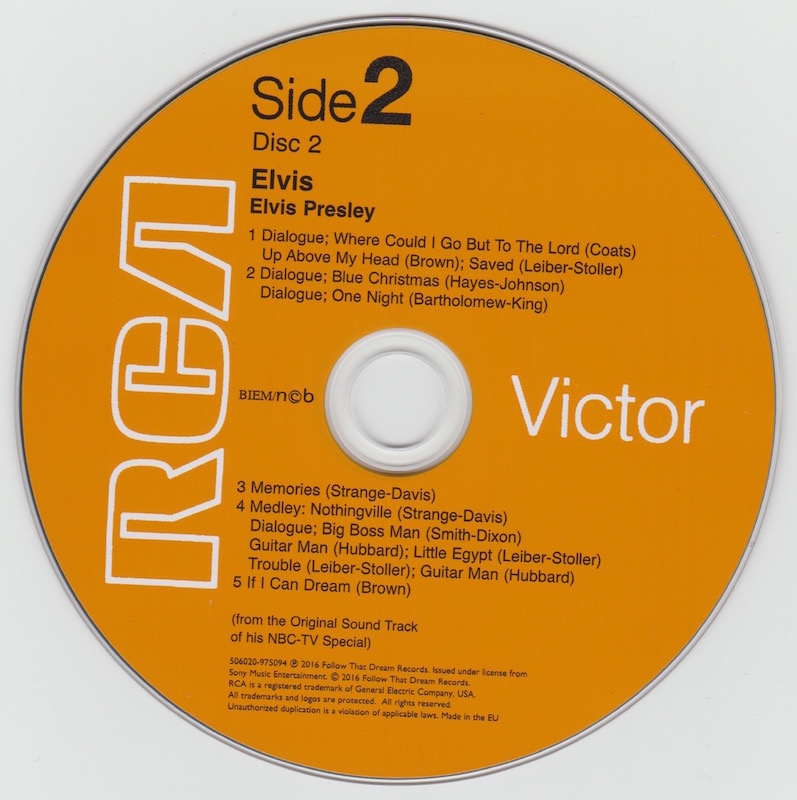
Although mistakenly listed on the cover in the “Outtakes - June 23 1968” section, this was actually recorded on June 22 1968!
How odd that it was so near the end of the session that the band gets to record the show's opener.
Take 1 is a fine first run-though and Elvis throws in some ad-libs and the band try out the extended “guitar scratch” ending.
Take 6 breaks down mid-section when drummer Hal Blaine misses the beat, with some real hilarity following as a band member imitates the sound of a dog. Elvis’ laughter and "Get that damn dog out of the studio!" is incredibly reminiscent of the same fun as "Shoot that damn dog" at Graceland‘s Jungle Room sessions eight years later.
Take 7 is all the more enjoyable because Elvis knows that it is only a rehearsal, when the band's timing messes up at the start, but Elvis keeps on going. Listen out for Elvis' enthusiasm @ 04.19 as he urges the band along. It’s a sensational outtake.
The final master was a splice of the much later Takes 21 (‘Trouble’) and 32/19 (‘Guitar Man’).
Outtakes - June 23
'If I Can Dream'
This FTD Classic Album release at last presents the whole session including previously unreleased false start Take 2.
While the first take was sensational for a first attempt and complete, it could be seen as a rehearsal, as extraneous noise at the start meant it never could be a master. First released on the Platinum - A Life In Music box-set, but it sounds much better here thanks to the new Vic Anesini / Sebastian Jeansson mix remaster. Elvis is very measured with the lyrics and notably holds back at times, but for a “rehearsal” it is an amazingly powerful recording.
The previously unreleased false start Take 2 sadly never gets to the first line, “A little feedback crept in there”.
Take 3 similarly lasted only forty seconds and stops at Elvis’ first line.
Complete Take 4 sounds nearly perfect, even if he sings “Why can’t my dream come true?” instead of “Why can’t my dream appear?” Interestingly, Elvis seems to drift slightly off key and changes melody at the end. It is still a fascinating and powerful version. “Let me do one more” Elvis notes afterwards.
The next Take 5 would be the master we all know which Elvis lip-synced his black leather stand-up performances to on June 29.
'Memories'
Takes 3 and 4 of the backing track along with Elvis’ alternate vocal overdub of Take 4.
The treat on these sessions is hearing the incredible musicians that made up “The Wrecking Crew” at work.
On unreleased Take 3 false start, you can hear Tommy Tedesco’s beautiful guitar picking. “Tommy, if you remember what you did, do it again” says Steve Binder. Tedesco would play on several of Elvis' mid-’60s movie soundtracks, including the original recording of ‘Let Yourself Go’.
The following alternate take (#1) has a delicious rich vocal with a different ending with Elvis quietly intoning “Memories, memories”.
The CD ends with the unreleased Take 1 of the ‘Let Yourself Go’ ending instrumental which doesn’t feature such a loud brass explosive ending as one used in the special.
Overall Verdict
It is hard to believe that Elvis’ NBC ‘68 Special could be re-packaged in an even better way than it has been before - but this FTD Classic Album version is absolutely sensational.
Disc one features all the highlights of the original main RCA releases with the original album and the additional key extras while disc two provides us the ultimate eighty- minutes of The Wrecking Crew Sessions.
With the sixteen-page booklet and beautifully remastered audio, this is one of the very best Classic Albums that FTD have ever released.
Buy it with confidence; you won’t be disappointed.