Review by Gordon Minto - Elvis: The Man And His Music
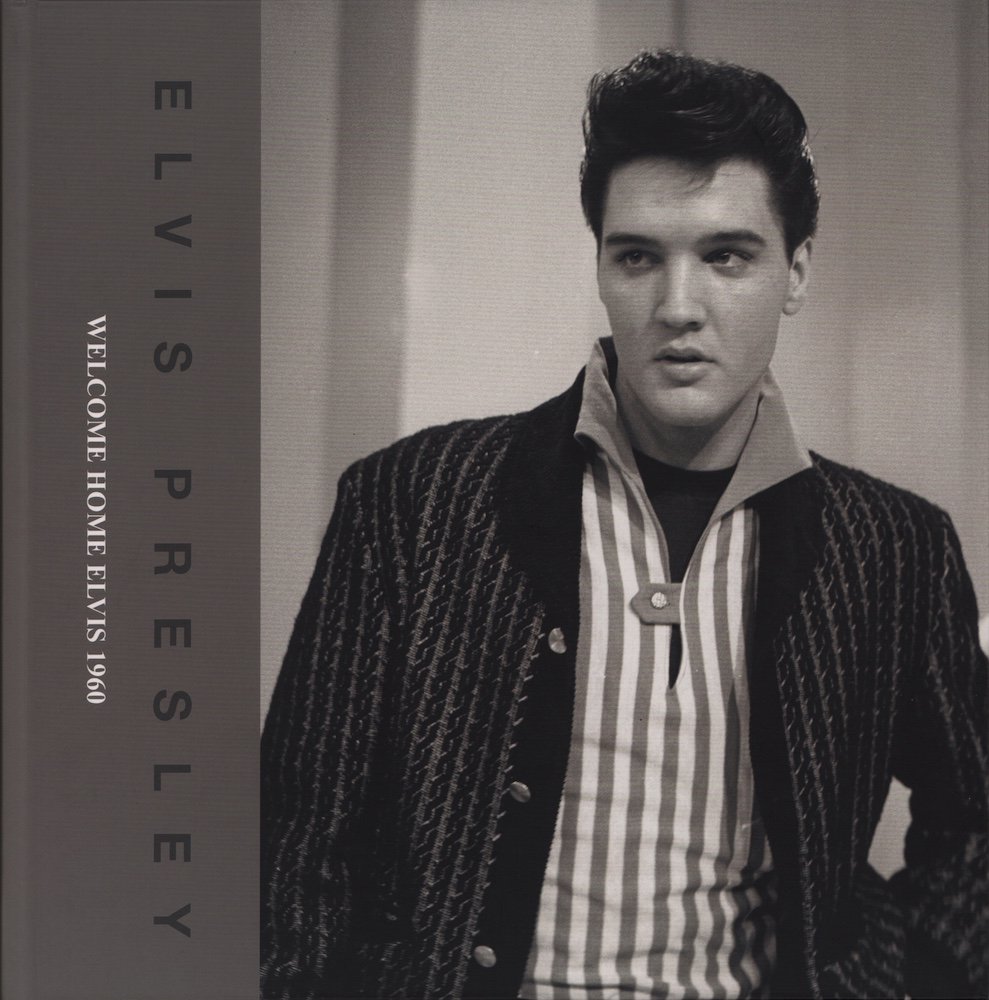
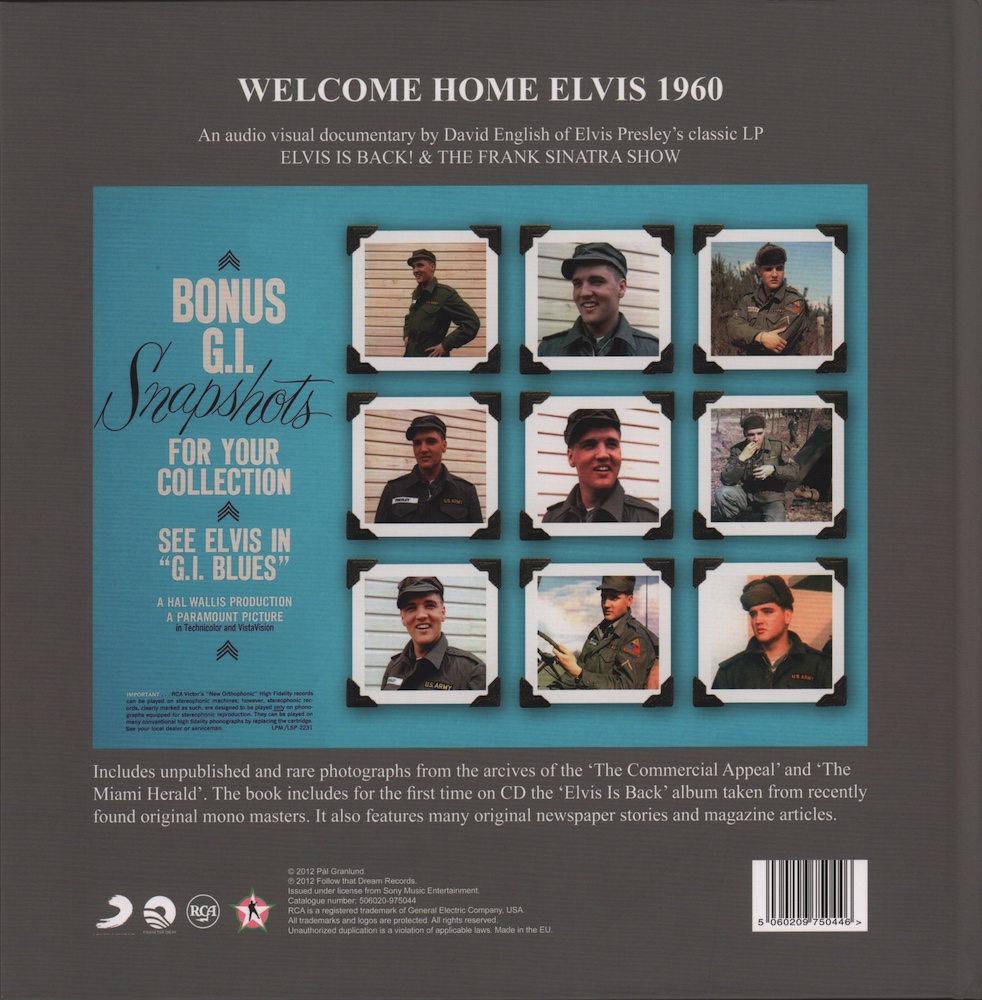
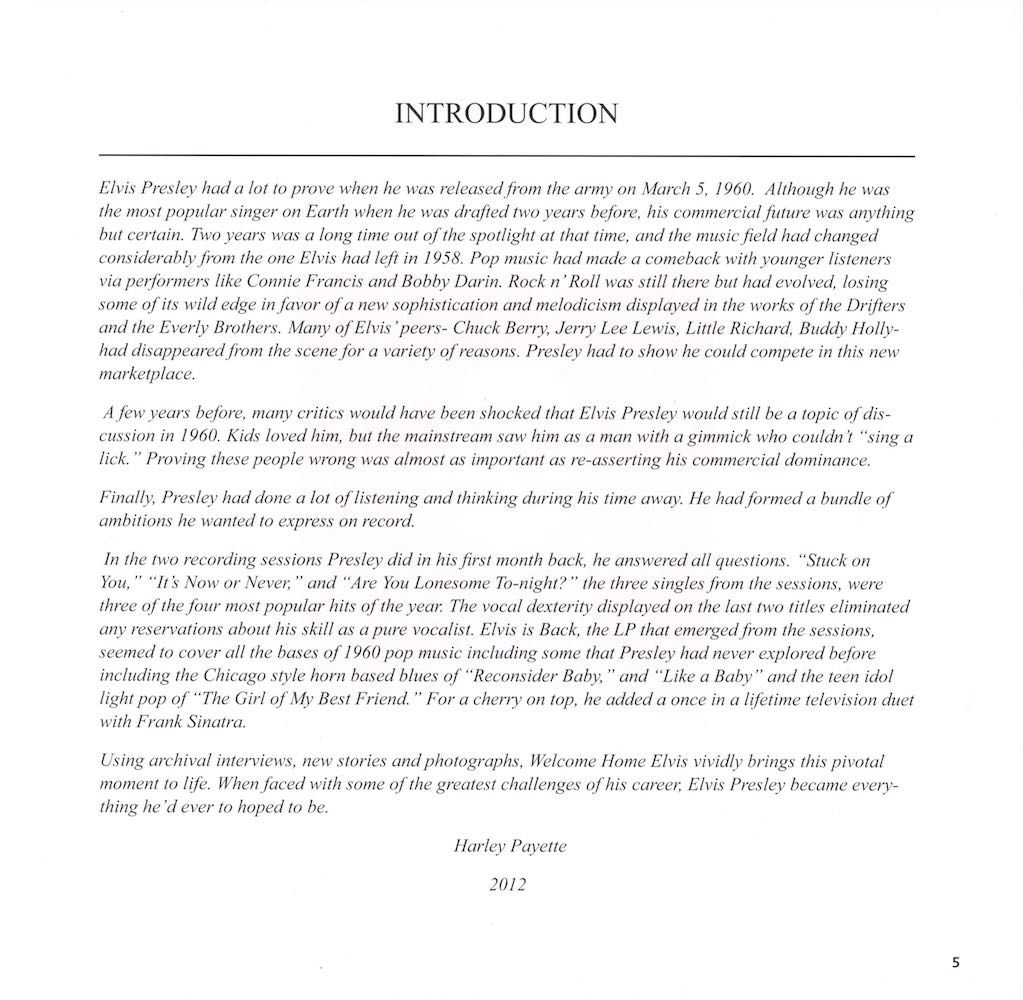
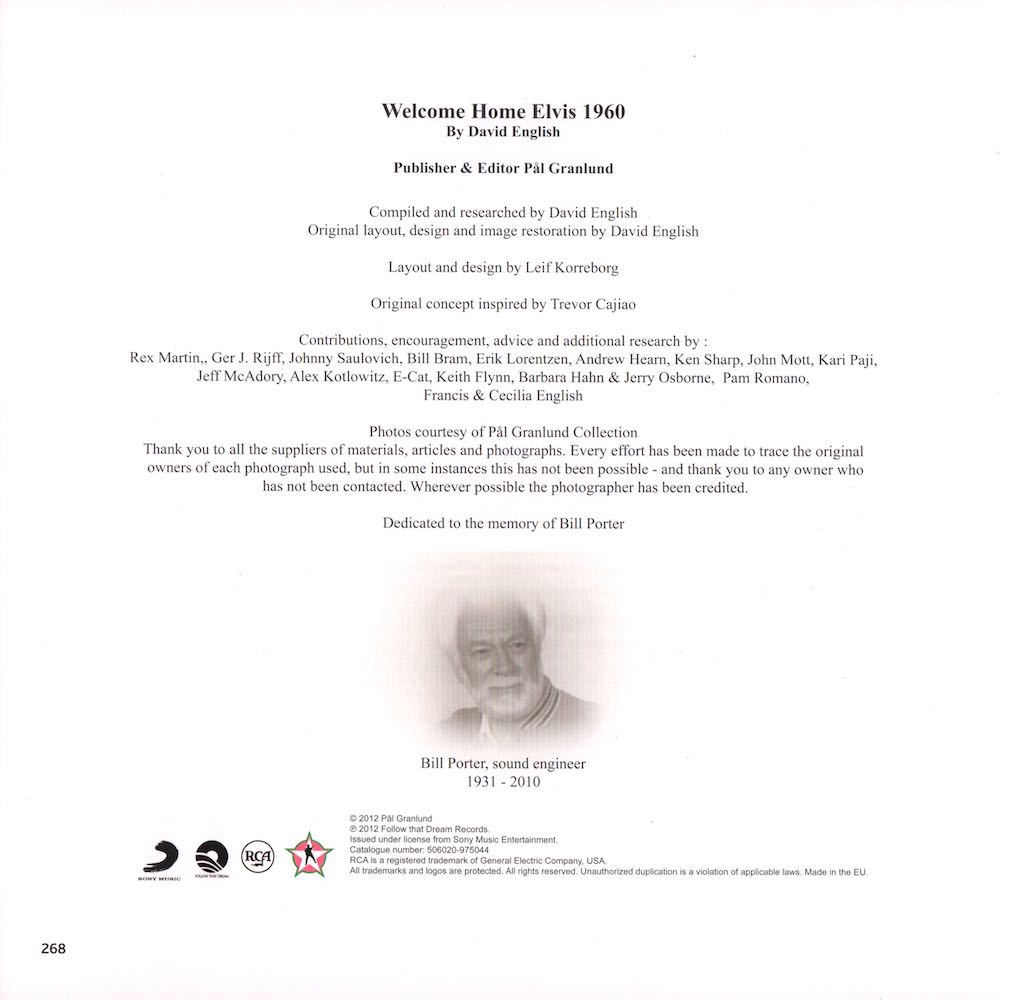
A question that often occupies the minds of dedicated Elvis fans and dispassionate commentators alike is the issue of identifying truly significant points in his twenty-three year career. Many pivotal moments present themselves as contenders, but until now there has been very little focus on what is arguably the key turning point - and it's not his induction into the army, but rather his demob in March 1960. This 260+ pages hard-backed book and CD combo from FTD, compiled by David English (who has worked hard for years researching and compiling it), seeks to address that omission and offers a mouth-wateringly attractive look at those all-important months in early 1960 through the medium of some previously un- published photos, juxtaposed with direct quotations from many of the musicians, engineers and friends who were there at the time, complemented by session information, plus countless press cuttings and reviews from the period, sourced from US and UK publications. (Though strangely there's no mention at all of his brief visit to Prestwick in Scotland on March 2 on his way home from Germany.)
Remember, while Elvis was serving Uncle Sam in Germany he was, quite literally, out of the public eye. Yes, there were intermittent record releases but, crucially, Elvis was not available - nor was he willing, it seems - to promote these releases. Now there's ample evidence to support the view that he didn't particularly want to do his military service - who would in his position? - but made no attempt to avoid doing it. It was, unquestionably, a high-risk strategy, considering the inherently ephemeral nature of the pop business. As Elvis himself readily conceded, pop stars came and went with alarming frequency and he had no illusions that the same fate may befall him.
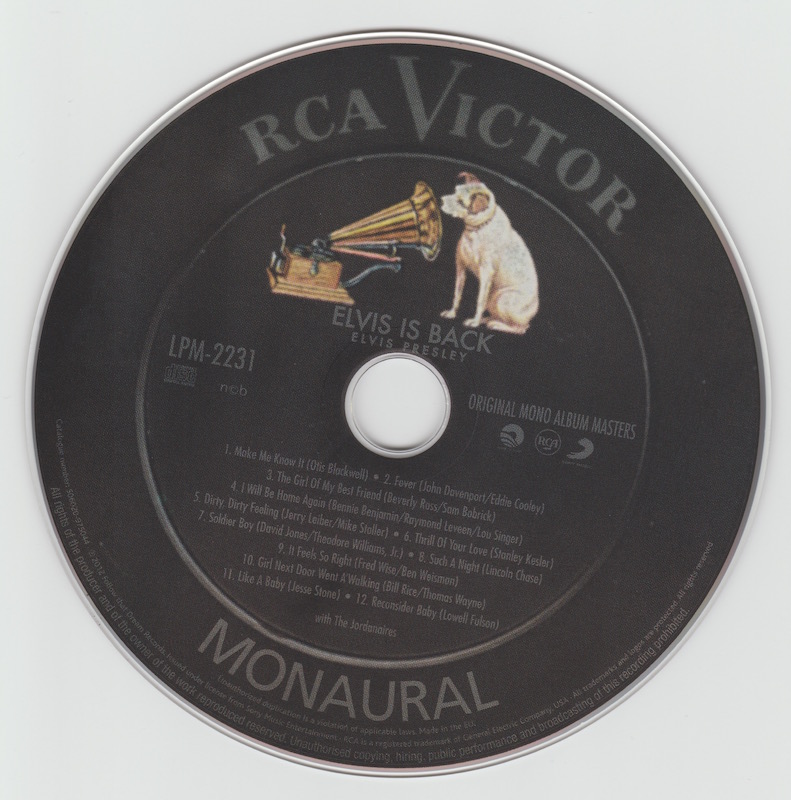
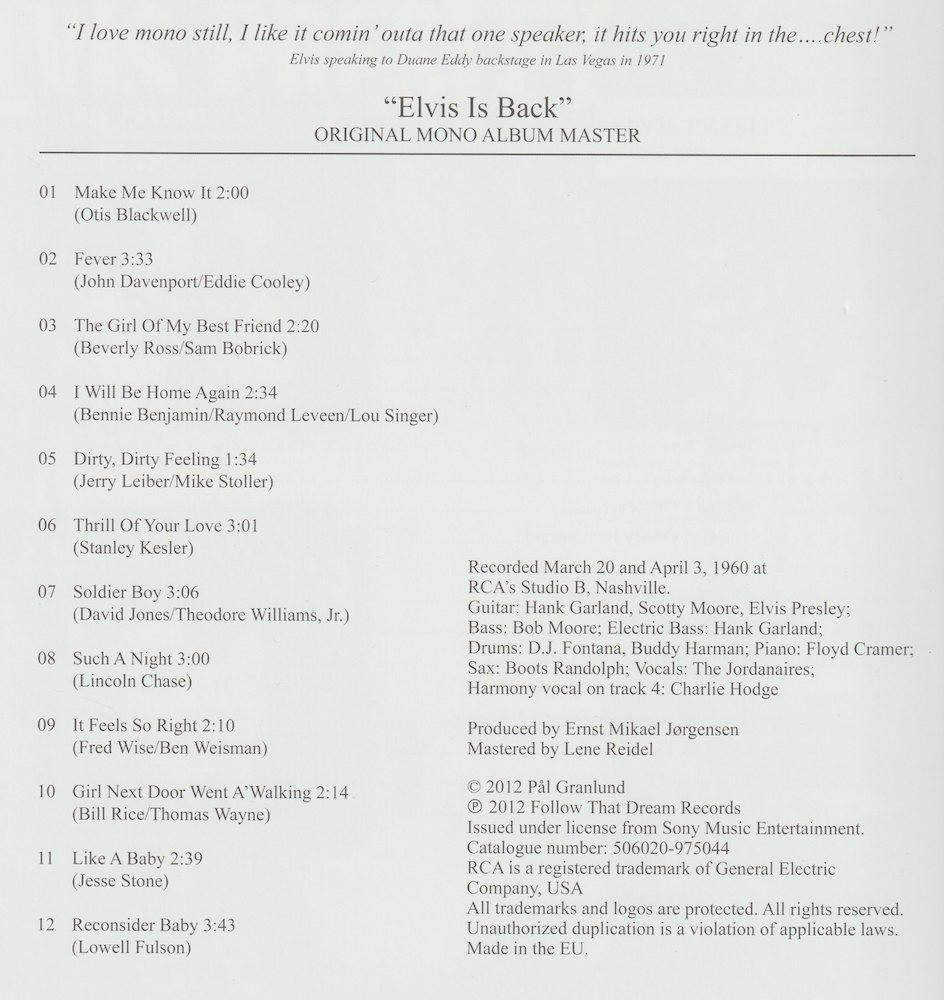
Overall, this book is a worthy and worthwhile venture, complementing the great audio material that exists from this period, and pictorially it gave me a great deal of pleasure browsing through it, for it makes for fascinating reading and viewing. In that regard, I acknowledge and applaud David’s efforts. Some photos (in colour and black and white) are so good that they’re almost in 3-D (check out pages 19, 41, 53, 79, 149, 160, 163). And I learned much from it, too. Additionally, the package includes a mono version of the classic Elvis Is Back! album though it's a pity that other material - songs from Frank Sinatra's Welcome Home Elvis TV show itself, for example - couldn't have been included, too.
But - and it’s a big but, I’m afraid - my overall enjoyment of this otherwise fine piece of work has been marred by the scores of mechanical and grammatical errors which run through the book. The punctuation - including the repeated misuse of apostrophes (in plurals), and a lack of clear speech marks - is generally appalling. Yet for once I am both confused and conflicted about this. Normally my tolerance of things poorly written or badly constructed is fairly low but on this occasion I can understand why some are there. First, many of the original writers (whose work David English has drawn on) frequently betrayed poor writing skills and included factual errors. Thus, when transcribed, the challenge is this: do you reprint things as they originally appeared or do you try to correct what has been said? Sensibly perhaps, David English has opted for the former course of action. However, with respect, what might have been a good idea was to have had some clear disclaimer early in the book pointing this out to the readers. And where the mistakes are factual, perhaps put a notation to set the record straight. For example, by March 1960 Elvis was twenty-five years old yet is frequently said to be twenty-four. And on page 11 the reference to Elvis appearing on the Sinatra show on “April 31st” made me hoot out loud!
However, alongside these distracting mistakes - and I liken it to speaking directly to someone who has a huge pimple on their nose: you just can't take your eyes off it, regardless of what they are actually saying! - sadly, there are examples of poor layout. sentences mangled, words missed out, incorrect spacing and sloppy editing, all of which unsettle me and detract from what would otherwise have been an excellent product. Let me quote just a few examples. The back cover states: “from the arcives...” while on page 36, paragraph three reads: “Yes, she was with us, but I can't talk about Elvis’ dad preceded him to Memphis with E/'s grandmother, new secretary and blonde he may wed. it yet,” he said. Er... pardon? On page 77 it says “continued” but it isn’t.
On page 89 the sentence skips a couple of lines, leaving a space for no apparent reason. On page 97, Illinois reads as “Illinos” and “sheriff's deputy” comes out as “depu—ty”; while on 103 we have “Grace-land” and “came-ras”. On page 119 songwriter Ben Weisman is shown as “Wiseman”, but perhaps my favourite typo is “Ray Walker from The Jordanians” on page 132. Oh dear. Then on page 159 the reference to the photos featured on page 155 is inaccurate - as it is on 174 too, when it reads “Scotty Moore is sitting with his electric guitar with the acoustic bass player in-between and Stan...”. Who? Believe me, this is just a small, but fairly representative, sample of what I mean.
Truthfully, this is unacceptable and unfair on fans who pay out substantial sums of money for such product. And I’m not being mean-spirited or “arsey” about this: but the fact is that many of the errors present here ought to have been identified and corrected long before publication. There is an apparent lack of rigour at various stages; but, crucially, from leaving the author’s care and being reset for publication something else has gone awry, though ultimately it remains a collective responsibility. And, as we have seen all too frequently recently, a number of books published outside the UK (e.g. Fashion For A King) - but using English text - are being published with fundamental yet largely avoidable mistakes. My question is simple: why spoil any product by failing to have it proofread carefully? It's a quality control issue and I think it's unpardonable not to exercise more care. Fans deserve better.
Summary:
Fine but flawed.