Review by Trevor Cajiao - Elvis: The Man And His Music
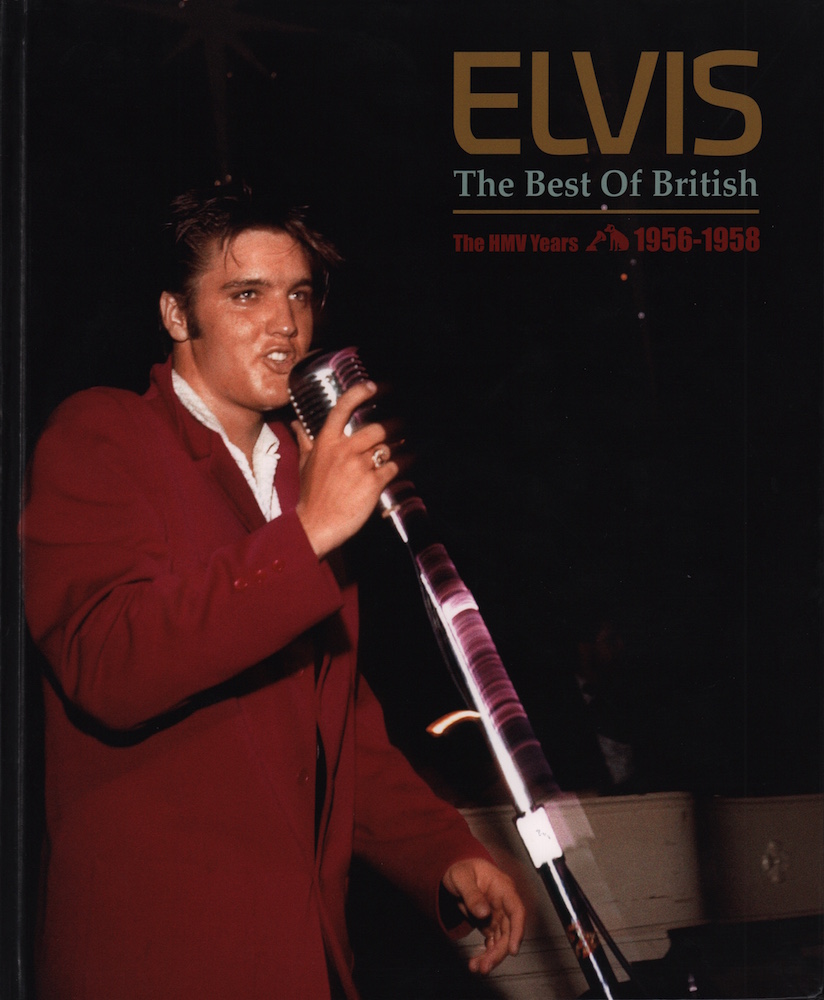
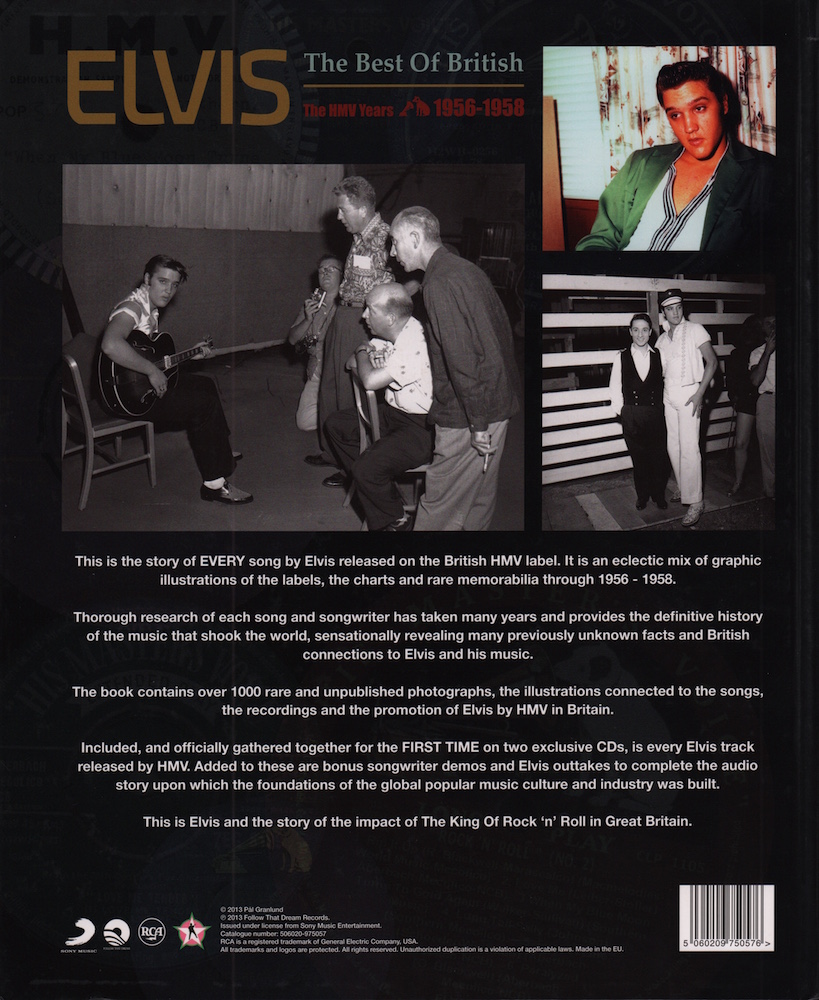
HMV books are like buses. We wait for ages for one to turn up and then two come along one after the other! Last issue we reviewed Alan White's Elvis Presley HMV Worldwide Discography, and now here's Trevor Simpson's take on the subject. The two books are, however, very different. Whereas the White book concentrated more on the listing of variations (label colours, print font sizes, tax codes etc.) of the HMV releases themselves, resulting in an informative but ultimately fairly dry read, this new book is a lavish 438-page monster work going much further than simply cataloguing the HMV releases and telling the story of how Elvis’ initial UK records came to be on the famous imprint. It does all of that, but also tells the story behind each of the forty eight songs put out by him (across fourteen singles, two EPs and three LPs) between 1956 - 1958, by which time, of course, RCA had set up its own label here.
Every title is looked at in depth, with detail on the song‘s writers, original version (where applicable), Elvis‘ performance and heaps of other trivia. It also deals with a few long-time puzzles and anomalies along the way; things that have been shrouded in mystery and intrigue for many a year. Such as: just which Bill Campbell was it who wrote ‘One-Sided Love Affair’? Was it “Country” Bill Campbell (white) or “Harlem” Bill Campbell (black)? Then there’s the strange situation surrounding ‘Too Much’, involving two separate couples claiming authorship, resulting in a lawsuit being filed in July 1957.
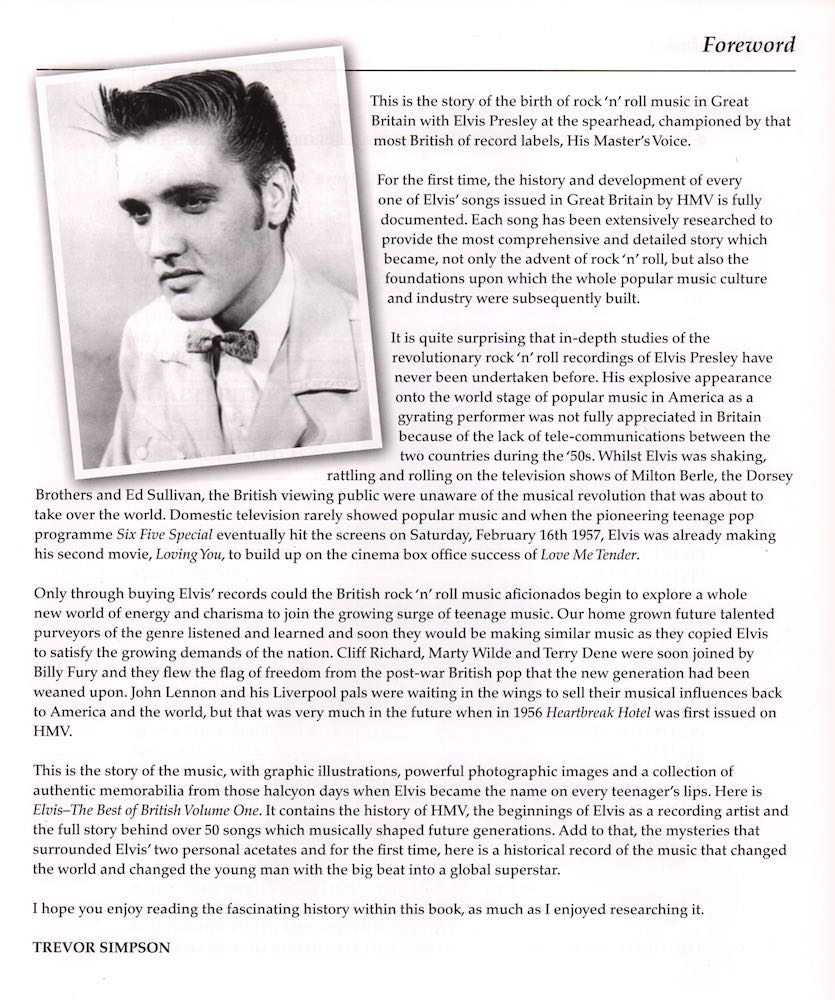
The narrative weaves in details on what else was happening in the world whilst all of this was going on, putting everything into an historic perspective. It could be said that at times there’s too much information served up, but it’s all been so obviously well-researched and the attention to detail is quite staggering.
There's also a section on ‘The Truth About Me’, the spoken word 6” record made available in the UK in early 1957 through Weekend Mail (after being presented first in the States with the magazine Elvis Answers Back!). Precise production details of this disc have never been made available, though it's thought to have been pressed by EMI (HMV’s parent company) and carries the legend “Elvis Presley - The HMV Recording Star” on the label. Strange, however, that nowhere is it mentioned that this UK pressing edited out Elvis’ reference to enjoying his “RCA Victor records”.
Additional sections deal with the two Memphis Recording Service acetates of 1953, trying to make sense of all the speculation and guesswork surrounding them, whilst at the same time detailing the story behind the songs they contain. Obviously this hasn't really got anything to do with Elvis’ HMV output (‘That’s When Your Heartaches Begin’ being the only tenuous link) but is interesting nonetheless.
The book is heavily illustrated by label shots. record covers, trade ads, sheet music, charts and TONS of cool photos! Lots of them will be familiar, but they're the perfect way to demonstrate just how mind-blowingly different Elvis was at this particular period. Quality-wise most of the photos are superb, with only a few of ‘em on the fuzzy side. There are several full-page ones, both in full colour and black and white, that are quite simply stunning.
The only mistakes that caught my eye are obviously typos. The photo of Sam Phillips, Elvis and Marion Keisker on page 10 was taken or September 23 1956, not December 23 (a photo from the same day presented later in the book has the correct date). And ‘Too Much’ was not released in the UK in April 1956 (page 208), rather April 1957. Such things are annoying but don’t detract from the wealth of information the book offers.
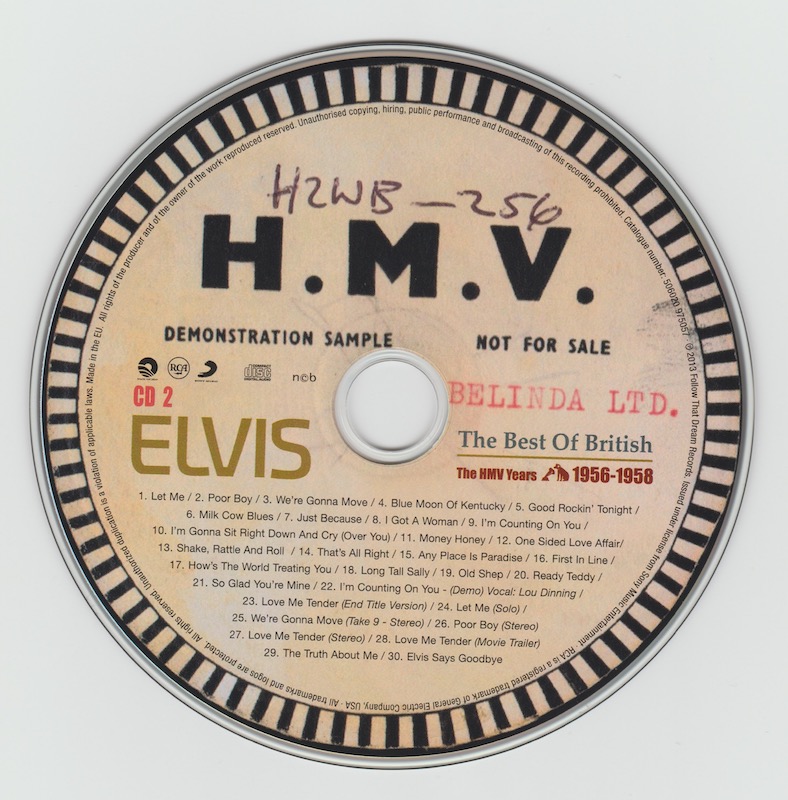
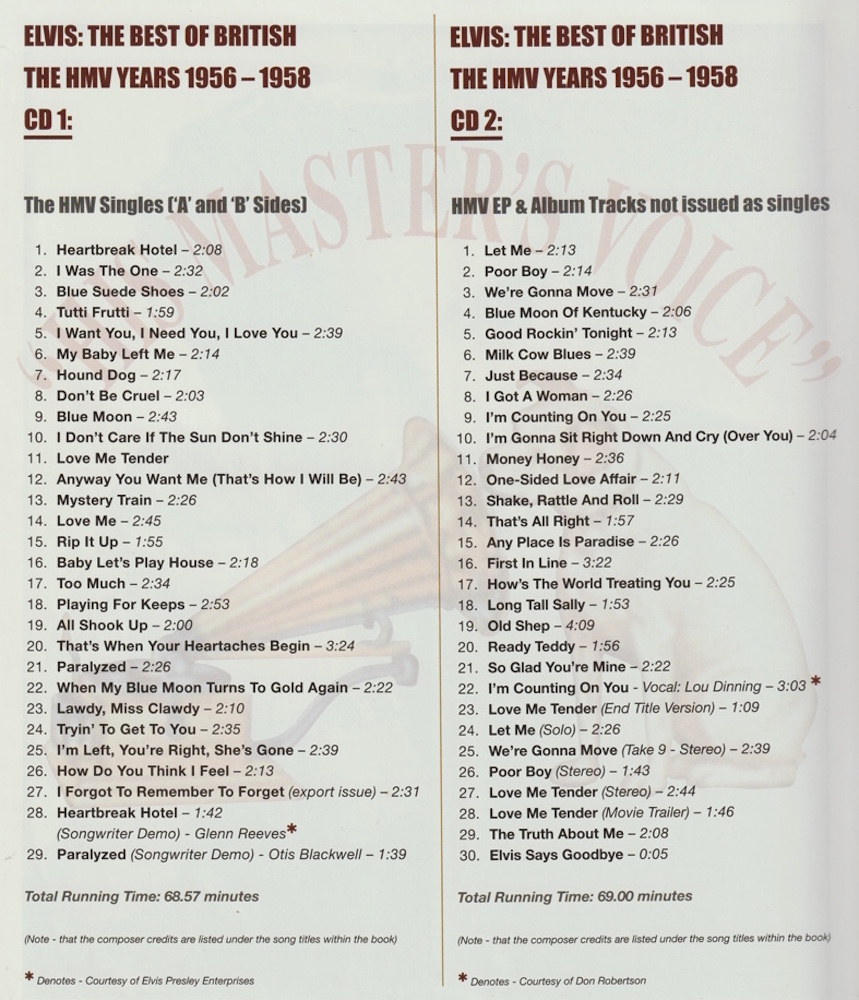
Two accompanying CDs have all the tracks from the HMV releases - very familiar, of course, but timeless stuff that will forever sound glorious. There’s also a bunch of previously released alternative / stereo cuts from ‘Love Me Tender’, ‘The Truth About Me’ (but not the UK edit) and three original demos - ‘Heartbreak Hotel’ (Glenn Reeves), ‘Paralyzed’ (Otis Blackwell) and ‘l’m Counting On You’ (Lou Dinning).
A mine of information and a fine addition to any serious Elvis library.